

-
On October 14, 2026
Guide to Window Lock Types for Safer Homes
A window that looks fully shut can still be the weakest point in a property if its lock is worn, poorly fitted, or simply the wrong type for the frame. This guide to window lock types helps homeowners, landlords, and small business owners make sense of what is fitted, what needs attention, and when an upgrade is worth it. The right lock should suit the window’s opening style, provide reliable security, and be practical for everyday ventilation and emergency access.
Why the Window Lock Type Matters
Window security is not just about having a key. A lock needs to hold the sash or opening section tightly against the frame, resist forced movement, and work smoothly every time. If a handle turns without engaging, a key no longer works, or the window can be lifted or pried open, the issue should not be ignored.
Good locking also supports the overall performance of the window. When the sash closes correctly, it helps maintain weather sealing and can reduce drafts, rattling, and water ingress. For rental properties and commercial premises, dependable locks can also make day-to-day security checks much simpler.
The best choice depends on the window design. A lock that works well on a side-hinged casement window will not necessarily suit a vertical sliding sash or a patio-style horizontal slider. That is why identifying the window first is the smart place to start.
Guide to Window Lock Types by Window Style
Espagnolette locks for uPVC casement windows
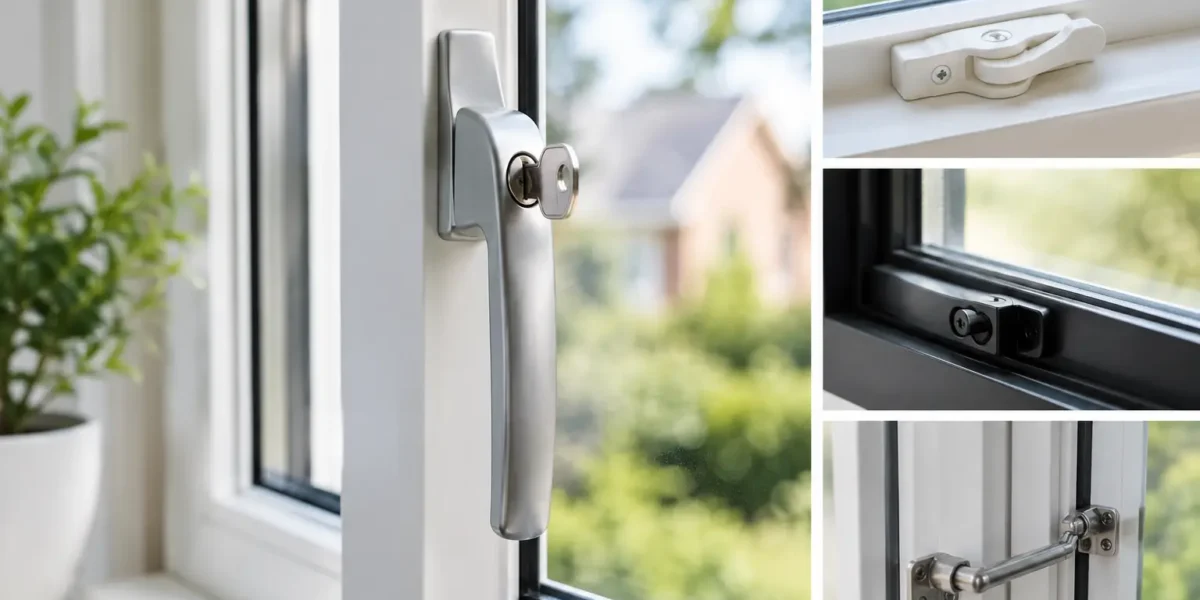
Espagnolette locks, often called espag locks, are common in modern uPVC casement windows. They are concealed within the edge of the opening sash and operated by the window handle. When the handle is turned, a metal gearbox moves locking points along the strip, engaging them with keeps fitted to the frame.
This system is popular because it spreads the locking action across more than one point rather than relying on a single latch. The number and position of locking points vary with the size and design of the window. A larger opening may need more points to resist flexing and forced entry.
The handle usually includes a key lock, but the handle is only one part of the security system. A stiff or loose handle can point to a worn gearbox, misalignment, or a problem with the locking strip. Replacing only the handle may not solve the underlying fault.
Cockspur handles and wedge catches
Older aluminum and uPVC windows often use cockspur handles. These have a hooked nose that closes over a wedge or striker on the frame. Some versions are lockable, while older fittings may rely solely on the handle being positioned correctly.
Cockspur systems can still be effective when they are in good condition and fitted properly. However, a damaged wedge, loose screws, or a poorly matched replacement handle can leave gaps and weaken the window’s hold. Because there are different step heights and fixing positions, accurate measurement matters before parts are changed.
Shoot bolts for stronger sash restraint
Shoot bolts are bolts that slide into the frame at the top and bottom of a window sash. They may be operated by a handle or form part of a multi-point locking arrangement. You will often find them on timber casement windows and some traditional designs.
Their strength comes from anchoring the opening section at two separate points. They are especially useful on taller or wider windows, where a single central latch may not hold the sash as firmly. The trade-off is that exposed shoot bolts may require more care and occasional adjustment than a concealed modern mechanism.
Sash window fasteners and restrictors
Traditional vertical sliding sash windows need locks designed for two moving sashes. The classic option is a sash fastener, usually fitted where the meeting rails overlap. Turning the fastener draws the sashes together and reduces movement.
For better security, sash stops can be added to limit how far the window opens. These are particularly useful on ground-floor windows, upper-story rental properties, and rooms where a small opening is wanted for fresh air without leaving a wide access point. Key-operated sash stops offer an added layer of control, but keys should be stored somewhere accessible to the responsible adult in the property.
A fastener alone may not be enough for an older sash window with loose frames or worn cords. The lock can only perform as well as the timber, glazing, and frame alignment around it.
Sliding window locks
Horizontal sliding windows usually need a lock that prevents one panel from moving along its track. Common designs include thumb-turn latches, lever locks, and keyed sliding window locks. Some systems secure the moving sash directly to the fixed sash, while others engage with a keeper in the frame.
Look closely at the condition of the track as well as the lock. Dirt, damaged rollers, and frame movement can stop the panels from meeting squarely, which puts strain on the latch and may leave it only partly engaged. A lock that feels difficult to close is often a sign that adjustment is needed, not something to force.
Keyed window handles
Keyed handles are widely used on modern casement, awning, and tilt-and-turn windows. They help prevent the handle from being turned when locked, making them a useful feature for accessible ground-floor windows and properties left vacant for periods of time.
They are not all interchangeable. Handle spindle length, screw spacing, handing, and the type of internal locking mechanism all need to match. A like-for-like replacement may be straightforward, but a professional assessment is worthwhile if the window is hard to operate or the existing handle has failed unexpectedly.
Window restrictors
Restrictors are not always locks in the traditional sense, but they play a vital role in safety and security. A cable restrictor or hinged restrictor limits how far a window can open. They are common in upper-floor rooms, schools, rental homes, offices, and any setting where fall prevention is a concern.
Some restrictors release with a key, while others use a button or a separate release mechanism. The right option depends on who uses the property and whether the window may be needed as an emergency escape route. Never fit a restrictor without considering fire safety requirements and the practical escape plan for the room.
What to Look for When Choosing a Window Lock
Security should be the first consideration, but convenience matters too. A key-operated lock is useful where security is the priority, yet a window that is routinely used for ventilation needs a mechanism that occupants can operate without frustration. If keys are required, make sure every authorized user knows where they are kept.
Material and window condition are equally important. uPVC, timber, aluminum, and composite frames each use different hardware and fixing methods. A quality lock cannot compensate for rotten timber, a cracked frame, failed hinges, or a sash that has dropped out of alignment.
For homes with children, restrictors may be more valuable than simply fitting a stronger key handle. For a shop, office, or ground-floor rental, a multi-point locking arrangement and properly secured glazing may deserve greater attention. The right answer is rarely a one-size-fits-all product.
Signs Your Window Lock Needs Repair or Replacement
A window lock may need professional attention if the key sticks, the handle spins, the window will not close flush, or the lock only works when the sash is pushed or lifted into position. Visible rust, bent locking points, loose handles, and missing screws are also warning signs.
Do not keep forcing a stiff lock. Excess pressure can damage the gearbox, snap a key, or bend internal components that could otherwise have been adjusted. A timely repair is often more cost-effective than waiting until the window cannot be secured at all.
If a key has been lost after a move, a tenancy change, or staff turnover, consider changing the locking hardware or cylinders where applicable. Security is strongest when you know who has access.
A Better Fit Starts With the Right Assessment
Choosing between window lock types is about more than picking a handle that looks right. The mechanism must match the window, close securely, and support how the property is used every day. A skilled installer can assess the frame, hinges, glazing, alignment, and hardware together, then recommend a repair or replacement that makes sense.
Bee Manchester brings that practical, detail-focused approach to window and lock work, helping property owners create safer, better-performing spaces without sacrificing appearance. If a window feels unreliable, have it checked before a small fault becomes the opening an intruder – or the weather – has been waiting for.