

-
On October 12, 2026
How to Repair Window Hinges That Stick or Sag
A window that catches on the frame, refuses to stay open, or lets in a cold draft is rarely just an annoyance. The hinge may be loose, worn, bent, or corroded, and leaving it unchecked can put strain on the handle, lock, and glass unit. Knowing how to repair window hinges helps you spot a manageable adjustment before a small problem turns into a window that will not close or secure properly.
For most homeowners, the right repair depends on the type of window and the condition of its hardware. A few careful adjustments can restore smooth movement. But if the hinge is damaged, the sash has dropped significantly, or the window will not lock, replacement is usually the safer and more durable answer.
Identify the Window Hinge Before You Start
Modern uPVC casement windows commonly use friction stays. These are the slim metal tracks running along the top and bottom edges of the opening sash. They control how far the window opens and hold it in position. Older timber windows, some aluminum frames, and certain side-hung designs may use visible butt hinges instead.
Start by opening the window slowly and watching where it rubs. If the sash scrapes the lower frame, it may have dropped. If it binds near the hinge side, the screws could be loose or the hinge may be distorted. A window that closes but leaves a gap at the hinged edge often has worn friction stays.
Do not force a stiff window. Excess pressure can crack a handle, pull screws from the frame, or damage the locking mechanism. Instead, support the sash and inspect the hardware in good daylight.
What You Will Need for a Basic Hinge Repair
Most minor hinge work calls for a screwdriver with the correct bit, a clean cloth, a soft brush, silicone-based lubricant, and possibly replacement screws. A drill may be needed if a screw hole is stripped, but this is where care matters. Drilling into a uPVC frame without knowing what sits behind the surface can create a bigger repair.
Avoid using thick grease or household oils on friction hinges. They attract dust and grime, which can make the action worse over time. Silicone lubricant is a better choice for moving metal parts because it leaves a light protective coating without turning the track into a dirt trap.
If the window is large, heavy, or above ground level, have another adult hold the sash while you work. Glass and opening sashes are heavier than they look, particularly on double-glazed units.
How to Repair Window Hinges With Simple Adjustments
Clean the hinge tracks first
Leaves, paint flakes, dust, and small stones can lodge in friction stays, especially around the lower hinge. Brush out debris, wipe the tracks clean, and inspect the metal for signs of rust or obvious bends. Then apply a small amount of silicone lubricant to the moving sections and open and close the window several times.
This simple step often improves a window that feels stiff but still sits squarely in the frame. It will not fix a worn hinge, though. If the window continues to drop or scrape after cleaning, move on to the screws and alignment.
Tighten accessible screws
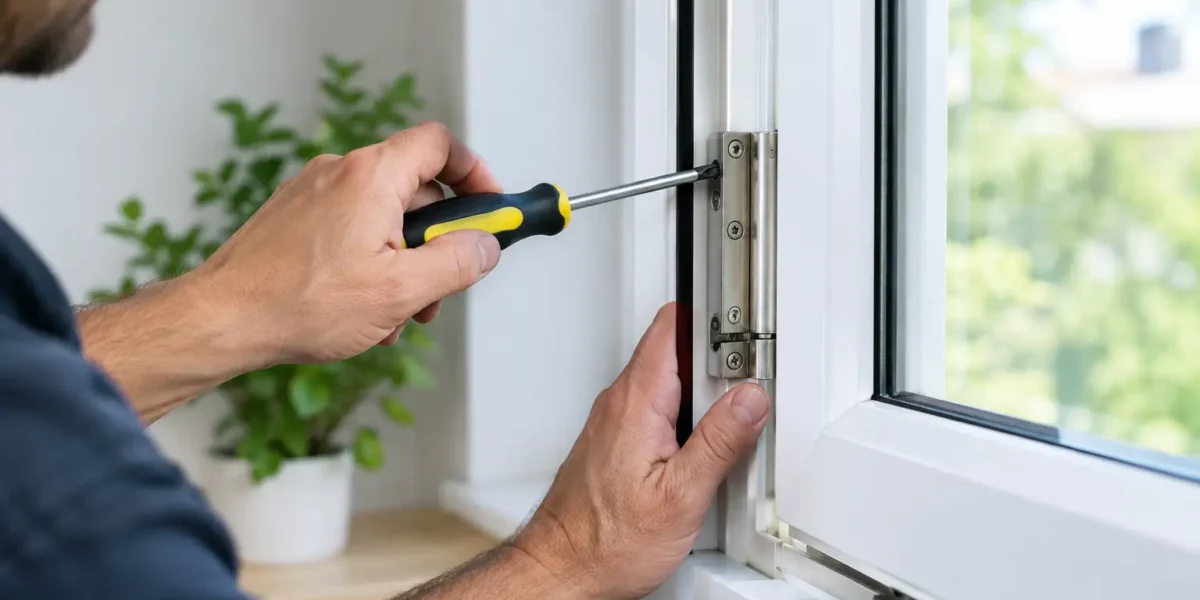
With the window open, check the screws securing the hinge to both the frame and the sash. Tighten any that have backed out, but do not overtighten them. Screws driven too hard into uPVC can strip the hole or distort the hardware.
Test the window after tightening. If it now closes evenly and the handle locks without resistance, you may have solved the problem. If a screw spins without gripping, the fixing hole may be stripped. That repair can require a larger specialist fixing or a replacement hinge, depending on the window profile and hardware.
Check whether the sash needs adjustment
Some windows have adjustable hinge components or adjustment points around the locking side. These can provide a small correction when a sash is slightly out of line. The exact method varies by manufacturer, so do not turn unidentified screws at random. A locking adjustment made in the wrong direction can make the window harder to secure.
As a general rule, make one small adjustment at a time, then close and lock the window to test it. Look for an even reveal around the sash and frame, smooth movement, and a handle that turns without excessive force. The goal is not simply to make the window shut. It must also compress the weather seal evenly to keep out drafts and rain.
When Friction Stays Need Replacing
Friction stays are usually replaced rather than repaired when they are bent, badly corroded, loose at the joints, or no longer holding the window open. A common sign is a sash that falls shut in light wind or drops onto the bottom of the frame despite tight screws.
Replacing them is possible for an experienced DIYer, but accuracy matters. The new stays must match the original length, stack height, opening angle, handedness, and fixing positions. Even a hinge that looks similar can sit differently in the frame, causing poor alignment or preventing the window from locking.
To replace friction stays safely, support the sash before removing any fixings. Take clear measurements of the existing hinge and photograph its position. Remove and replace one hinge at a time where possible, rather than taking both off at once. Once fitted, test the window gently before fully tightening everything.
There is a trade-off here. Ordering and fitting the wrong hinge may cost more in time and replacement parts than arranging a professional repair from the outset. This is especially true for egress windows, large opening sashes, upper-floor windows, and commercial properties where safe operation is essential.
Common Problems That Are Not Actually Hinge Faults
A hinge can look like the culprit when the real issue lies elsewhere. If the window is difficult to lock but moves freely, the locking cam, keeps, or handle gearbox may need attention. If condensation appears between panes, the sealed glass unit has failed, not the hinge. If the whole frame is warped or moving away from the wall, hinge adjustment will not correct it.
Seasonal expansion can also affect uPVC windows. Hot weather may make a tight-fitting sash temporarily harder to close, while cold weather can expose gaps around worn seals. Small changes in movement are normal, but repeated scraping, drafts, or difficulty locking deserve a closer inspection.
Never ignore a window that will not lock securely. It affects home security, weather protection, and energy efficiency all at once. A properly aligned window should close smoothly, engage the lock cleanly, and press evenly against its seals.
When to Call a Window Repair Specialist
Professional help is the sensible choice when the sash is heavy, the glass appears stressed, screws have pulled from the frame, or the window needs both hinge and lock work. It is also worthwhile if you can see rusted stays, broken hinge arms, cracked uPVC, or daylight around a closed window.
For Manchester property owners, a local repair visit can identify whether the best value is an adjustment, new friction stays, replacement handles or locks, fresh seals, or a larger window repair. Bee Manchester can assess the full window rather than treating one stiff hinge in isolation. That means the finished repair can support secure locking, smooth operation, and better thermal performance.
A hinge repair should leave your window quieter, easier to use, and properly sealed against the weather. If a careful clean and tightening does not achieve that result, stop forcing the mechanism and have the hardware assessed before the problem spreads to the frame or locking system.