

-
On October 16, 2026
Commercial Entry Door Options for Safer Stores
A commercial front door has a tough job. It welcomes customers, protects stock and staff, handles constant use, and gives people their first impression of your premises before they step inside. The right commercial entry door options balance all of those demands, rather than forcing you to choose between a secure entrance and one that looks the part.
For Manchester shops, offices, rental buildings, salons, clinics, and other small commercial properties, the best choice usually comes down to how the entrance is used. A quiet office has different needs from a busy retail unit, and a side service entrance needs a different level of protection than a customer-facing glass door. Getting those details right early can save money on repairs, heat loss, and avoidable security concerns later.
Start With How the Door Will Be Used
Before choosing a material or color, consider who uses the entrance and how often. Is it a main customer entrance that opens hundreds of times a day? Does it need to let in daylight and display your products? Is it a staff-only door at the rear of the building, where security matters more than visibility? These answers narrow the field quickly.
Traffic level matters because a door can be strong but still be poorly suited to repeated heavy use. Busy entrances often benefit from commercial-grade hinges, closers, handles, and threshold systems designed to take the strain. A well-fitted door should close reliably, latch cleanly, and avoid dragging across the floor as seasons change.
Access also needs thought. A wider opening can make a premises easier to use for customers with strollers, deliveries, mobility aids, and moving equipment. Where several people enter at once, double doors may be more practical than trying to make one oversized leaf do every job.
Commercial Entry Door Options by Material
Aluminum doors for busy, glazed entrances
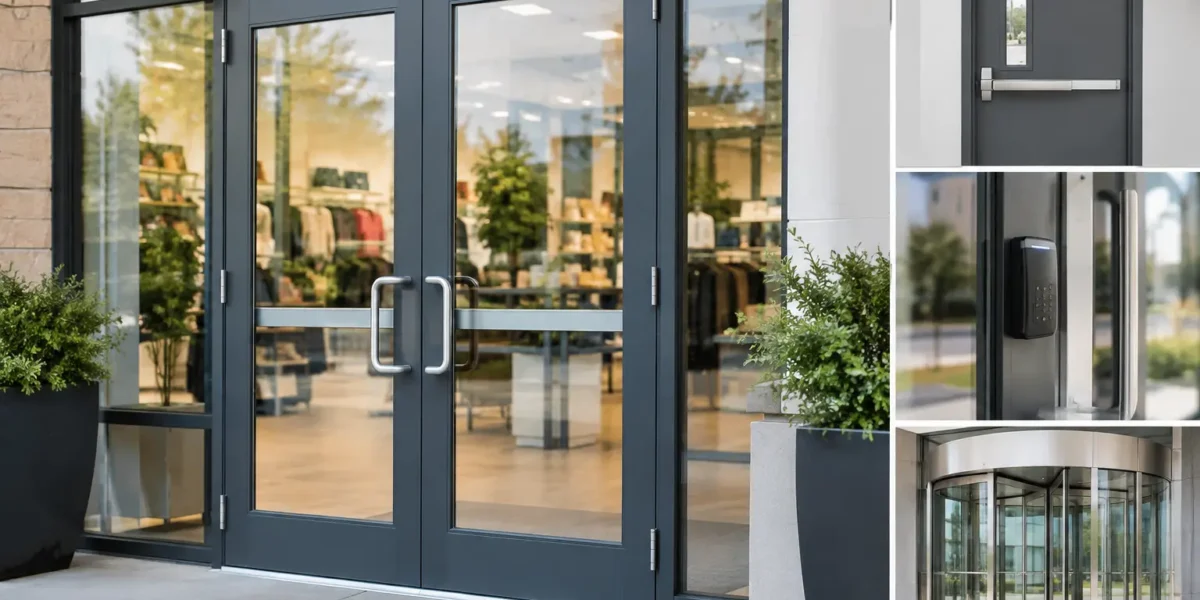
Aluminum is a popular choice for modern storefronts, offices, and communal entrances. Its slim but strong frame can support larger glazed panels, giving a bright, open look without making the entrance feel flimsy. It is also low maintenance and resists rust, which is useful in Manchester’s wet weather.
This option suits businesses that want maximum daylight, clear sightlines, or a contemporary finish. Aluminum can be powder-coated in a broad range of colors, helping the door work with your signage, window frames, or wider brand identity. The trade-off is that quality glazing, thermal breaks, and professional installation matter greatly. A poorly specified aluminum door can lose heat more readily than a well-insulated alternative.
Steel doors for security-led areas
Steel entry doors are a sensible fit for rear exits, storage areas, workshops, service corridors, and premises where resistance to forced entry is the priority. They are hard-wearing, difficult to damage, and available with reinforced frames, security hinges, vision panels, and a range of locking arrangements.
A solid steel door is not always the best choice for the main public entrance, particularly where appearance and natural light drive footfall. But it can be an excellent second line of defense at the less visible parts of a building. Insulated steel doors can also help control drafts and improve comfort in spaces that are otherwise expensive to heat.
uPVC doors for practical value
For smaller offices, rental properties, community spaces, and lower-traffic commercial settings, uPVC can offer a cost-effective and energy-efficient solution. It is easy to maintain, available in different finishes, and can be fitted with secure multi-point locking systems.
The key is to match uPVC to the setting. It is generally better suited to moderate-use entrances than a heavily used retail doorway. A quality reinforced profile, strong hardware, and proper fitting make a major difference to performance. For landlords, it can be a practical option where dependable insulation and straightforward upkeep are high on the list.
Composite doors for a stronger traditional look
Composite doors combine materials to create a thicker, solid-feeling entrance with good insulation and strong visual appeal. They are particularly useful for converted properties, professional offices in older buildings, and commercial spaces that need a warmer, more traditional presentation than aluminum provides.
With a wide choice of panel designs, glazing styles, and colors, a composite door can be tailored to suit the building rather than looking like an afterthought. They work especially well where the front entrance needs to feel welcoming but still needs dependable locking and weather resistance.
Security Is More Than the Door Panel
A heavy door is only as secure as the frame, lock, hinges, glass, and installation behind it. This is where many property owners can get caught out. Upgrading a door slab while leaving worn hinges, weak cylinders, or loose frames in place does not create a properly secure entrance.
For commercial entry doors, look at the full assembly. Multi-point locking can provide several points of engagement around the frame. High-security cylinders can help reduce the risk of common lock attacks. Hinge bolts, reinforced strike plates, and security-rated handles add further protection, especially on outward-opening doors.
If you need glazing for visibility or natural light, consider toughened or laminated glass where appropriate. A large glass panel can make a front entrance more inviting, but it should not become the easiest point of attack. The best specification depends on the location, your insurance requirements, the door’s position, and whether staff are on site after hours.
Keep Energy Bills and Drafts in Check
A commercial entrance can be a surprisingly large source of heat loss. Gaps around an old frame, tired weather seals, cracked glazing, and a door that no longer closes squarely all let cold air in. That makes reception areas uncomfortable and can put more pressure on heating systems.
Insulated door cores, double-glazed units, thermal-break frames, and correctly fitted seals all help. For a glazed aluminum entrance, ask how the frame and glass work together thermally. For a solid door, check the quality of its core and whether the threshold will seal properly without creating a trip hazard.
Energy efficiency is not only about the product specification. Installation is part of the result. A door that is excellent on paper can still perform badly if it is measured inaccurately, fitted out of square, or finished without careful sealing around the opening.
Don’t Overlook Hardware and Daily Operation
The handle is often the first part of a commercial entrance to show wear. A smart-looking door with a loose pull handle, stiff closer, or unreliable latch sends the wrong message to customers and frustrates staff every day. Commercial-grade hardware is a worthwhile investment where use is frequent.
Door closers should be adjusted so the door closes securely without slamming. Panic hardware may be needed on certain escape routes, while keypad, fob, or digital access systems can make staff entry easier to manage. These choices should always be assessed against the building’s fire safety and access requirements, rather than added as an afterthought.
A qualified installer can also advise whether an existing frame can be retained, or whether replacing the complete door set will give better security and longevity. Sometimes a repair to hinges, locks, glazing, or alignment is enough. Other times, repeatedly fixing a failing door only delays the replacement that the property genuinely needs.
Style Still Has a Commercial Job to Do
Your entrance tells people whether a business feels established, cared for, accessible, or difficult to approach. That does not mean every commercial door needs to be flashy. A clean frame finish, well-chosen glazing, coordinated hardware, and a color that suits the building can make a real difference.
For customer-facing properties, glass can create openness and improve visibility from the street. For private offices or clinical settings, frosted or obscured glazing can retain daylight while adding privacy. Dark frames can look sharp and contemporary, while a colored composite door can bring character to a more traditional frontage.
At Bee Manchester, the goal is to keep the process buzzing with quality, not guesswork. A tailored survey can identify the practical details that photographs and online product lists cannot show, from uneven openings to worn locks and exposure to wind and rain.
The best commercial entrance is one your customers barely have to think about: it opens easily, closes securely, looks right for the premises, and keeps doing its job day after day. Start with how your building is used, then choose a door system built to meet that reality.