

-
On November 21, 2026
Do Composite Doors Warp? Causes and Prevention
A front door that suddenly catches on the frame, lets in a draft, or needs a shoulder nudge to close can make any property owner nervous. So, do composite doors warp? Usually, a well-made and correctly installed composite door is highly resistant to warping, but it is not completely immune to movement, heat, fitting issues, or damage.
That distinction matters. A door that feels stiff is not automatically warped, and replacing it before finding the real cause can be an expensive mistake. For Manchester homeowners, landlords, and business owners, a proper assessment can separate a minor adjustment from a genuine door problem.
Do Composite Doors Warp? The Straight Answer
Composite doors are designed to stay stable far better than traditional timber doors. Their structure combines several materials, often including a solid or insulated core, reinforced sections, and a durable outer skin. This layered construction helps the door handle changing temperatures, rain, and day-to-day use without absorbing moisture and twisting in the way untreated wood can.
However, “resistant” does not mean “impossible.” Extreme or repeated heat exposure can cause some composite doors to bow slightly. Poor installation can put the slab under tension from day one. Hinges, locks, and frames can also move or wear, creating symptoms that look very much like warping.
The practical answer is that quality composite doors should not warp under normal conditions. If yours appears bent, sticks regularly, or no longer lines up with the frame, it deserves a closer look rather than a guess.
What Warping Actually Looks Like
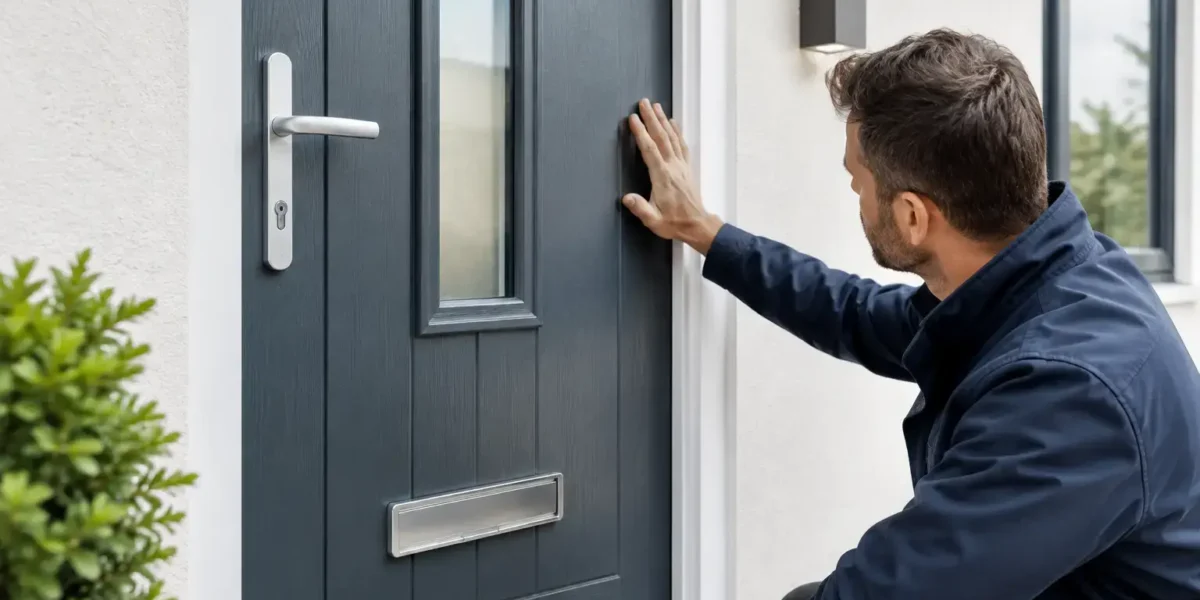
Warping means the door slab has changed shape. It may bow outward in the center, curve along one edge, or twist so that opposite corners no longer sit flat in the frame. On a true warp, the gap around the door often looks uneven, even after hinge adjustment.
A common sign is a door that seals at the top and bottom but leaves a visible gap around the middle. You may notice daylight, cold air, traffic noise, or rainwater getting past the weather seals. The door might also be difficult to lock because the multipoint lock hooks and rollers cannot align cleanly with their keeps.
That said, many door faults have a simpler explanation. A dropped hinge, loose handle, swollen weatherstrip, misaligned lock keep, or movement in the frame can all make a straight door behave like a warped one. This is why a hands-on inspection is worth far more than relying on the symptoms alone.
Why Composite Doors Can Bow or Distort
Heat is one of the most common contributing factors. Dark-colored doors, especially black, deep blue, dark gray, or bold red shades, absorb more solar heat than lighter finishes. If a door faces strong afternoon sun with little shelter, one side can become much hotter than the other. Over time, that uneven expansion may put stress on the panel.
The risk depends on the product, its construction, the color and finish, and the location of the property. A dark door under a covered porch has a very different exposure level from one on a south- or west-facing facade with uninterrupted sun. Heat alone does not mean a door will fail, but it should influence the door and color choice.
Installation is just as significant. A frame that is not square, level, and properly secured can force the door out of alignment. If the hinges are set incorrectly or the frame shifts as the building settles, the door may scrape, bind, or fail to lock smoothly. Those are fitting issues, but they can place unnecessary strain on the door over time.
Damage can play a role too. Heavy impacts, repeated slamming, attempted forced entry, or unsuitable drilling for hardware can affect a door’s structure. In commercial settings, where doors receive more frequent use, worn hinges and closers can create alignment problems sooner than expected.
Warping vs. Everyday Adjustment Problems
A composite door has moving parts, and those parts occasionally need adjustment. Seasonal temperature changes can alter clearances by a small amount. Hinges can settle, hardware can loosen, and weather seals can compress with use. None of this necessarily suggests poor quality.
If your door was working well and has gradually become hard to close, start with the basics. Check whether the problem happens all day or only during hot weather. Look at the gaps around the door and see whether the latch lines up with the strike plate. Notice whether lifting the handle changes how it sits in the frame.
A door that catches at one corner often points to hinge adjustment or frame alignment. A lock that only works when you push or pull the door usually indicates that the keeps need realigning. A door that is visibly curved when checked against a straight edge is more likely to have a slab issue.
Avoid forcing the handle or repeatedly slamming the door shut. Multipoint locking systems are built for security, not for overcoming a badly aligned frame. Forcing them can damage the gearbox, cylinders, keeps, or handle mechanism, turning a manageable repair into a bigger job.
How to Reduce the Chance of a Composite Door Warping
The best protection starts before installation. Choose a reputable door system suited to the exposure of your property, and be realistic about color choices on an unshaded, sun-facing entrance. A darker finish can look striking and deliver serious curb appeal, but it may need more careful product selection where heat buildup is likely.
Correct installation is non-negotiable. The frame should be measured accurately, packed and fixed securely, and checked for square before the final adjustments are made. The door should close freely, seal evenly, and lock without excessive pressure. These details are where dependable workmanship earns its buzz.
Once fitted, simple care helps preserve performance. Clean the outer surface and drainage channels with mild soapy water, keep grit away from hinges and seals, and use an appropriate lubricant sparingly on moving lock components. Do not paint or cover a composite door with products not approved for its finish, as this can affect appearance, heat behavior, and warranty coverage.
It also pays to act early. A small alignment correction is usually straightforward. Leaving a door that scrapes, sticks, or needs force to lock can wear down both the hardware and the frame.
When Repair Is Enough and When Replacement Makes Sense
In many cases, repair is the sensible route. Hinges can be adjusted, keeps repositioned, seals renewed, cylinders upgraded, and multipoint locks repaired or replaced. If the door slab is sound, these changes can restore smooth operation, reduce drafts, and improve security without the cost of a new door.
Replacement becomes more likely if the slab has permanently bowed, the outer skin is cracked or delaminating, the core has been compromised, or repeated adjustments cannot create an even seal. A severely distorted door may also undermine security because the locking points cannot engage correctly across the frame.
For landlords and small business owners, this decision should include the condition of the lock and frame, not just the panel. A door that looks acceptable but cannot lock reliably is not doing its main job. For homeowners, replacement can also be an opportunity to improve insulation, choose a more suitable finish, and update the overall look of the entrance.
Get the Cause Checked Before You Commit
If your composite door is catching or showing gaps, do not assume the worst. Take a few photos of the gaps, note whether heat seems to make the issue worse, and avoid forcing the lock. An experienced door specialist can check the frame, hinges, lock alignment, seals, and slab condition to identify what is actually happening.
Bee Manchester can assess whether a targeted repair will put things right or whether replacement is the safer long-term answer. A front door should close with confidence, lock without a fight, and keep your property secure and comfortable – exactly as a quality entrance should.