

-
On November 19, 2026
Best Locks for Front Door Security in 2026
A front door can look solid, freshly painted, and perfectly fitted, yet still be the weak point in a property if its lock is outdated, poorly installed, or matched to the wrong type of door. The best locks for front door security are not always the most expensive option. They are the locks that suit your door construction, close securely every time, resist common attack methods, and are fitted with real precision.
For homeowners, landlords, and small business owners, the goal is simple: make the door difficult to force, manipulate, or bypass without making daily access a nuisance. A good locking upgrade should also work with the appearance and operation of the door, whether it is timber, composite, uPVC, aluminum, or a glazed entrance.
What Makes a Front Door Lock Worth Buying?
A lock should be judged as part of the whole door system, not as a standalone piece of hardware. The strongest deadbolt can still be undermined by a weak strike plate, loose frame, thin door panel, or worn hinges. Security is built in layers, and the lock is one of the most visible layers.
Start with the lock type your door is designed to take. A traditional timber door may use a deadbolt and latch, while a uPVC or composite door commonly uses a multipoint mechanism operated by lifting the handle. Aluminum and commercial doors can have different hardware again. Forcing an unsuitable lock into a door is not an upgrade – it can compromise fit, weather sealing, and long-term reliability.
Look for tested security performance where available. In the United States, ANSI/BHMA Grade 1 is generally the highest residential and light-commercial grade, with Grade 2 offering dependable performance for many homes. The exact rating is only one part of the decision, but it offers useful evidence that the hardware has been tested for strength, cycle life, and resistance to impact.
The Best Locks for Front Door Types
Deadbolts for solid timber and metal doors
A quality single-cylinder deadbolt remains a practical choice for many front doors. It uses a key outside and a thumb turn inside, making it easy to leave quickly in an emergency. Choose a model with a solid bolt, reinforced strike plate, and long screws that anchor into the wall framing rather than only the door jamb.
Deadbolts are straightforward, familiar, and usually cost-effective. They work particularly well on solid wood, fiberglass, and steel doors with enough thickness and a properly aligned frame. However, a deadbolt is not a cure for a poorly fitted door. If the gap around the door is excessive or the frame moves under pressure, repair work should come before a new lock.
Double-cylinder deadbolts require a key on both sides. They may be considered where nearby glass could allow someone to reach the inside thumb turn, but they can slow exit during a fire or other emergency. Check local fire and building requirements before choosing one, especially for rental and commercial properties.
Multipoint locks for uPVC and composite doors
Multipoint locking systems are among the best locks for front door security when fitted to compatible uPVC and composite doors. Instead of securing at one point, lifting the handle engages several locking points along the edge of the door – commonly hooks, rollers, bolts, or mushrooms – before the cylinder is turned to lock them in place.
That spread of locking points helps resist levering and keeps the door pulled tightly against its seals. It also supports better weather performance, which matters on exposed entrances. The trade-off is that multipoint systems rely on correct alignment. If a door has dropped on its hinges, the handle feels stiff, or the key does not turn smoothly, do not force it. The mechanism may need adjustment before a minor issue becomes a full lockout.
The cylinder in a multipoint door deserves just as much attention as the mechanism. Choose a high-security cylinder designed to resist snapping, drilling, and picking where those risks are relevant. The cylinder should sit correctly within the handle and door surface. One that protrudes too far can create an avoidable point of attack.
Smart locks for controlled access
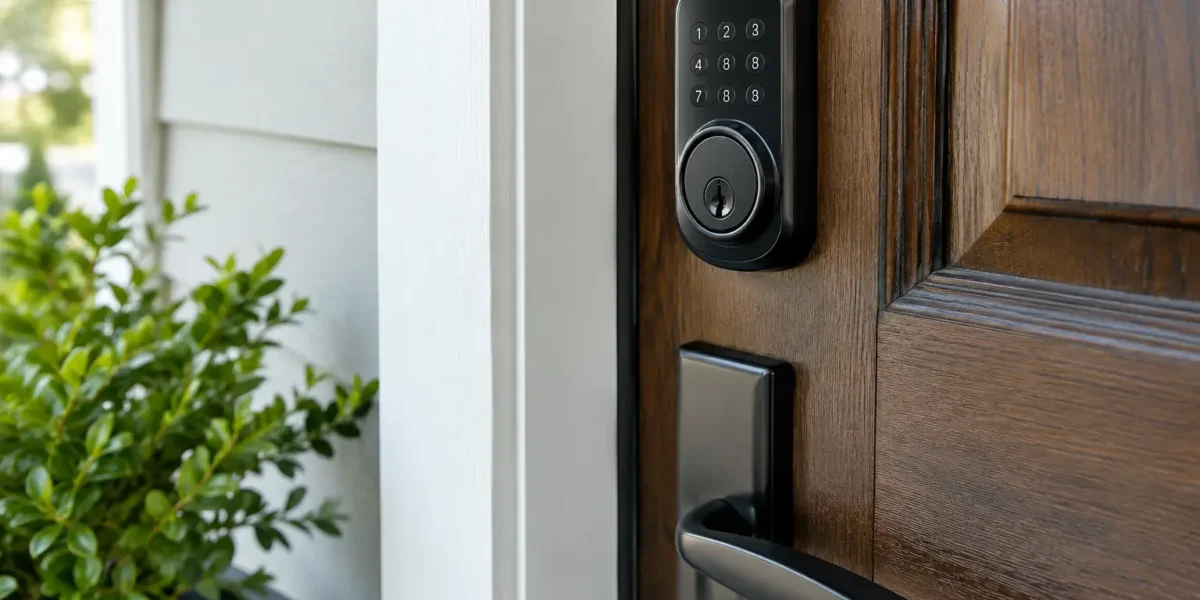
Smart locks can be an excellent option for busy households, landlords managing access, and small businesses that need to issue temporary codes. Depending on the model, they can provide keypad entry, phone-based control, activity logs, auto-locking, and guest access schedules.
Convenience should not overtake the basics. Select a smart lock with a physical key override, strong encryption, reliable battery alerts, and a compatible deadbolt or multipoint setup. Consider who needs access, how often codes will change, and what happens if the battery runs low. A smart lock is at its best when it improves control without becoming a complicated daily ritual.
For a rental property, digital codes can reduce the need to collect and copy keys between tenancies. For a family home, they can be useful for children, visitors, or tradespeople. Still, a smart lock should be installed on a sound door with a secure frame – technology cannot compensate for weak joinery.
Mortise locks for traditional and commercial entrances
Mortise locks fit into a pocket cut into the edge of the door and can provide substantial mechanical strength when professionally installed. They are common on traditional timber doors and some commercial entries, where durability and a neat finish are both priorities.
A mortise lock can combine a latch and deadlocking function in one unit, but the correct model depends on the door thickness, handing, frame condition, and intended use. Cutting a mortise inaccurately weakens the door, so this is not an area for rushed fitting. A well-installed mortise lock is discreet, durable, and especially suitable when preserving the character of an older door matters.
Do Not Ignore the Hardware Around the Lock
A lock can only do so much if the components around it are weak. The strike plate is particularly important because it takes the force when a door is kicked or pushed. A reinforced strike plate secured with long structural screws is a simple improvement that can make a real difference.
Check the door frame, hinges, handle set, and glazing too. Hinges on outward-opening doors may need security studs or specialized hardware. Decorative handles should be sturdy enough to protect the cylinder rather than leave it exposed. If there is glass close to the locking area, consider the entire entry design and the risks posed by reach-through access.
For multipoint doors, handles are more than a finishing detail. A quality security handle can shield the cylinder and help prevent tampering. It should feel firm, operate smoothly, and suit the door’s style. Good security does not have to make a front entrance look industrial or out of place.
Common Mistakes When Replacing a Front Door Lock
The most common mistake is buying a lock based on appearance or a single security claim. A polished finish and a heavy feel may be reassuring, but compatibility and fitting are what determine whether the lock performs as intended.
Another mistake is replacing only the cylinder when the multipoint mechanism is worn, or replacing only the mechanism when the door is misaligned. Stiff operation is a warning sign, not a reason to use more force. A locksmith or door specialist should assess why the lock is struggling before parts are swapped.
Property owners also sometimes overlook key control. After moving into a new home, changing tenants, losing keys, or completing renovations, rekeying or replacing cylinders is sensible. You cannot know how many copies of an old key are still in circulation.
Finally, avoid treating installation as an afterthought. Incorrectly positioned keeps, loose screws, an uneven gap, or a poorly sized cylinder can reduce the value of even premium hardware. A professional fitting protects the door, preserves warranties where applicable, and ensures the lock engages cleanly.
Choosing the Right Level of Security
The right choice depends on the door, location, and how the property is used. A detached home with a solid timber door may benefit most from a Grade 1 deadbolt, reinforced strike plate, and dependable exterior handle. A composite or uPVC entrance may be better served by a properly adjusted multipoint system and a high-security cylinder. A rental or small office may find that controlled smart access offers meaningful day-to-day value.
There is no need to buy the most complicated lock simply because it has the longest feature list. The best outcome is a door that closes neatly, locks without effort, withstands attempted force, and gives the people inside confidence every time they turn the key.
If your lock sticks, your handle has become loose, or your door needs a security upgrade, have the full door and frame checked rather than guessing at the fix. Bee Manchester can help match secure, attractive hardware to the way your entrance actually works – keeping your property buzzing with quality, not lock-related worry.