

-
On July 28, 2026
Composite Doors vs uPVC: Which Is Right?
A front door has a tougher job than most people give it credit for. It needs to welcome guests, stand up to Manchester rain, help keep heating bills in check, and make an intruder think twice. That is why the composite doors vs uPVC decision is about more than picking a color you like. The right answer depends on your property, budget, security priorities, and how long you expect the door to serve you.
Both options can be smart upgrades from an aging timber door or a poorly fitted older unit. Both are low-maintenance, available in a wide range of designs, and can be fitted with modern locking hardware. But their construction, feel, price, and long-term performance are different enough to deserve a closer look.
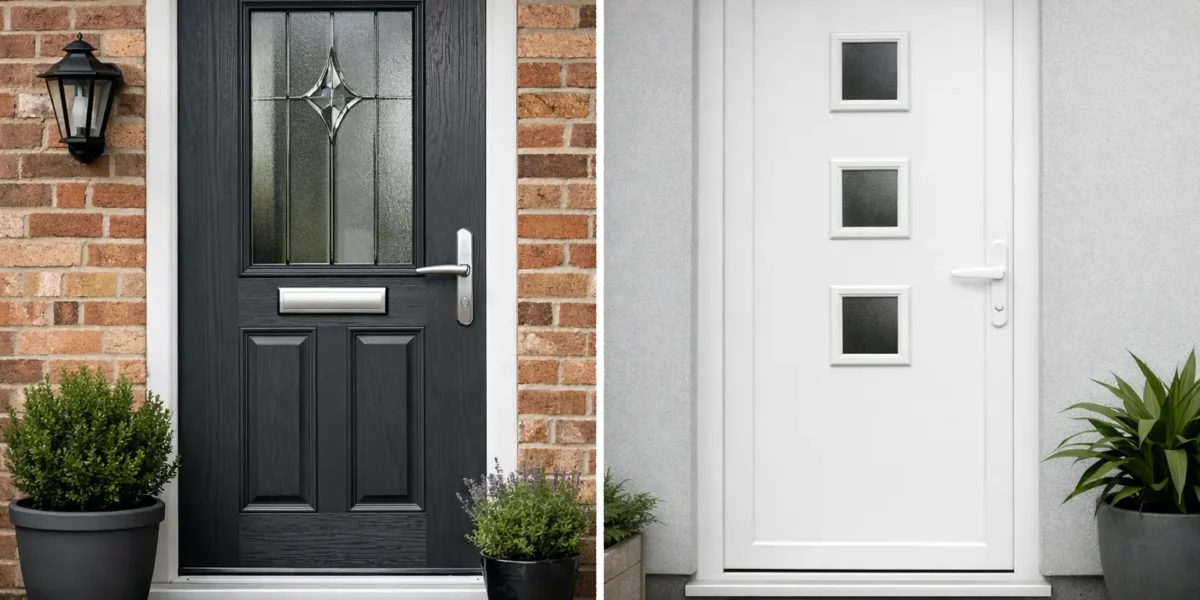
Composite Doors vs uPVC: The Key Difference
A uPVC door is made primarily from unplasticized polyvinyl chloride, usually with an insulated internal core and reinforced sections where needed. It is lightweight, weather-resistant, and a familiar choice for front, rear, and side entrances across Manchester.
A composite door uses several materials in layers. Depending on the design, this may include a solid timber core, high-density foam, reinforced frame, and a durable outer skin such as glass-reinforced plastic. The result is a thicker, heavier door designed to combine the traditional look of timber with modern insulation and security.
In simple terms, uPVC is usually the more budget-friendly practical option. Composite is typically the more premium choice for homeowners who want a substantial feel, stronger visual impact, and enhanced performance at the front of the house.
Security: A Door Is Only as Strong as Its Whole System
Security starts with the slab, but it does not end there. The frame, hinges, cylinder, multipoint lock, letter plate, glazing, and installation quality all matter. A high-quality uPVC door with the right reinforcement and locking system can provide dependable home security. It is a major improvement on many dated doors, especially when fitted correctly and paired with a secure cylinder.
Composite doors tend to have an advantage in sheer solidity. Their thicker construction and dense core make them feel more substantial and can offer greater resistance to forced entry. This makes them especially appealing for a main entrance that faces a street, shared driveway, or busy area.
That said, paying for a premium door while keeping an old, weak lock is not a wise trade-off. If security is your main concern, ask about the full door set rather than the panel alone. Quality multipoint locking, anti-snap cylinders where appropriate, secure hinges, and a properly aligned frame make the complete setup work as it should.
For landlords and small commercial property owners, the same principle applies. A durable door with reliable locks can reduce maintenance calls and give tenants, staff, and visitors greater peace of mind.
Insulation and Weather Performance
A draughty entrance can make a hallway feel cold even when the heating is on. Modern uPVC and composite doors are both designed with insulating cores, compression seals, and tightly fitting frames to help reduce heat loss and block unwanted drafts.
Composite doors usually offer the stronger thermal performance because they are thicker and use more insulating materials. For homeowners upgrading an exposed front door, this can be a worthwhile benefit. It may also help with outside noise, which is useful on busier Manchester roads.
A well-made uPVC door can still perform very well. Its insulating chambers and weather seals make it a strong choice for side doors, rear entrances, utility rooms, and rental properties where value matters. The key is to avoid judging performance by material alone. A poor installation can leave gaps around even the best door, while a carefully measured and fitted uPVC door can make a noticeable difference to comfort.
Glazing choices also affect results. If your door includes sidelights or decorative glass, ask for energy-efficient glazed units that complement the door’s overall performance without compromising privacy.
Style and Curb Appeal
This is where composite doors often create the bigger first impression. They can replicate the depth, texture, and proportions of a painted timber door while avoiding the regular sanding and repainting timber can demand. From classic cottage styles to clean, contemporary designs, composite doors work well on period terraces, suburban family homes, and newer developments.
Color choices are broad, too. A deep blue, heritage green, charcoal gray, black, or statement red can give a property a completely different character. Decorative glazing, door knockers, handles, and letter plates provide the finishing touches. When chosen carefully, these details make a front entrance feel considered rather than off-the-shelf.
uPVC doors have come a long way in appearance. They are available in white, gray, black, wood-effect finishes, and panel styles that suit many properties. They may not have quite the same weighty, premium look as composite, but they can look neat, fresh, and highly appropriate, particularly on a rear or side elevation.
If matching existing uPVC windows is important, a uPVC door can create a consistent appearance. If you want the entrance to become a focal point, composite is usually the option that gets more homeowners buzzing.
Cost: Upfront Price Versus Long-Term Value
uPVC doors generally cost less to supply and install than composite doors. That makes them an appealing choice when replacing several doors, improving a rental property, or working to a firm budget. You still gain low maintenance, good insulation, and modern security options without stretching the project unnecessarily.
Composite doors command a higher upfront price because of their materials, construction, and design options. Whether they are worth it depends on where the door is going and what you want from it. For a principal front door, many homeowners see the additional investment as worthwhile for the security, visual impact, and substantial feel.
Think about the door’s role rather than assuming the most expensive option is always best. A composite door may be ideal at the main entrance, while a quality uPVC door may be the sensible choice for a garage access door or utility entrance. This balanced approach can put your budget where it has the greatest day-to-day effect.
When comparing quotes, check what is included. Measurements, removal of the old door, frame condition, glazing, hardware, locks, fitting, and finishing can all affect the final cost. A clear quote protects you from surprises and makes it easier to compare like for like.
Maintenance and Lifespan
Neither composite nor uPVC doors should need the demanding upkeep associated with traditional timber. Routine care is straightforward: clean the surface with mild soapy water, wipe the frame and seals, and keep drainage channels clear. Avoid harsh abrasives or solvents that can damage finishes.
uPVC is particularly easy to maintain and does not rot. Over many years, lower-grade products or poorly exposed white doors may show some weathering or discoloration, though quality modern units are made to cope with normal conditions.
Composite doors are designed to resist warping, cracking, and fading, with a durable outer skin that handles everyday weather well. They are often the stronger long-term choice where an entrance gets frequent use or faces harsh conditions. Still, no door is maintenance-free forever. Hinges and locks may need adjustment, seals can wear, and hardware may eventually need replacing.
A door that catches, sticks, lets in a draft, or has a loose handle should be dealt with early. Small adjustments can prevent bigger issues and help your investment keep doing its job.
Which Door Suits Your Property?
Choose a composite door if your front entrance needs maximum presence, you value a heavier and more premium feel, or security and insulation are leading priorities. It is particularly well suited to homeowners planning a long-term upgrade and wanting a design that lifts curb appeal.
Choose a uPVC door if you want a cost-effective, dependable replacement with good energy efficiency and low maintenance. It is an excellent fit for rear and side doors, rental properties, and projects where practical performance matters more than making a style statement.
There is no one-size-fits-all answer. The best door is one that suits the opening, matches the building, meets your security needs, and is fitted with care. A poorly selected or badly installed door will never give you the full benefit of its materials.
For Manchester property owners, it pays to look at samples, consider the exposure of the entrance, and discuss locks and hardware as part of the same project. Bee Manchester can help turn those choices into a door that looks right, closes securely, and keeps your home feeling warm and well protected for years to come.