

-
On October 30, 2026
How to Replace Door Handles Without Compromising Security
A loose handle that droops, rattles, or sticks can make an otherwise solid door feel neglected. It can also be more than a cosmetic nuisance: on an exterior door, a poorly fitted handle may affect how the latch, deadbolt, or multi-point lock engages. Learning how to replace door handles starts with identifying what is actually fitted to your door, then choosing hardware that matches it precisely.
For an interior bedroom or closet door, this is often a straightforward home project. For a front, patio, composite, or uPVC door, the handle is part of a bigger security system. A smart upgrade should look great, feel comfortable every day, and keep the locking mechanism working exactly as it should.
Know Your Door Handle Before You Buy
Door handles are not one-size-fits-all. The first job is to establish whether you have a simple lever handle with a tubular latch, a handle and lockset, a mortise lock, or a multi-point locking system. Interior handles commonly use a square spindle that passes through the latch. Exterior hardware may use a spindle alongside a key cylinder, thumb turn, deadbolt, or several locking points running up the edge of the door.
Take clear measurements before ordering anything. Measure the distance between the centers of the screw holes, the length and width of the backplate or rose, and the thickness of the door. If the handle works with a key cylinder, measure the distance from the center of the handle spindle to the center of the keyhole. This is often called the PZ measurement on certain exterior handle systems.
Also check the handing of the door. Stand outside and look at the hinges. Hinges on the left generally mean a left-hand door, while hinges on the right indicate a right-hand door. Not every lever is handed, but many exterior handlesets and thumb-latch designs are. Buying the wrong version can leave you with a handle that points upward, clashes with the frame, or cannot operate properly.
Finish matters as well, especially on a busy front door. Satin nickel, chrome, matte black, brass, and bronze can all work beautifully, but choose a finish made for the location. A handle exposed to rain, strong sunlight, salty air, or constant commercial use needs durable protective coating, not just an attractive first impression.
Tools You Will Usually Need
Most handle replacements need only basic tools, but working carefully is more valuable than working quickly. Gather a screwdriver that fits your fixings, a tape measure, a pencil, and an Allen key if the handle has a small grub screw. You may also need a drill and correctly sized bits if the new backplate does not cover the old screw positions.
For an exterior door, keep the old handle and screws nearby until the new set has been tested. It is much easier to compare parts as you work than to discover halfway through that the supplied spindle is too short or the new screw spacing is different.
How to Replace Door Handles Step by Step
Start with the door open. This avoids the frustrating possibility of removing the working handle, fitting the new one incorrectly, and finding yourself unable to open the door again. If you are replacing a locking exterior handle, leave any keys where you can reach them and avoid working alone if the door is your only entry point.
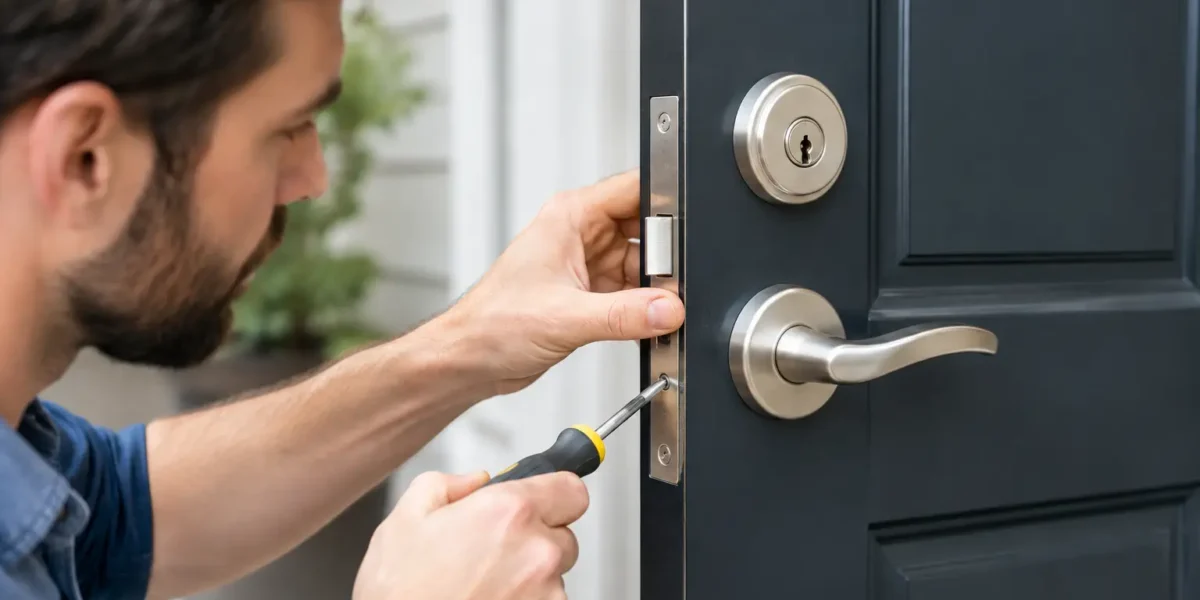
First, remove the old handle. On many interior levers, you will see two screws on the backplate. Remove these while holding the handle on the other side so it does not fall and scratch the door. Some modern handles conceal their screws beneath a decorative cover. Gently turn or pry off the cover according to its design, then undo the fixings beneath it.
Pull both handle halves away from the door and slide out the square spindle. Inspect it before reusing it. A spindle that is bent, heavily worn, or too short can cause a new handle to feel loose or fail to retract the latch fully. New handles often include a spindle, but check its length against the door thickness and the handle instructions.
Next, inspect the latch or lock case. Turn the latch with a screwdriver and make sure it springs back cleanly. If it sticks, feels gritty, or does not retract fully, replacing only the handle will not solve the real issue. The same goes for a multi-point locking door: lift the existing handle and see whether every locking point engages smoothly before changing anything.
Fit the spindle through the latch or lock, then position both new handle halves on either side of the door. Keep the handles level and insert the fixing screws by hand first. Tighten each side gradually, alternating between screws so the backplates sit flat against the surface. Overtightening can pinch the mechanism, damage the door skin, or make the handle stiff.
With the screws secure, operate the handle several times while the door remains open. The latch should retract fully and spring back when you release it. If there is a grub screw, align it with the flat section or groove on the spindle, then tighten it firmly without stripping the small screw.
Close the door and test it again. Check that the latch enters the strike plate without forcing the door, and make sure any lock engages and releases smoothly with the handle in its normal resting position. A handle should not need to be lifted, pushed, or twisted in an unnatural way just to close the door.
Exterior Doors Need an Extra Security Check
Replacing handles on exterior doors calls for more caution because the hardware is often tied directly to the property’s security. On a door with a euro cylinder, make sure the new handle does not prevent the cylinder from sitting correctly or leave it protruding excessively. On a multi-point lock, the handle must lift and return freely, or you could put strain on the gearbox inside the door.
Do not assume a new handle will correct a door that has dropped on its hinges. If the latch scrapes the strike plate, the locking points do not line up, or you need to slam the door to lock it, the issue may be alignment rather than hardware. Replacing the handle without addressing alignment can shorten the life of both the handle and the lock.
This is particularly relevant for composite, uPVC, French, and patio doors. Temperature changes, settling, and everyday use can affect the fit over time. A correctly aligned door protects the lock, improves weather sealing, and makes the handle feel effortless rather than stiff.
Common Mistakes That Create Bigger Problems
The most common mistake is buying a handle based on appearance alone. A stylish black lever might look perfect online, but it will not fit if the screw centers, spindle size, lock spacing, or door thickness are wrong. Measure first, then choose the finish and style.
Another mistake is reusing damaged fixings. Screws that are worn, too short, or mismatched can loosen quickly and leave the handle wobbling. Use the manufacturer’s supplied fixings when they are suitable for the door, and make sure they are not so long that they interfere with internal lock components.
Finally, avoid forcing a stiff lock after fitting the new hardware. A little resistance during the first few tests can indicate a misaligned spindle or overtightened backplate. Stop, loosen the screws slightly, realign the handle, and retest. A smooth action is the goal, not brute force.
When to Call a Door and Lock Specialist
A professional is the sensible choice if the door will not lock, the key turns but the handle does not operate, the lock is damaged, or the new hardware requires drilling into a security door. The same applies if you are replacing a handle on a commercial entrance, fire-rated door, or multi-point system with uncertain measurements.
A specialist can identify whether the issue lies with the handles, hinges, cylinder, latch, lock gearbox, or door alignment. That means you avoid spending money on a handle that looks smart but does not fix the fault. For homeowners and property managers, Bee Manchester can help match quality hardware with secure fitting, so the finished door is buzzing with both style and dependable performance.
A new handle is a small detail with a big daily role. Choose one that suits your door, test every movement before calling the job finished, and treat any resistance as a useful signal rather than something to push through.