

-
On November 7, 2026
A Guide to Window Restrictors for Safer Homes
An open upstairs window can turn from a welcome breeze into a serious hazard in seconds. This guide to window restrictors explains how these compact fittings limit an opening, where they make the biggest difference, and how to choose an option that protects people without making a window frustrating to use.
For homeowners, landlords, and small business owners, a restrictor is a practical safety upgrade rather than an afterthought. The right one can reduce fall risks, support safer ventilation, and give you more control over accessible windows. But fitting one blindly is not the answer. Window type, location, emergency escape needs, and the condition of the existing frame all matter.
What Does a Window Restrictor Do?
A window restrictor limits how far a window can open. Many are designed to hold the opening to a small gap, often around 4 inches, which can allow airflow while helping prevent a child or vulnerable adult from falling through the opening.
Most restrictors are fitted to the window frame and sash. Depending on the design, they may use a cable, a hinged arm, or an internal locking mechanism. Some lock automatically when the window is opened, while others require a key or release action to open the window wider.
They are useful in family homes, rental properties, offices, clinics, schools, and commercial premises with windows above ground level. They can also add a useful layer of control where a window is close to a flat roof, balcony, outdoor stairwell, or other area that creates an easy route in or out.
A restrictor is not a replacement for a properly functioning window lock, nor is it a substitute for supervision. Think of it as one hardworking part of a wider safety and security plan.
Guide to Window Restrictors: Choose the Right Type
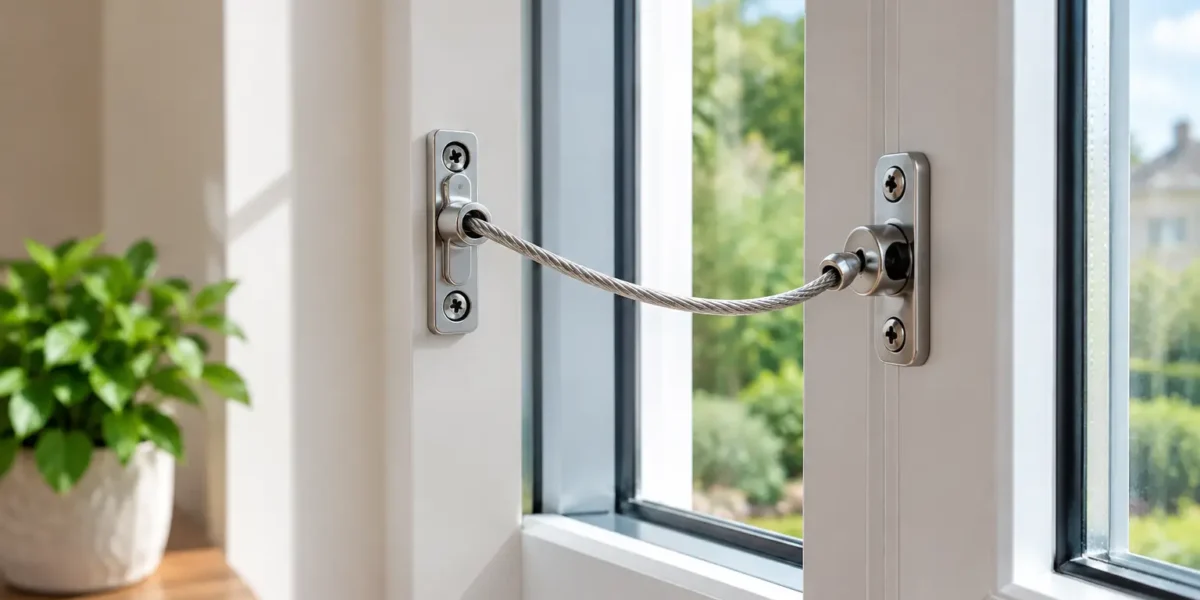
The best restrictor depends on the window itself and how the room is used. A simple cable restrictor is often a popular retrofit choice because it is visible, strong, and suitable for many casement windows. The cable lets the sash open to a set point, and a key-operated release can allow wider opening when needed.
Hinged restrictors, sometimes called friction stays or opening limiters, are more discreet. They are commonly used on outward-opening windows and can be fitted as part of the hinge arrangement. Their cleaner appearance can suit homeowners who want safety hardware that does not distract from the window’s style.
Lockable restrictors offer more control in shared or managed properties. A landlord may want occupants to ventilate a room but prevent a window from being opened fully without authorization. In a small commercial setting, this can help reduce risks around upper-floor windows or windows accessible from an adjacent roof.
Integrated restrictors are built into some modern window systems. These can be neat and convenient, but they are not always the easiest option to add to older windows. If you have aging uPVC, timber, or aluminum frames, a specialist can advise whether a surface-mounted restrictor or a wider repair is the smarter investment.
Where Restrictors Matter Most
Upper-floor bedrooms are the most obvious place to start, particularly where young children visit or live in the property. A bed, chair, storage box, or low sill can make an open window more accessible than expected. Restrictors work best alongside sensible furniture placement, keeping climbable items away from windows.
Bathrooms and kitchens also deserve attention. These rooms need regular ventilation to help manage steam, condensation, and moisture, yet windows may be left open while people are distracted. A restrictor can provide a controlled opening for fresh air without leaving the sash wide open.
For landlords, consistent protection across a property is usually easier to manage than addressing risks only after a concern is raised. Check all upper-story windows, especially in bedrooms, hallways, communal areas, and stairwells. Keep a record of fitted hardware, key locations, and any maintenance work completed.
Ground-floor windows should not be ignored. A restrictor will not replace secure locking hardware, but it can make opportunistic access harder where a window is left open for ventilation. This is particularly relevant for windows beside side passages, bins, gates, or low roofs.
Do Not Compromise Emergency Escape
Here is the trade-off that matters most: a window that is safely restricted must still work with your property’s emergency escape plan. Some bedrooms rely on a window as an emergency exit, especially where there is no alternative protected route. A fixed restrictor that cannot be released quickly could create a dangerous delay.
Before fitting hardware, identify which windows may need to open fully in an emergency. A key-release model can be appropriate in some cases, but only if responsible adults can access the key immediately and know how it works. Never hide the key so well that it cannot be found under pressure.
Building requirements can differ by property type, location, window position, and whether work is part of a larger renovation. Rental homes and commercial properties may also have additional duties. When there is any doubt, get advice from a qualified window professional and check the requirements that apply to your building.
What to Check Before Installation
A restrictor is only as dependable as the window and frame it is attached to. Loose hinges, cracked uPVC, rotting timber, damaged sash corners, or failed glazing can all affect the result. If the window rattles, catches, will not lock, or has visible damage, deal with those issues first.
Measure how the window opens and note anything nearby that could interfere with the fitting. Inward-opening, outward-opening, sliding, tilt-and-turn, and sash windows need different approaches. The hardware must also be positioned so it does not pinch seals, damage the frame, or stop the window from closing and locking correctly.
Consider who uses the room. A bedroom used by a toddler needs a different level of control from a home office used only by adults. In a rental or workplace, think about key management and make sure the person responsible for the building understands how the release works.
Professional Fitting Delivers a Better Finish
Some restrictors are sold as simple DIY items, but drilling into a window frame is not always straightforward. Incorrect screw placement can damage reinforcement inside a uPVC frame, compromise weather seals, create a poor alignment, or leave the restrictor under strain. A badly fitted unit may also be easier to defeat or fail when it is needed most.
Professional fitting starts with the condition and operation of the whole window, not just the hardware. The installer can recommend a restrictor suited to the frame, secure it in the right position, test the opening limit and release, and check that locks and hinges still work as intended.
If your windows already need attention, combining repairs with a restrictor upgrade can be more cost-effective than arranging separate visits. Bee Manchester can assess window locks, handles, hinges, glazing, and restrictors together, helping you make a practical improvement without sacrificing the look or everyday use of your windows.
Keep Restrictors Working Properly
Like any moving hardware, window restrictors need occasional checks. Open and close the window, confirm the restrictor stops at the expected point, and test the release mechanism according to its instructions. Look for frayed cables, loose fixings, corrosion, bent arms, or signs that the frame is moving around the screws.
Keep key-release mechanisms accessible to the right adults, but out of reach of children. Do not paint over moving parts or force a stuck restrictor. If it is difficult to release, the cable is worn, or the window no longer closes squarely, arrange a repair rather than relying on it until it fails.
The best window safety measures are the ones that fit naturally into daily life. A properly selected and fitted restrictor lets fresh air in, limits unnecessary risk, and keeps your property feeling secure – a small upgrade that can bring real peace of mind.