

-
On November 1, 2026
External Door Weatherproofing Guide for Drafts
A chilly hallway, rainwater near the threshold, or a door that rattles in the wind is more than a minor annoyance. It can signal wasted heating, moisture damage, and a less secure entrance. This external door weatherproofing guide helps you identify where the weather is getting in, choose the right fix, and know when a professional repair or replacement will give you a better long-term result.
For Manchester properties, weatherproofing needs to handle frequent rain, cold snaps, and damp conditions without making the door difficult to open or lock. The aim is a close, even seal around the whole frame – not simply adding more material wherever a draft is felt.
Start by Finding the Source of the Draft
Before buying strips, seals, or filler, inspect the door on a dry day. Stand inside with the door closed and look for daylight around the edges. On a breezy day, move the back of your hand slowly around the frame, letter plate, threshold, and keyhole. You may feel air movement long before you can see the gap.
Pay attention to when the problem happens. A gap at the top hinge side can point to a dropped door or loose hinges. Water coming in beneath the door may mean a worn threshold seal, incorrect drainage, or a door that is not sitting squarely in its frame. A persistent cold spot around the frame can be caused by failed perimeter seals, gaps between the frame and brickwork, or older glazing in a partially glazed door.
Do not assume the door itself is the only culprit. Cracked exterior sealant around the frame, damaged masonry, and blocked drainage channels can all let water travel toward the entrance. Treating the visible draft without correcting the cause often leads to the same issue returning next winter.
External Door Weatherproofing Guide: Check the Fit First
A weather seal only works when the door is correctly aligned. If the slab has dropped, bowed, or shifted, adhesive foam tape may briefly hide the problem but will soon compress unevenly or tear. This is especially common on frequently used front doors, heavier composite doors, and doors exposed to driving rain.
Open and close the door slowly. It should move freely, latch without force, and sit evenly within the frame. Look for scuff marks on the threshold, rubbing near the top corner, or a latch that only catches when you lift the handle. On uPVC and composite doors, adjustment at the hinges or locking keeps can often restore a firm seal. Timber doors may need hinge work, minor planing, or repairs to swollen sections before new weatherproofing is fitted.
Be careful with DIY adjustments. Modern multipoint locks need accurate alignment. Over-adjusting hinges or forcing a door into position can affect locking performance, which is not a worthwhile trade-off for a slightly tighter seal. A properly adjusted door should feel secure and operate smoothly.
Seal the Gaps Around the Frame
Once the door fits properly, inspect the compression seals around the frame. These flexible rubber or brush-like strips are designed to meet the door evenly when it closes. They can flatten, split, shrink, or become detached over time.
For a narrow, consistent air gap, a replacement compression seal is usually the cleanest answer. Choose a profile that matches the existing channel where possible. A seal that is too thick can make the door hard to close and put unnecessary strain on the hinges and lock. One that is too thin will not stop the draft.
Self-adhesive foam weatherstripping is useful for small gaps on certain doors, sheds, or secondary entrances, but it is not always the best option for a main external door. In wet, high-use areas, it can peel away and may interfere with the closing action. Quality fitted seals generally last longer and look neater.
Outside the frame, check the perimeter sealant where it meets brick, render, or cladding. Any cracks, holes, or sections pulling away should be removed and replaced with an exterior-grade flexible sealant. This stops water getting behind the frame, where it can cause damp patches, staining, and gradual damage to surrounding finishes.
Do Not Ignore the Bottom of the Door
The threshold works harder than any other part of an entrance. It faces foot traffic, rain splash, grit, and repeated contact with the door. If water is appearing inside, start here.
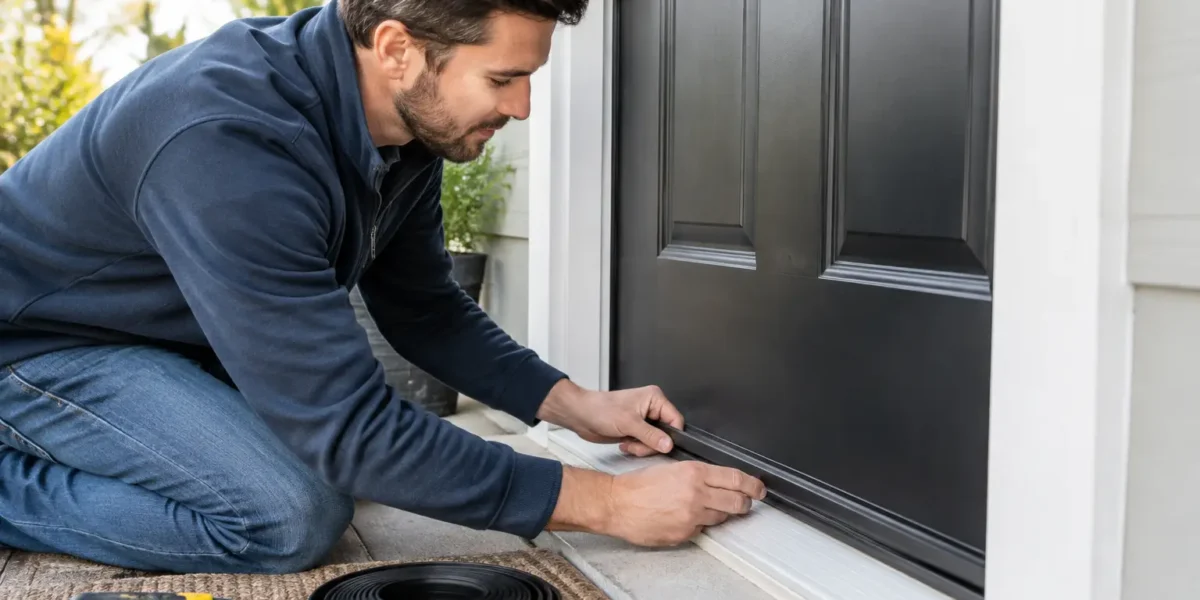
A door bottom seal, sweep, or drip bar can close the gap beneath the door and direct water away from the threshold. The right choice depends on the door type and the existing sill. A brush sweep is often practical where there is an uneven surface, while a rubber blade can provide a tighter seal on a smooth threshold. A threshold seal may suit doors with a larger under-door gap, but it must not create a trip hazard or prevent drainage.
Check that drainage paths are clear. Many uPVC door frames have drainage slots designed to release water outside. Leaves, dirt, paint, and debris can block them, causing water to pool and eventually find a route indoors. Clean them gently and avoid sealing over any intended drainage openings.
If the threshold is cracked, loose, or sloping toward the house, replacing a small seal may not be enough. Water management is about direction as well as blockage. The sill should encourage rainwater away from the property, not trap it against the frame.
Weatherproof the Smaller Openings
A surprising amount of cold air can come through door hardware. Letter plates, keyholes, and old pet flaps are common weak points, particularly on older timber doors.
A letter plate with internal brush flaps or a draft cover can reduce air movement while preserving everyday use. Check that the flap closes properly and that the surrounding fixings are secure. If the opening is distorted or the plate is corroded, replacing the whole unit may give a better seal and a smarter finish.
For keyholes, a fitted cover can help limit drafts, but security comes first. Never fit anything that obstructs the key, prevents the lock from operating normally, or makes emergency access more difficult. If your handle, cylinder, or lock feels loose, stiff, or unreliable, have it assessed rather than attempting to pack around it with sealant.
Glazed panels also deserve a close look. Condensation between panes, cracked glass, or loose beading can indicate that the glazing unit or its seals are failing. Replacing a failed unit can improve comfort and appearance without always needing a completely new door.
Know When Repair Is Better Than Replacement
Weatherproofing does not automatically mean replacing the door. A sound uPVC, composite, or timber door can often be brought back into good working order with alignment, new seals, hardware repairs, and properly finished perimeter sealant. This is often the most cost-effective route when the door remains structurally solid and secure.
Replacement becomes more sensible when there is rot, warping, severe frame damage, recurring water ingress, failed glazing, or an outdated lock arrangement that cannot provide the security you need. A modern external door can combine a tighter seal with stronger locking, insulated construction, and a style that lifts curb appeal.
For landlords and small business owners, it is worth acting early. A drafty entrance can lead to tenant complaints, higher energy use, wet flooring, and avoidable maintenance calls. For homeowners, a well-sealed door makes the first few steps into the house feel warmer and quieter – a small change with an everyday benefit.
Keep Your Door Weatherproof Through the Seasons
A quick seasonal check prevents most weatherproofing problems from becoming expensive repairs. Wipe seals clean with mild soapy water, clear drainage channels, tighten loose hardware, and look for cracks in external sealant after periods of harsh weather. Avoid harsh solvents on uPVC and rubber seals, as they can dry or discolor the materials.
If your door needs force to close, lets in water, or no longer locks confidently, it is time to look beyond a temporary strip of foam. Bee Manchester can assess the fit, seals, glazing, locks, and hardware together, so the finished entrance is secure, weather-ready, and still looks the part. A dry, quiet doorway starts with the right diagnosis – and that is something worth getting sorted before the next spell of rain.