

-
On September 24, 2026
Composite Front Door Review: Is It Worth It?
A front door has a tough job. It must stand up to rain, cold mornings, daily use, deliveries, and the occasional forgotten key, while still making your property look cared for from the street. This composite front door review looks beyond the showroom finish to answer the question that matters: will a composite door genuinely improve your home or business premises?
For many Manchester property owners, the answer is yes, provided the door is correctly specified and professionally installed. Composite doors combine the appearance of a traditional timber door with modern materials designed for security, insulation, and lower maintenance. But not every composite door is built to the same standard, and the details behind the outer skin make a real difference.
What a Composite Front Door Is Made Of
A composite door is not one single material. It is built in layers, usually with a reinforced outer surface, a dense insulating core, internal structural elements, and a weather-resistant finish. This combination is why composite doors tend to feel heavier and more solid than many standard uPVC doors.
The exact construction varies by manufacturer. Some doors use a high-density foam core, while others use a more timber-rich or solid core. Neither option is automatically best for every property. A foam-core design can offer strong thermal performance at a more accessible price, while a denser core can create a particularly substantial feel and may improve sound reduction.
The outer finish is equally important. Good-quality composite doors are designed to resist fading, warping, cracking, and swelling. That is a major advantage over a traditional timber front door, especially on an exposed entrance that takes the full force of Manchester weather.
Composite Front Door Review: The Benefits That Matter
The strongest reason to choose a composite front door is usually security. A well-built door paired with a reinforced frame, quality hinges, and a high-security locking cylinder creates a far more reassuring entrance than a tired, thin, or poorly fitted door. The lock is not an afterthought here. Even an attractive door can be a weak point if its cylinder, handle, or keep plates are low quality.
Look for a door and locking setup that has been selected as a complete system. The slab, frame, hinges, lock, and installation should all work together. For landlords and small business owners, this can also help reduce worries around frequent use, vacant periods, and insurance requirements.
Energy efficiency is another meaningful benefit. A properly sealed composite door limits drafts around the entrance and helps keep heated air where it belongs. You may notice that the hallway feels less chilly, particularly in older properties where an existing door has gaps around the frame or a worn threshold.
A door alone will not solve every heat-loss issue in a home. If adjacent glazing, windows, or wall insulation are underperforming, they also deserve attention. Still, replacing a drafty front door is often one of the most visible and immediately noticeable upgrades a property owner can make.
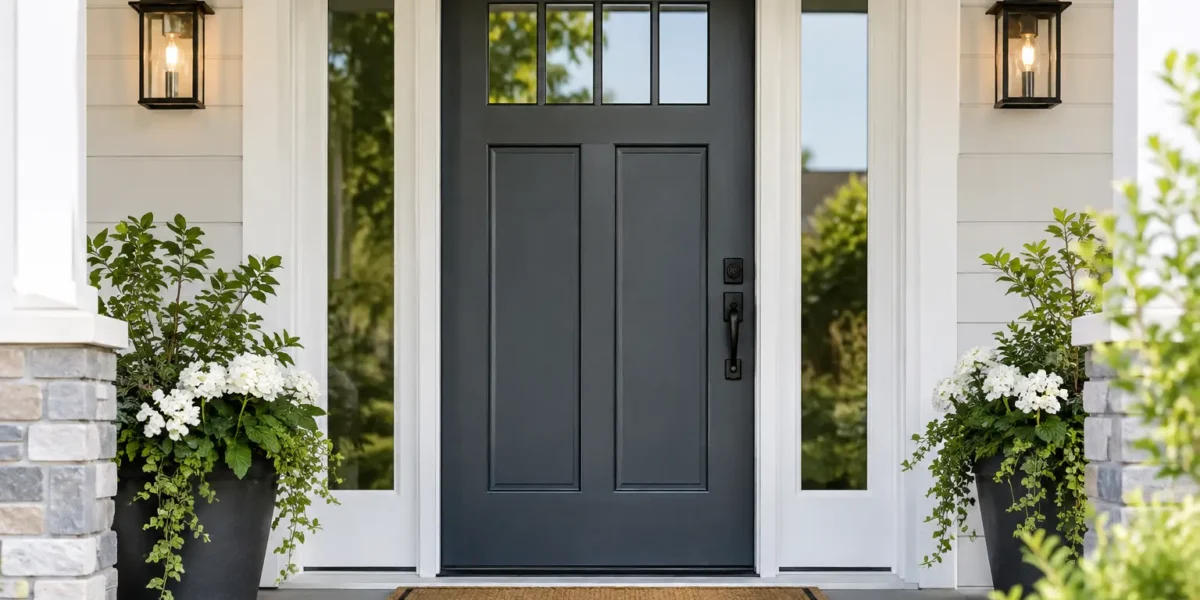
Appearance is where composite doors give homeowners plenty to enjoy. They are available in traditional and contemporary panel styles, a broad range of colors, woodgrain finishes, decorative glazing options, and hardware choices. A classic black, blue, or green door can suit a period terrace, while a clean gray design with contemporary furniture may work better on a newer build.
The best choice is not always the most striking sample. Consider the brickwork, window frames, porch, and the character of nearby homes. A front door should give your property personality without looking out of place.
The Trade-Offs to Consider Before Ordering
Composite doors are not the lowest-cost option. A basic uPVC door can be less expensive upfront, and it can still be suitable for certain budgets, side entrances, or rental properties. A composite door generally costs more because of its materials, construction, security features, and the range of customization available.
That higher initial spend can make sense when you factor in longevity, insulation, and curb appeal. However, it depends on the door specification. Paying more for decorative glass or premium hardware may be worthwhile for a main entrance, but it may not be necessary for a little-used rear door.
Weight is another consideration. The substantial feel of a composite door is often a positive, but it means fitting must be precise. A poorly aligned heavy door can catch, stick, strain hinges, or compromise the weather seal. This is why measuring, frame preparation, and final adjustment should never be rushed.
Color choice also deserves care. Dark finishes can look smart and dramatic, but a south-facing entrance may receive more sunlight and heat. Quality materials are designed to cope with this, yet choosing a reputable product and having it installed correctly gives you the best chance of a long-lasting finish.
Security Is More Than a Strong Door Slab
A composite door should feel secure when you close it, but security comes from the complete setup. Ask about the locking mechanism, cylinder protection, hinge security, frame reinforcement, and the quality of the handle. If your existing door has a loose handle, a worn lock, or visible movement in the frame, replacing only one component may not address the wider issue.
Glazing needs attention too. Decorative glass can brighten a hallway and add character, but it should be toughened and fitted securely. The design should complement the door’s security performance rather than weaken it.
For commercial properties, communal entrances, and rental homes, practical access is also part of the decision. Consider who needs keys, how often the door is used, and whether you may need lock repairs or upgrades later. A door chosen with day-to-day use in mind will serve you better than one selected only for appearance.
What Good Installation Looks Like
Even the best composite door can disappoint if the fitting is poor. Before installation, the opening should be accurately measured, with the condition of the surrounding frame, brickwork, and threshold assessed. The new frame must sit square and secure, allowing the door to open, close, and lock smoothly.
After fitting, there should be no obvious gaps, rattles, or excessive daylight around the edges. The weather seals should make even contact, the threshold should be neat and safe underfoot, and the door should not require force to engage the lock. Small adjustments after installation are normal, particularly as components settle, but persistent sticking or drafts should be addressed promptly.
At Bee Manchester, the focus is on matching the door, hardware, and fitting method to the property rather than treating every entrance as identical. That local, practical approach matters in older homes, where openings are not always perfectly square and previous repairs can hide surprises.
Choosing the Right Style for Your Property
Start with function, then choose the finish. If privacy is the priority, a solid-panel door or obscure glazing may suit best. If your hallway is dark, a design with carefully placed glazed panels can bring in welcome daylight. For a family home, consider how easily the surface can be kept clean and whether the threshold works for prams, deliveries, or mobility needs.
Hardware is a small detail with a big visual impact. A traditional knocker, letter plate, and handle can suit a heritage-style door, while a bar handle may sharpen a modern design. Keep the finish coordinated with house numbers, exterior lighting, and any visible gate furniture for a polished result.
It is also wise to think ahead. A color you love today should still feel right in several years, and a highly specific design may not appeal to every future buyer or tenant. Neutral does not have to mean boring. Deep blue, anthracite gray, black, and heritage green can all feel distinctive while remaining widely appealing.
Is a Composite Door Worth It?
For a main entrance that needs better security, less maintenance, stronger insulation, and a serious curb-appeal lift, a composite door is often worth the investment. It is especially compelling when replacing an aging timber door that swells in wet weather or a basic door that feels flimsy and lets drafts through.
The key is not to judge by a photograph alone. Compare the core construction, frame, lock, glazing, weather seals, warranty, and installation standard. A cheaper quote can be perfectly valid, but make sure you understand what has been included and what has been left out.
A well-chosen composite front door should make arriving home feel better every day: quieter, warmer, safer, and a little more welcoming. Choose the details carefully, get the fit right, and your entrance can stay buzzing with quality for years to come.