

-
On November 5, 2026
Popular Composite Door Colors for Manchester Homes
A new front door changes the first few seconds of arriving home. It can make brickwork look warmer, give a period terrace more presence, or sharpen up the entrance to a newer property. That is why choosing between popular composite door colors is about more than following a trend. The right shade should suit your home, handle Manchester weather gracefully, and still feel like you in five or ten years.
Composite doors give homeowners far more freedom than the standard white door of years gone by. Their durable colored finishes are designed to retain their appearance while delivering the security, insulation, and low-maintenance benefits people expect from a modern external door. The question is not simply which color looks good in a showroom. It is which one will look right against your brick, render, windows, paving, and surrounding street.
Why Front Door Color Carries So Much Weight
Your front door is one of the few parts of a home that visitors see up close. It frames the threshold, draws attention to the hardware, and can either complement the character of the property or fight against it. A well-chosen color can make an older home feel cared for without stripping away its charm. On a contemporary house, it can bring contrast and personality without clutter.
Color also affects how much day-to-day upkeep you notice. Deep shades can show dust, pollen, and rain marks more readily than mid-tones, while pale colors may reveal scuffs around the handle and letter plate. Composite doors are straightforward to clean, but choosing with real life in mind means fewer surprises after installation.
There is no single best choice for every Manchester property. A shaded north-facing entrance needs a different approach from a bright, open doorway, and a landlord selecting a hard-working door may prioritize broad appeal over a highly personal statement shade.
The Most Popular Composite Door Colors
Anthracite gray: contemporary without being cold
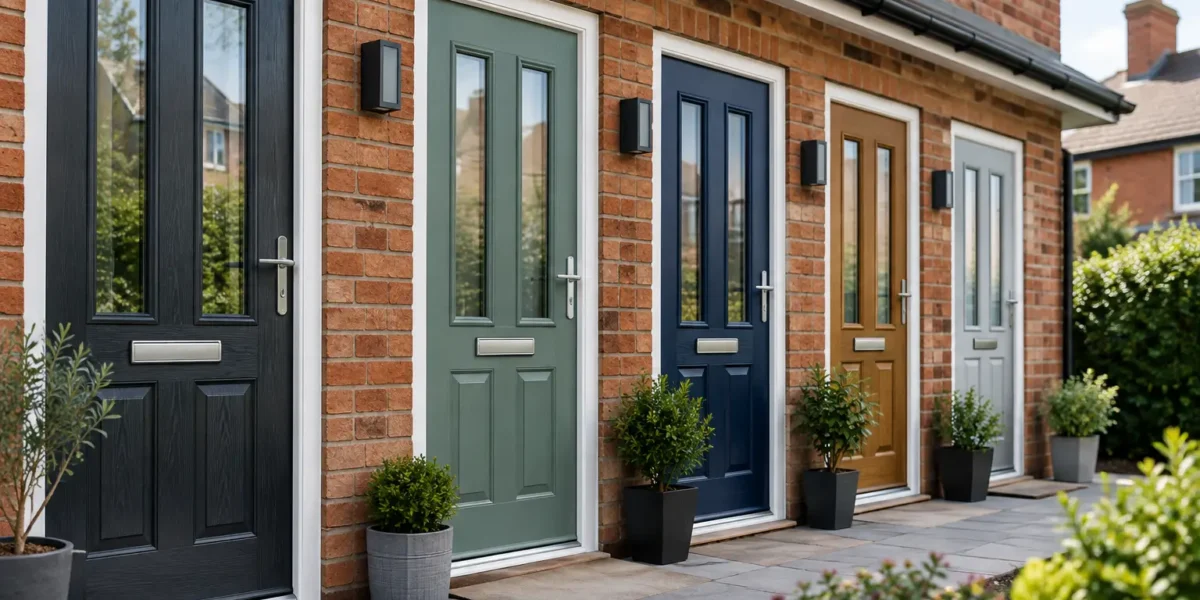
Anthracite gray has become a firm favorite for good reason. It provides a crisp, modern finish that works exceptionally well with white uPVC windows, aluminum frames, light render, and newer brick homes. It has enough depth to make an entrance look intentional, but it is less severe than black.
For many homes, it is the reliable middle ground. It suits clean-lined doors with long vertical glazing, as well as more traditional styles with decorative panels. Choose matching or near-matching gray hardware for a streamlined appearance, or add brushed chrome to lift the look. On a very dark frontage, however, anthracite can disappear, so consider a lighter surround or glass panels to create definition.
Black: classic, confident, and versatile
Black has long been one of the most popular composite door colors because it works across architectural styles. A black door can look smart against red brick, elegant on a painted Victorian exterior, and sharp on a modern home. It also gives brass, chrome, and black hardware a strong backdrop.
The trade-off is visibility. On a busy street or exposed entrance, black can show dust and water spotting more than gray or blue. It may also absorb more heat in direct sun, though a quality composite construction is designed for demanding outdoor conditions. If your doorway is strongly shaded, use glazing or polished hardware so the entrance does not feel too heavy.
Blue: character with staying power
Blue offers personality without the commitment of a brighter primary color. Navy is especially effective on Victorian, Edwardian, and traditional terraced homes, where it feels refined and works beautifully with white trim. A deeper blue can also balance warm red or orange brick.
Lighter blue-gray shades bring a softer, coastal-inspired feel and pair well with pale stone, cream render, or light gray window frames. They are less formal than navy but still smart enough for a main entrance. The key is to see a physical sample outdoors. Blue can appear nearly black in shade and much brighter in full daylight.
Green: a natural choice for heritage and modern homes
Green has moved beyond being a niche choice. Deep racing green and forest green create a traditional, established look, particularly with brass door furniture and stained-glass-inspired panels. Sage and softer muted greens feel more relaxed and can bring warmth to neutral exteriors.
This family of colors is particularly good when your entrance has planting, a wooden porch, or natural stone nearby. Bright green is harder to get right and can date quickly, so most homeowners are better served by a muted or darker tone. It offers distinction while remaining easy to live with.
White and cream: bright, simple, and practical in the right setting
White composite doors remain a sensible option, especially for smaller or darker entryways where a lighter door helps reflect daylight. They suit many traditional homes and create a clean look when paired with white window frames. Cream offers a gentler alternative that works well with stone, pale brick, and period properties.
The compromise is that lighter doors can show grime and scuff marks sooner, especially around the lock, handle, and lower panels. Regular wiping keeps them looking fresh, but white is best chosen because it genuinely fits the house rather than because it feels like the safest default.
Match the Door to the Rest of the Exterior
Start with the fixed features that are expensive or difficult to change. Brick color, roof tiles, window frames, stone sills, and porch details should guide the decision before any passing trend does. Warm red brick often looks excellent with black, navy, deep green, or charcoal. Buff brick and sandstone can take softer greens, blues, creams, and rich black. Cool gray render usually benefits from contrast, such as navy, black, or a warmer green.
Look at the door from the street, not only from inside the hallway. A color that feels bold on a small swatch can look balanced when surrounded by brick and windows. Equally, a shade that seems subtle indoors may become too dark in a recessed porch.
Hardware matters here too. A traditional door knocker, letter plate, and polished chrome handle create a different impression from a modern bar handle and minimalist numerals. Think of the door, glazing, and furniture as one composition rather than separate decisions.
Consider Light, Weather, and Everyday Use
Manchester’s changeable weather makes finish quality and fitting just as important as color. Rain, road dust, and damp conditions can make an entrance look tired if seals, drainage, and hardware are not properly installed. A professionally fitted composite door should close securely, protect against drafts, and keep its finish looking smart with simple cleaning.
Take note of where sunlight hits. South-facing doors receive the strongest light, which can make dark tones feel more dramatic and lighter colors appear brighter than expected. North-facing entrances tend to flatter colors with some warmth or depth. Ask to view samples outside at different times of day rather than making a choice under showroom lighting alone.
For rental properties and commercial entrances, durability and broad appeal may carry more weight. Anthracite gray, black, and navy are strong choices because they look professional, suit a wide range of buildings, and tend not to polarize future tenants or buyers.
Choosing a Color You Will Still Like Later
Trends can inspire a choice, but a front door is not a cushion cover. If you love a distinctive yellow, red, or teal, it can absolutely work, particularly on a home with confident architectural character. Just be honest about whether you will enjoy seeing it every day and whether it complements the wider street scene.
A useful test is to narrow your choices to two or three shades, then compare them against photos of your property and real samples. Consider your preferred hardware at the same time. That small amount of planning can prevent a costly decision made on impulse.
Bee Manchester can help homeowners weigh appearance alongside the essentials: secure locking, energy efficiency, durable construction, and a precise installation. The best door color is the one that makes you pleased to turn onto your street, while doing the practical work of protecting your home every day.
Before committing, stand outside your property with the samples in natural light and give the choice a little time. The shade that keeps catching your eye for the right reasons is usually the one worth bringing home.