

-
On November 29, 2026
Commercial Window Maintenance Guide for Owners
A cracked pane, a sticking fire-exit door, or a window that will not lock properly can quickly become more than a minor maintenance job. This commercial window maintenance guide helps property owners and managers protect their premises, reduce avoidable repair costs, and keep their business looking professional from the street.
For shops, offices, rental properties, salons, hospitality venues, and small industrial units, windows work hard every day. They provide light, insulation, ventilation, security, and curb appeal. When one part starts to fail, drafts, water ingress, damaged frames, or weak locks can follow. A little planned care keeps your windows buzzing with quality rather than becoming an unexpected disruption.
Why Commercial Window Maintenance Matters
Commercial windows face a different level of wear than most residential installations. They may be opened and locked many times a day, exposed to delivery traffic, street dirt, customer contact, and the occasional accidental knock. Ground-floor glazing also has a major security role, particularly where stock, equipment, or customer data are kept on site.
Well-maintained windows help control heat loss and reduce pressure on heating and cooling systems. They also make a better first impression. Faded frames, misted double glazing, loose handles, and damaged seals can make an otherwise well-run premises appear neglected.
Maintenance is not only about appearance, though. A faulty locking mechanism can leave a vulnerable access point overnight. A loose hinge can cause a sash to drop or stop closing correctly. Catching these concerns early is usually faster and less expensive than waiting for a full replacement or an emergency repair.
Commercial Window Maintenance Guide: A Practical Schedule
The right maintenance schedule depends on the building, window type, foot traffic, and location. A busy storefront on a main road will need more frequent attention than an upper-floor office in a sheltered position. Still, a simple routine makes it much easier to spot changes before they turn into faults.
Monthly: Clean and inspect high-use areas
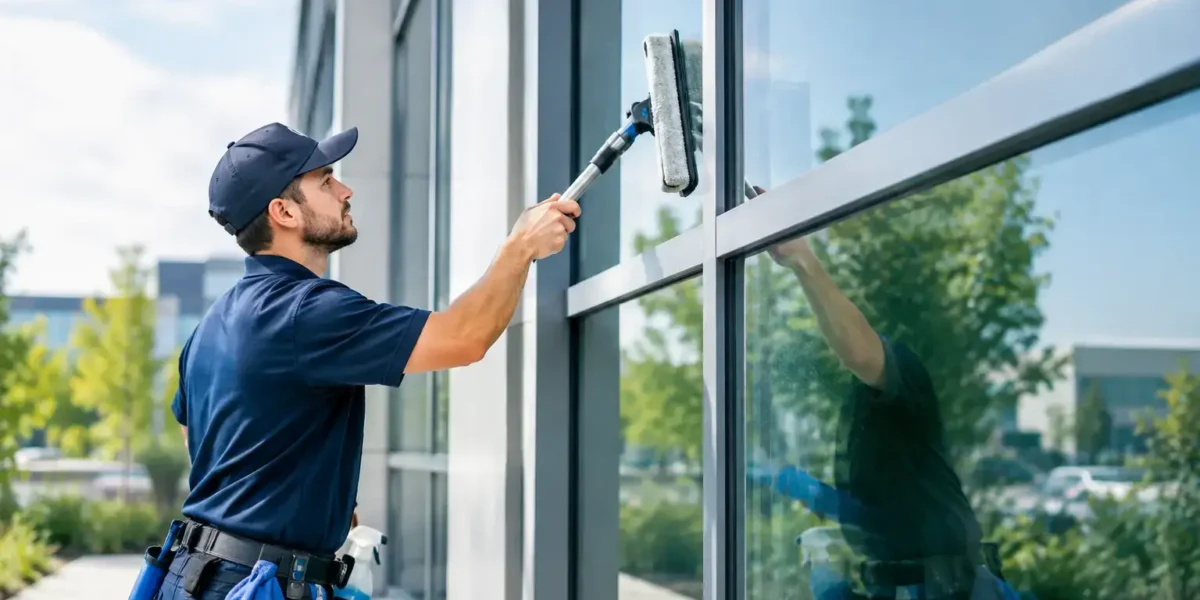
Clean glass, frames, and sills with warm water, mild detergent, and a soft cloth. Avoid abrasive pads, harsh solvents, and strong chemical cleaners, especially on uPVC frames, decorative finishes, and window seals. These products can dull surfaces or damage components over time.
As you clean, look closely at the corners of frames and the bottom tracks. Remove leaves, grit, dust, and debris that may block drainage channels. If water cannot drain away, it can collect around seals and joints, increasing the risk of damp, staining, or water getting inside.
Check for visible cracks in glass, chips around the edges, cloudy patches between double-glazed panes, and signs of condensation. Condensation on the room side may point to poor ventilation, but moisture trapped between panes often indicates a failed sealed unit.
Every three months: Test opening, closing, and locking
Open each accessible window fully, then close and lock it. It should move without excessive force, scraping, or rattling. If the handle feels loose, the sash catches, or the lock does not engage cleanly, do not force it. Continued use can put extra strain on the hardware and make a straightforward repair more complicated.
Pay attention to hinges, handles, restrictors, stays, and locking points. These small components carry a lot of responsibility. Windows in public-facing spaces or rooms used by staff and visitors may need restrictors to manage safety while still allowing ventilation.
A small amount of appropriate lubricant on moving metal parts can help, but it depends on the manufacturer and hardware type. Do not coat locks or hinges with heavy oil, as this can attract dirt and cause sticking. If you are unsure, arrange for a qualified window and lock specialist to inspect the mechanism.
Twice a year: Check seals, drainage, and frame condition
Spring and fall are sensible times for a more detailed inspection. Examine the rubber gaskets around each window. They should sit securely against the glass and frame, without splitting, shrinking, or pulling away at the corners. Worn seals can allow drafts and rainwater through, reducing comfort and energy efficiency.
Look at the frame itself for warping, discoloration, movement, or gaps where it meets the wall. On aluminum and uPVC windows, check that drainage holes remain clear. On timber windows, watch for peeling paint, soft areas, swelling, or early rot. Each material needs a different approach, so maintenance should match the window rather than follow a one-size-fits-all rule.
Also inspect the exterior sealant around the window opening. Cracked or missing sealant can let water enter behind the frame, where the problem may not be visible until it has caused internal damage.
Warning Signs That Need Professional Repair
Some issues should not wait until the next planned check. Arrange a professional assessment if you notice a window that will not lock, a broken handle, shattered or cracked glazing, water entering the building, or a frame that has visibly shifted.
Misted double glazing is another common concern. When the seal between panes fails, moisture can enter the unit and leave a cloudy or streaked appearance. The glass may still be intact, but its insulating performance can be reduced. In many cases, the sealed glass unit can be replaced without changing the entire frame, which can be a more cost-effective option.
Drafts are worth investigating too. They may come from compressed seals, poor alignment, damaged trickle vents, or gaps in external sealant. Do not assume a draft always means replacement is necessary. A skilled repair can often restore the fit, security, and performance of an otherwise sound window.
Do Not Forget Security and Safety
Commercial window care should sit alongside your wider property security plan. Confirm that locks work correctly, keys are controlled, and any damaged hardware is repaired promptly. If your premises has windows near ground level, rear access points, or secluded elevations, these areas deserve particular attention.
For businesses with staff, visitors, or tenants, safety matters just as much as security. Windows used for ventilation must operate reliably, while upper-floor windows may need restrictors to prevent unsafe opening. Emergency escape requirements vary by building type and layout, so never fit a restrictor or security device without considering how it affects safe exit routes.
If you manage rental or multi-occupancy commercial space, keep a simple record of inspections and repairs. It creates a clear maintenance history and helps you identify repeat issues, such as one exposed elevation that regularly suffers from weather damage.
When Repair Makes More Sense Than Replacement
Replacement is not always the first or best answer. If frames are in good condition and the issue is limited to a handle, hinge, lock, gasket, or sealed glass unit, targeted repair can extend the life of the installation and control costs.
Replacement becomes more sensible when there is widespread frame damage, repeated water ingress, major deterioration, poor thermal performance across several units, or glazing that no longer meets the needs of the building. Upgrading may also be worthwhile if you want stronger security features, better noise reduction, or a more consistent exterior appearance.
The best decision comes from an honest inspection. A dependable specialist should explain what can be repaired, what needs replacing, and why. Bee Manchester takes this practical approach, helping property owners choose solutions that support security, efficiency, and the look of their premises without paying for unnecessary work.
A Simple Plan for Better-Looking, Better-Performing Windows
Assign responsibility for regular checks, whether that is a facilities manager, landlord, site supervisor, or business owner. Keep cleaning gentle, drainage channels clear, and hardware tested. Then act quickly when you see a fault rather than hoping it settles on its own.
Your windows are part of your building’s security system, energy performance, and first impression. Give them a little consistent attention, and they will keep working hard for your business long after the first installation day.