

-
On November 27, 2026
Laminated Versus Toughened Glass Explained
A broken pane does not always create the same problem. In a front door, it may expose a lock or create an easy point of entry. In a patio door, it can leave a sharp, hazardous opening. That is why the laminated versus toughened glass decision is about far more than appearance. It affects security, safety, noise control, and how your property performs day after day.
For Manchester homeowners, landlords, and business owners, the right choice depends on where the glass is going and what you need it to do. Both options are safety glass, but they behave very differently when struck or broken.
What Is Toughened Glass?
Toughened glass, often called tempered glass, is made by heating standard glass to a very high temperature and then cooling it rapidly. This process puts the outer surfaces under compression, making the finished pane considerably stronger than ordinary annealed glass of the same thickness.
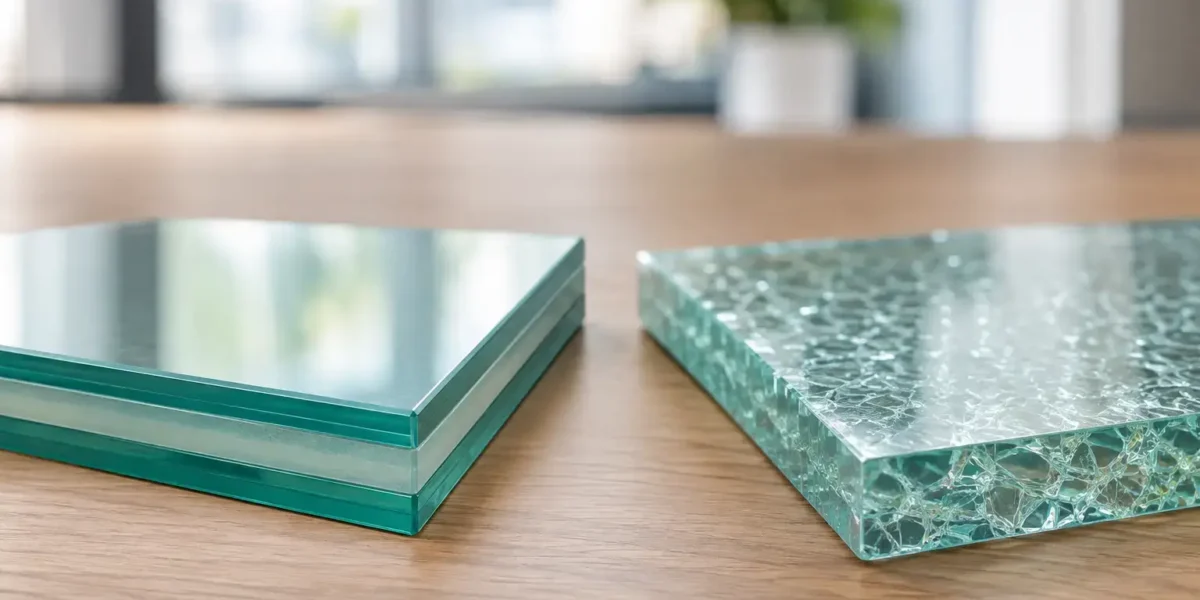
Its biggest feature appears when it breaks. Instead of forming long, dangerous shards, toughened glass breaks into many small, blunt-edged pieces. That significantly reduces the risk of serious cuts if someone falls against it or if a door panel is damaged.
This makes toughened glass a common choice for areas where accidental impact is a concern. Think patio doors, French doors, glass beside a doorway, low-level windows, shower screens, and internal glass partitions. Building regulations can also require safety glazing in certain critical locations, so glass selection should never be treated as a purely decorative choice.
Toughened glass is a strong performer while intact, but once it fractures, the entire pane typically breaks apart. It does not stay in the frame as a barrier. For a location where delaying forced entry matters, that distinction is worth considering.
What Is Laminated Glass?
Laminated glass is constructed from two or more panes of glass bonded together with a clear plastic interlayer, usually polyvinyl butyral, known as PVB. The layers are pressed together under heat and pressure to create one composite pane.
When laminated glass is struck hard enough to break, the glass may crack in a spiderweb pattern, but the interlayer holds the fragments in place. Rather than falling away immediately, the pane generally remains together and continues to cover the opening.
That retained barrier is why laminated glass is widely chosen for security-focused doors, ground-floor windows, storefronts, skylights, and other vulnerable areas. It will not make a property impossible to enter, but it can make an attempted break-in slower, noisier, and more difficult. Those extra moments can matter greatly when paired with quality locks, secure frames, and professional installation.
The interlayer can also bring an acoustic benefit. It helps dampen certain sound frequencies, which can be helpful near busy roads, local traffic, or active commercial areas. If outside noise regularly disrupts your home or premises, laminated glass may be part of a better glazing specification.
Laminated Versus Toughened Glass: The Key Difference
The simplest way to compare laminated versus toughened glass is to look at what happens after breakage. Toughened glass is designed to reduce injury by breaking into small pieces. Laminated glass is designed to hold together after impact.
Neither is automatically the better product in every setting. Toughened glass is an excellent safety choice where people may collide with glazing. Laminated glass is often the stronger choice where security, containment, or noise reduction is the priority.
There are also products that combine the benefits of both. A laminated toughened unit uses toughened panes with an interlayer between them. This can be specified for applications that need increased impact resistance alongside retained fragments after breakage. It is a specialist option, and the full door or window system must be suitable for its weight and thickness.
Security and Forced Entry
A toughened pane can resist a substantial impact, but when it reaches its breaking point, it can collapse quickly into pellets. A determined intruder may then have a clear opening.
Laminated glass can remain held together even after repeated blows. The interlayer must be cut, torn, or pushed through, so access is delayed. For front doors with glazed sections, side panels beside entrance doors, accessible windows, and commercial frontage, this is often a worthwhile upgrade.
Glass alone is not a complete security plan. A well-fitted frame, correctly aligned hinges, quality handles, and reliable multipoint locks all work together. The weakest component can undermine a strong pane, which is why a full survey is more useful than choosing glass from a brochure.
Safety Around People
Both materials are classed as safety glass when supplied to the correct standard. Toughened glass is particularly useful where reducing laceration risk is the central concern. Its fragment pattern is the reason it is so often used in doors and other human-impact zones.
Laminated glass also reduces the risk of falling shards because fragments stick to the interlayer. It can be especially useful overhead, in roof glazing, or where broken glass falling from height would create an additional hazard. The right specification depends on the exact opening, its height, surrounding use, and applicable building requirements.
Noise, Weather, and Energy Performance
Laminated glass can offer better sound control than a comparable standard glass configuration, although results depend on pane thicknesses, cavity depth, frame quality, and the type of sealed unit. For the best acoustic result, installers often use different glass thicknesses within a double-glazed unit to disrupt sound waves more effectively.
Neither laminated nor toughened glass automatically makes a window more energy efficient. Thermal performance is driven by the whole unit: double or triple glazing, low-emissivity coatings, gas-filled cavities, warm-edge spacers, airtight seals, and the frame itself. A security-focused laminated pane can still be included in an energy-efficient double-glazed unit, so you do not have to choose between warmth and protection.
For exposed doors and windows, good installation matters just as much. Gaps, poor sealing, damaged gaskets, or a failing unit can lead to drafts and condensation regardless of the glass type.
Where Each Type Usually Makes Sense
Toughened glass is often the practical fit for patio doors, French doors, low-level glazing, shower screens, and interior partitions. It is strong, clear, and designed to break safely if an accident occurs.
Laminated glass is often better suited to front-door glazing, sidelights, easily accessible ground-floor windows, shopfronts, rooflights, and locations near roads where added sound reduction is welcome. Landlords may also favor it in vulnerable communal or ground-floor areas because it can help keep the opening covered after accidental damage or vandalism.
Appearance does not need to be a compromise. Both toughened and laminated options can be incorporated into clear, frosted, obscure, decorative, and patterned designs. Whether you are updating a classic property or fitting contemporary bi-fold doors, the glass should complement the style of the frame while meeting the practical demands of the location.
Factors That Affect the Final Cost
Laminated glazing usually costs more than a like-for-like toughened pane because it uses multiple layers and an interlayer. Combined laminated toughened units can cost more again. However, price should be weighed against the potential value of stronger security, reduced noise, or better protection after breakage.
The final quote will also depend on pane size, thickness, double- or triple-glazed construction, decorative finishes, access for installation, and whether replacement frames or hardware are needed. A large glazed door panel is not simply a larger version of a small window pane. It requires the correct glass specification, suitable support, careful handling, and precise fitting.
How to Choose With Confidence
Start with the location. Ask whether the main risk is accidental impact, forced entry, falling glass, traffic noise, or a combination of these. Then consider who uses the space, how accessible the glazing is, and whether the existing window or door frame can support the proposed unit.
It also pays to think beyond the immediate repair or replacement. If you are replacing a failed sealed unit in an accessible ground-floor window, that is an ideal time to consider a laminated upgrade. If you are fitting new patio doors where family safety is the priority, toughened glass may be exactly what the opening needs.
A local glazing professional can assess the full setup, including the frame, locks, hinges, seals, and current condition of the unit. Bee Manchester can help property owners match the right glass and security options to the job, with workmanship that keeps your home or business buzzing with quality.
The best glass is the one that suits the opening, protects the people using it, and gives you confidence every time you close the door or lock up for the night.