

-
On October 20, 2026
Cylinder Lock Comparison: Which Type Fits?
A front door can look solid, feel heavy, and still be only as secure as the small cylinder sitting behind the handle. That is why a proper cylinder lock comparison matters when you are replacing a lock, fitting a new door, or improving security after a move, lost key, or break-in attempt.
For many homes and small business premises in Manchester, the right answer is not simply “the most expensive lock.” It is the cylinder that matches the door, the hardware, the level of risk, and how people use the property every day. A landlord may need controlled key access across several units. A family may prioritize anti-snap protection and an easy internal escape route. A shop may need a stronger cylinder paired with dependable commercial door hardware.
What a cylinder lock actually does
A cylinder is the removable part of a lock where the key is inserted. On many uPVC, composite, aluminum, and modern timber doors, it works with a multipoint locking mechanism. Turning the key operates the central gearbox and engages hooks, rollers, bolts, or mushrooms along the edge of the door.
This distinction matters because fitting a high-security cylinder to a damaged multipoint mechanism will not solve every security problem. The cylinder, handle, door alignment, hinges, keeps, and frame all need to work together. Security is a hive of connected parts, not one magic component.
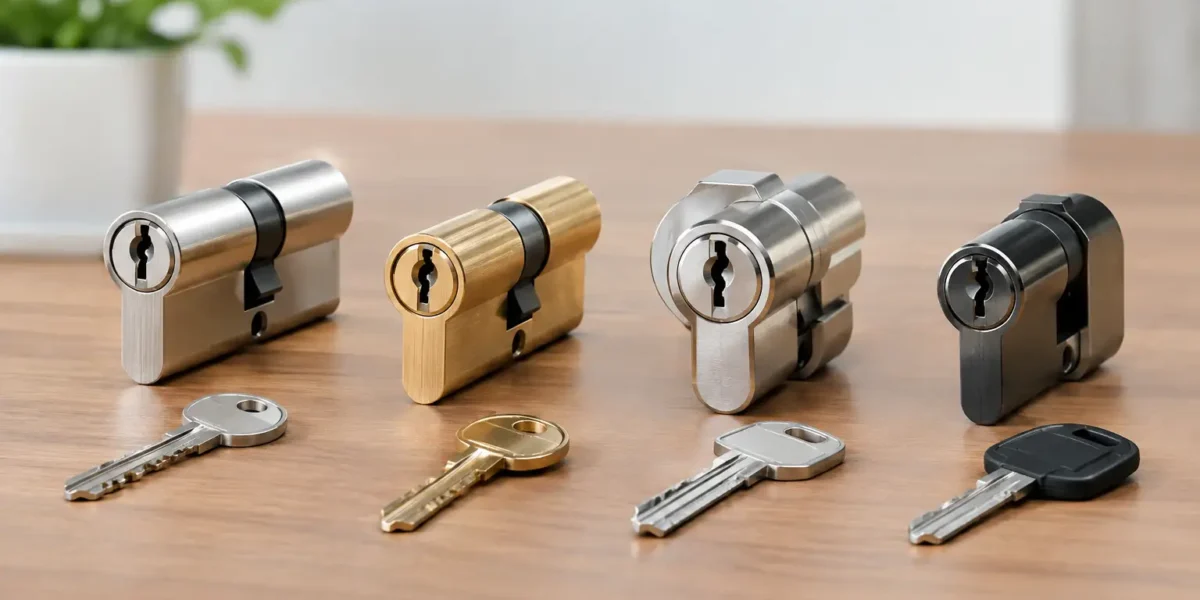
The most common choice on modern residential doors is the Euro profile cylinder. It has a familiar figure-eight shape and is widely available in different sizes and security levels. Other doors may use oval cylinders, rim cylinders, or mortise locks, so identifying the existing lock before ordering a replacement is essential.
Cylinder lock comparison: the main options
Standard Euro cylinders
Standard Euro cylinders are the entry-level option. They are commonly used on older doors, lower-risk internal access points, and properties where budget is the main driver. They can be suitable when paired with a well-maintained door and good external lighting, but they generally offer fewer defenses against forced entry techniques.
The trade-off is straightforward: they are affordable and easy to replace, but they may not offer protection against snapping, drilling, picking, or bumping. For a main entrance door, a standard cylinder is rarely the strongest long-term choice.
Anti-snap cylinders
Anti-snap cylinders are designed to break in a controlled way if an intruder tries to force or snap the exposed section. Rather than allowing access to the locking mechanism, the sacrificial part breaks while the secure core remains protected.
This is one of the most practical upgrades for a uPVC or composite front door because cylinder snapping can be a concern where too much of the lock protrudes beyond the handle. Not every anti-snap cylinder has the same testing level, however. Look beyond the label and consider independently tested security ratings.
High-security, three-star cylinders
High-security cylinders, often identified by a three-star security rating, are made for external doors where resistance to common attack methods is a priority. Depending on the model, they may include anti-snap, anti-drill, anti-pick, and anti-bump features, as well as more restricted key systems.
They cost more than standard cylinders, but that extra spend can be sensible for front doors, rear doors, side entrances, and commercial access points. The value is especially clear when the property has an exposed entrance, expensive equipment inside, or a door that is frequently left unattended.
A three-star cylinder is usually most effective when installed with compatible security handles. If the handle leaves the cylinder exposed, even a quality lock can lose some of its advantage. The fitting details deserve as much attention as the product itself.
Thumbturn cylinders
A thumbturn cylinder has a keyhole on the outside and a turn knob on the inside. It allows occupants to lock or unlock the door internally without searching for a key, which can be useful in an emergency or for households where quick exit is important.
The key consideration is whether there is nearby glazing, a letter plate, or another opening that could allow someone to reach the thumbturn from outside. Where that risk exists, a key-key cylinder may be more appropriate, or the door design may need additional protection. Convenience and security can work together, but only when the door layout is considered carefully.
Restricted-key cylinders
Restricted-key cylinders are designed so duplicate keys can only be cut through an authorized route. They are popular with landlords, small offices, managed properties, and homeowners who want firmer control over who has access.
They do not automatically make a door physically stronger, but they offer a different form of protection: better key management. If former tenants, contractors, cleaners, or staff members have had keys, a restricted system can reduce the chance of uncontrolled copies circulating for years.
Security ratings are useful, but they are not the whole story
When comparing cylinders, security ratings offer a helpful starting point. In the UK market, a three-star cylinder is widely recognized as a high-security choice. Some cylinders also carry additional test certifications for attack resistance and durability.
Still, a rating should not be viewed in isolation. A correctly fitted two-star handle combined with a one-star cylinder can provide a strong combined setup, while a three-star cylinder may be the simpler all-in-one option. The right combination depends on the existing door hardware and whether it can be upgraded without unnecessary replacement work.
Insurance requirements can also influence the decision. Some policies specify particular lock types or security standards, particularly for commercial premises and rental properties. Check the policy wording rather than assuming any replacement cylinder will satisfy it.
Size and fitting can make or break the upgrade
Cylinder length is not a cosmetic detail. A lock that sits too far outside the handle can be easier to grip and attack. One that is too short may be awkward to operate or may not work correctly with the door furniture.
A cylinder is measured from the central fixing point outward in both directions. Because doors vary in thickness, and because handles, escutcheons, and backing plates add depth, the inside and outside measurements may not be the same. A 35/45 cylinder, for example, has different lengths on each side.
This is why a visual guess is risky. Before fitting, measure accurately with the door open, or ask a qualified lock specialist to assess the door. They can also check whether the cylinder should sit flush with the handle or only project very slightly. Small fitting errors can undermine an otherwise excellent security upgrade.
Choosing the right cylinder for your property
For a typical owner-occupied home, a high-security anti-snap cylinder on the front and rear doors is often a sensible baseline. Add compatible security handles, make sure the door closes cleanly, and keep spare keys under control. If the door is glazed or has a large letter plate, consider carefully whether a thumbturn is appropriate.
For landlords, consistency can be more valuable than choosing different locks for every unit. A quality restricted-key system can simplify key control, while matched cylinders make future maintenance easier. Between tenancies, consider changing or rekeying cylinders rather than relying on returned keys.
For small commercial properties, access patterns should lead the decision. A rear service door, office entrance, stockroom, and customer-facing door may all need different levels of control. High-security cylinders are valuable, but so are durable handles, door closers, and regular checks for misalignment caused by heavy daily use.
When a new cylinder is not enough
If a key sticks, the handle lifts unevenly, the door has to be pushed or pulled to lock, or the multipoint mechanism feels rough, do not assume the cylinder is the only issue. Continuing to force a badly aligned door can damage the gearbox or leave the door vulnerable.
Likewise, following an attempted break-in, the visible cylinder may not show the full picture. Check the handle, keeps, frame, hinges, glazing, and lock mechanism for signs of distortion. A professional inspection can identify whether a targeted lock upgrade is enough or whether the door needs repair before new security hardware is fitted.
The best lock choice should feel reassuring without becoming complicated. Bee Manchester can assess the door you have, explain the options in plain language, and fit a cylinder that suits how your property is actually used. A well-chosen, correctly fitted lock is a small detail that can make every return home feel more secure.