

-
On August 17, 2026
A Guide to Composite Door Styles for Your Home
A front door has a big job to do. It needs to make the right first impression from the sidewalk, stand up to Manchester weather, keep warmth where it belongs, and give you confidence when you lock up at night. This guide to composite door styles will help you choose a design that suits your property without losing sight of security, efficiency, or everyday practicality.
Composite doors are not a one-look product. From a classic paneled entrance for a period terrace to a crisp glazed design for a newer build, there is a hive of possibilities. The best choice is usually the one that feels right for the building while meeting the needs of the people behind the door.
Guide to Composite Door Styles: Start With Your Property
Before choosing a color or decorative glass, look at the character of the property. Your front door does not have to copy every neighboring home, but it should feel considered rather than out of place.
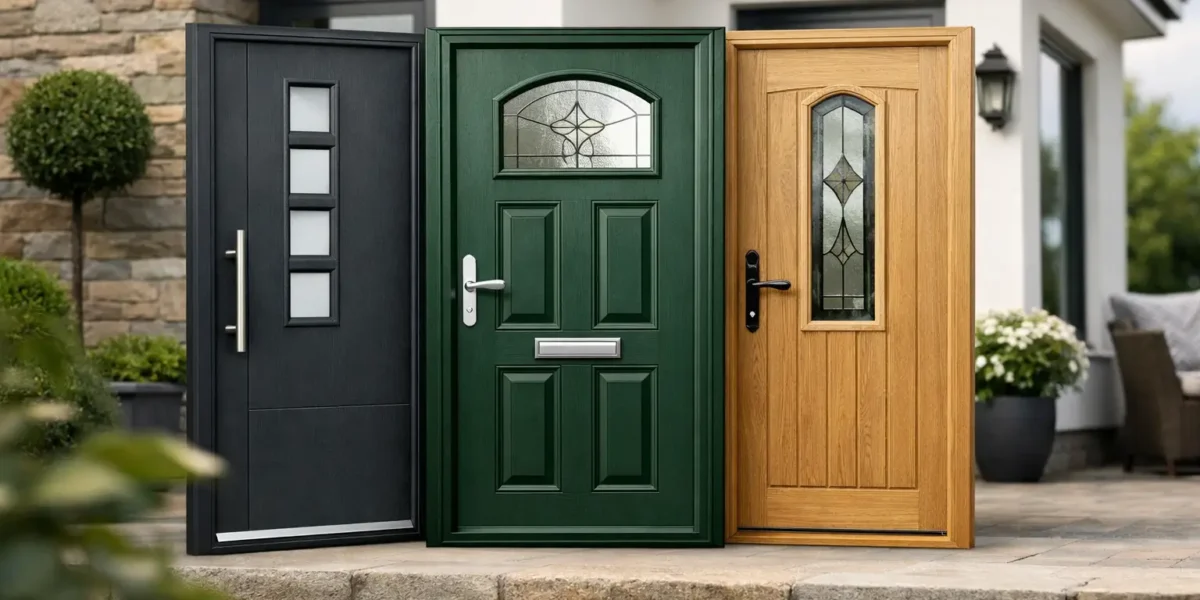
A Victorian or Edwardian home often suits a traditional composite door with raised panels, a central or upper glazed section, and heritage-style hardware. Deep red, black, navy, green, and wood-effect finishes can all work well here. If the original property has decorative brickwork, tiled paths, or a stained-glass fanlight, a more detailed door design helps carry that personality through to the entrance.
For a 1930s semi-detached house, a simple two- or four-panel style is often a dependable choice. These designs have enough detail to feel established but are not overly ornate. A restrained glazing pattern, chrome or black furniture, and a finish that complements the window frames can give the whole frontage a smart, balanced look.
Modern homes, apartments, and commercial premises usually benefit from cleaner lines. Think long vertical glass panels, flush surfaces, minimal panel detailing, and contemporary handles. Anthracite gray, black, and white remain popular because they create a sharp finish, but a bold blue or green can bring character to an otherwise plain facade.
Cottage-style doors sit somewhere between traditional and relaxed. They tend to feature vertical grooves, smaller glazed panels, or a stable-door appearance. These are a strong match for older cottages, converted properties, and homes where a warmer, less formal entrance is the goal.
Traditional, Cottage, and Contemporary Designs
Traditional panel doors
Traditional styles are a favorite for homeowners who want a front door with presence. Their molded panels add shadow and depth, so the door still looks interesting when viewed from a distance. They work particularly well with decorative knockers, letter plates, and classic numbers.
The trade-off is that a highly detailed door may feel too formal on a very modern property. If you like the security and thickness of a composite door but prefer a less ornate look, choose a traditional shape with fewer panels and simple glass.
Cottage and stable-door looks
A cottage-inspired composite door can make an entrance feel welcoming without looking old-fashioned. Vertical plank effects and modest glazing bring texture, while composite construction gives you the low-maintenance advantages of a modern door.
A true split stable door is a separate product choice, but many full composite doors recreate the visual charm of that style. This can be a practical route if you love the look but want the simplicity, weather resistance, and security of a single, solid door leaf.
Contemporary and flush doors
Contemporary styles are defined by proportion. A broad expanse of smooth color, a narrow glazed strip, or an offset window can look striking without adding unnecessary detail. They are especially effective when paired with modern uPVC windows, side panels, or a clean-lined porch.
A flush composite door can also be a smart option for landlords and business owners. Its unfussy design looks professional, is easy to coordinate with different exterior finishes, and is less likely to date quickly than a trend-led design.
Use Glazing to Add Light Without Giving Away Privacy
Glass can transform a dark hallway, but it deserves more thought than simply choosing the prettiest pattern. The location of the door, the height of the glass, and how overlooked the entrance is all matter.
Clear glazing maximizes light and suits homes with a private driveway or recessed entrance. Frosted, etched, textured, or decorative glass gives more privacy while still brightening the hall. Small upper panels are a good compromise for busy streets, while longer vertical panels can make a narrow entrance feel taller and more open.
For period homes, leaded or patterned glass can echo original features without the upkeep associated with older single-pane designs. For newer homes, plain or subtly obscured glazing often looks more natural. If there is a side panel beside the door, consider whether its glass should match the door glazing or remain simpler. Matching can create a polished, intentional entrance, but too much decorative glass may make a small frontage feel busy.
Whatever style you choose, security-rated glazing and quality fitting should be part of the conversation. A beautiful door is only buzzing with quality if it protects the property properly, too.
Color, Finish, and Hardware Make the Style Yours
Color has a bigger visual effect than most people expect. Black offers a crisp, timeless look and works with both period and modern properties. Gray is versatile and contemporary, while navy or deep green can add depth without feeling loud. Red remains a classic choice for traditional entrances, and softer shades such as duck-egg blue or cream can suit cottage-style homes.
Woodgrain finishes are worth considering if you want the appearance of timber with less maintenance. They can bring warmth to brick homes and are particularly useful where nearby doors or original architectural details have a natural wood tone. However, a wood-effect finish is not automatically the best option for every property. A smooth, solid-color finish may look cleaner on a newer home.
Hardware is where the details come together. A polished chrome handle can brighten a contemporary gray door, while black or antique-style furniture often complements a traditional design. Knockers, letter plates, hinges, and house numbers should be considered as a set. Mixing too many finishes can make a carefully chosen door look accidental.
Security should guide the hardware decision as much as appearance. Choose a strong locking system, durable handles, and properly fitted cylinders designed to resist common forms of attack. This is one area where cutting corners for the sake of style rarely pays off.
Do Not Choose Style at the Expense of Performance
Composite doors are popular because they combine a solid feel with strong insulation and low maintenance. Their layered construction is designed to resist warping, fading, and everyday knocks better than many older door types. Still, specifications vary, so compare more than the showroom appearance.
Ask about the door’s thermal performance, weather seals, locking options, glazing specification, and threshold. If your hallway is cold or your current door rattles in high winds, these details matter as much as the panel design. A well-fitted door helps reduce drafts, but even the best door will not perform as intended if it is measured or installed poorly.
Think about how the door will be used, too. Families with children, dog owners, landlords managing frequent tenant turnover, and small business owners may prioritize hard-wearing finishes and straightforward hardware. A grand decorative entrance may suit a forever home, while a simple, durable style can be the wiser long-term investment for a rental property.
A Better Way to Narrow Down Your Choice
Start by saving two or three door styles you genuinely like, then compare them against the property rather than choosing from a huge catalog all at once. Look at the brick color, window frame color, roofline, driveway, and any existing porch or canopy. A door that looks brilliant on its own can feel disconnected once those surrounding details are considered.
Next, decide what your entrance needs most. More light may point toward glazed panels. Better privacy may call for textured glass or a solid design. A tired-looking frontage may benefit from a bold color, while a character property may need a traditional panel layout and sympathetic hardware.
Finally, get professional advice before committing. Measurements, frame condition, side panels, threshold access, and locking requirements can all influence the final design. Bee Manchester can help turn your preferred look into a composite door that is built around your property, installed with care, and ready to work hard for years.
The right front door should not only look good on installation day. Choose one that makes coming home feel better, keeps the weather outside, and gives your property a welcome that holds up every day.