

-
On August 31, 2026
How to Replace Misted Window Glass Properly
A cloudy patch between the panes is more than an annoying view of your yard or street. When you replace misted window glass, you are addressing a failed insulated glass unit that can affect comfort, energy use, and the appearance of the whole property. The good news is that misted glass does not automatically mean replacing every window frame.
For many homeowners, landlords, and business owners, the practical fix is to replace the sealed double-glazed unit while keeping a sound uPVC, aluminum, timber, or composite frame in place. It is a targeted repair that restores clear glass and helps your windows get back to doing their job.
Why window glass becomes misted
Double-glazed windows are made with two panes of glass separated by a sealed spacer bar. That gap is filled with dry air or insulating gas and usually contains a desiccant material that absorbs trace moisture. Together, these parts create an insulated glass unit.
Over time, the perimeter seal can deteriorate. Sun exposure, temperature changes, movement in the frame, age, poor installation, or accidental damage can all contribute. Once the seal fails, moist air enters the cavity. Condensation forms between the panes, leaving the familiar foggy, streaky, or sometimes dirty-looking appearance that cannot be wiped away from either side.
External condensation is different. On a cold morning, a high-performing window can sometimes show moisture on the outside pane because it is keeping heat inside the room. Condensation on the inside surface may point to high indoor humidity, weak ventilation, or a cold room. But moisture trapped between panes is a seal failure and calls for a glazing repair.
Can you replace misted window glass without a new window?
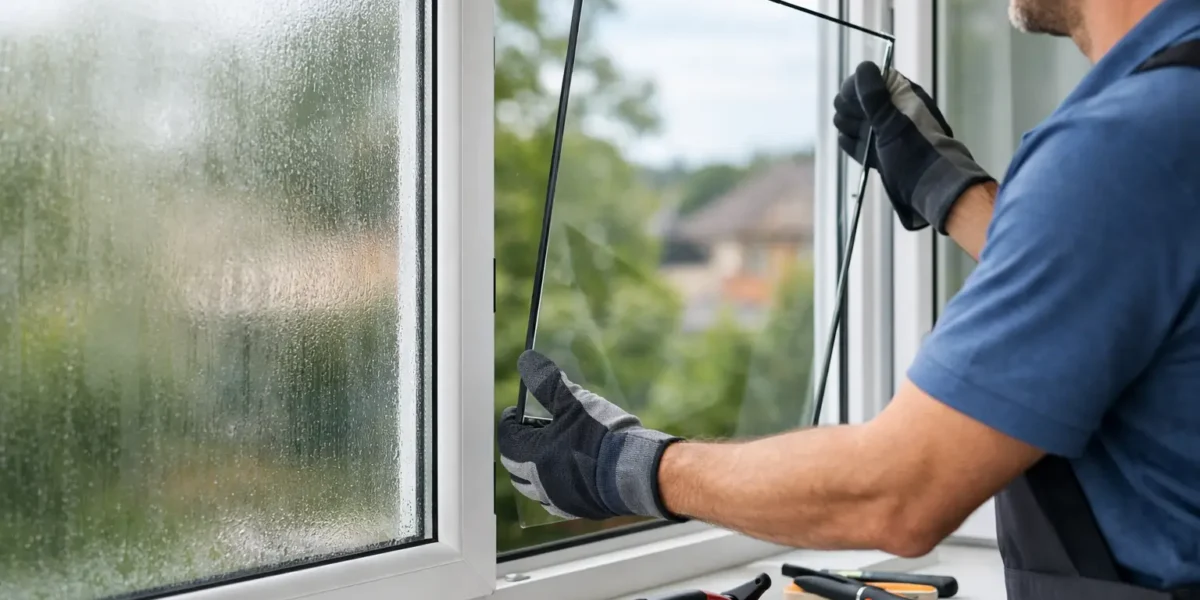
Usually, yes. If the frame is secure, square, and free from serious rot, warping, cracks, or failed hardware, replacing only the insulated glass unit is often the sensible choice. A specialist measures the existing unit, orders a made-to-fit replacement, removes the glazing beads, and fits new sealed glass into the original sash or frame.
This approach costs less and creates less disruption than a full window replacement. It also preserves the style of your existing windows, which can matter in rental properties, apartments, commercial units, and homes where matching every opening is important.
That said, glass-only replacement is not always the best value. If the frame leaks, the opening is hard to operate, the locks are outdated, or several units have failed after many years of service, a full replacement may deliver better long-term performance. The right choice depends on the condition of the entire window, not only the cloudy pane.
Signs glass-only replacement is a good fit
A replacement sealed unit is typically suitable when the misting is contained between the panes and the frame still closes tightly. The handles, hinges, locks, and drainage channels should also be working as they should. A professional inspection can spot issues that are easy to miss, such as damaged gaskets, loose beads, or a sash that has dropped out of alignment.
It is especially worthwhile when one or two panes have failed while the rest of the windows remain clear and functional. Replacing those individual units can make the elevation look sharper without committing to a full-house project.
When a complete window replacement makes more sense
Full replacement deserves consideration when timber frames are rotten, uPVC has become brittle or badly discolored, aluminum frames are distorted, or drafts continue around the opening. It can also be the better route where security needs improving. Modern window systems can combine energy-efficient glazing with stronger locking points, reinforced frames, and upgraded handles.
For landlords and small commercial owners, recurring maintenance can be the deciding factor. A low-cost glass repair today may not be the economical answer if old frames, worn hinges, and unreliable locks are likely to cause further callouts soon.
What happens when you replace misted window glass
A quality repair starts with accurate measuring, not a guess based on the visible glass size. The replacement unit must match the overall thickness, width, height, spacer configuration, and glazing system. An incorrect unit can leave gaps, put pressure on the frame, compromise weather sealing, or prevent the beads from fitting properly.
The installer will also establish whether the glass needs to meet a safety standard. Doors, sidelights, low-level glazing, bathrooms, and other vulnerable locations may require tempered or laminated safety glass. This is not an area for a like-for-like shortcut based only on what is cheapest.
Once the correct unit is made, the old glass is carefully removed and the frame is checked before the new unit is fitted. Packers are used to support the glass correctly, helping the sash remain aligned and operate smoothly. Fresh glazing beads and seals may be fitted where needed, then the installer checks for secure closure, clean sightlines, and smooth operation.
A professional job should leave the glass sitting evenly in the frame, without rattles, excessive pressure, damaged beads, or gaps around the edges. It is skilled work, particularly with large panes, upper-floor windows, patio doors, and older frames where brittle components can break during removal.
Choosing the right replacement glass
Replacing a failed unit is an opportunity to improve performance rather than simply repeat the original specification. Standard clear double glazing may be all that is needed in a sheltered room, but different rooms and properties call for different priorities.
Low-emissivity glass has a near-invisible coating that reflects warmth back into the room, helping reduce heat loss. Argon-filled units can improve insulation further. If traffic, neighbors, or late-night activity are an issue, acoustic laminated glass can reduce outside noise, although it may cost more and add weight.
Privacy glass is useful for bathrooms, entryways, and overlooked spaces. Obscure patterns allow daylight through while limiting views. Solar-control glass can be worth considering on large south- or west-facing windows that make rooms uncomfortably warm in strong sun. Each option has a trade-off: higher-specification glass may cost more upfront, and heavily tinted or solar-control glass can alter the amount and quality of daylight entering the room.
For properties in Manchester, changing weather and damp conditions make a well-sealed unit particularly valuable. Better glazing will not fix every condensation issue inside a home, but it can make internal glass surfaces warmer and reduce the conditions that encourage moisture to collect.
Why drilling or DIY defogging is rarely a lasting fix
You may see services or videos suggesting that misted windows can be drilled, cleaned, and resealed. While this can temporarily improve the view, it does not recreate the factory-sealed insulated unit or reliably restore its original thermal performance. The desiccant has often become saturated, and the unit may fog again.
DIY replacement also brings real risks. Double-glazed units are heavy, sharp, and easy to measure incorrectly. A cracked pane, broken glazing bead, damaged gasket, or poorly supported sash can turn a small repair into a more expensive problem. Safety glass requirements and warranty considerations add another reason to use an experienced glazing professional.
Getting the most from a glazing repair
Before approving a quote, ask whether it covers measuring, manufacture, removal, fitting, disposal of the old unit, and a warranty for both the glass and workmanship. It is also worth checking whether the proposed unit includes energy-efficient glass, gas filling, or a specific spacer type, rather than assuming every replacement offers the same performance.
Take a look at nearby windows while arranging the repair. If more than one pane is starting to show haze around the edges, dealing with them together can be more convenient and helps keep the appearance consistent. A specialist can also assess handles, hinges, locks, and seals at the same visit, which is useful when a window is stiff, drafty, or difficult to secure.
Bee Manchester can help property owners identify whether a misted pane needs a replacement insulated unit or whether the wider window would benefit from repair or renewal. Clear advice, correct measuring, and careful fitting keep the process buzzing along without unnecessary work.
A clear window should do more than improve the view. It should close securely, hold warmth where it belongs, and make the room feel cared for every time the light comes through.