

-
On August 29, 2026
Multipoint Versus Mortice Locks: Which Is Better?
A front door can look solid, close neatly, and still leave the property vulnerable if its locking system is worn, poorly fitted, or simply wrong for the door. When comparing multipoint versus mortice locks, the better choice is rarely about picking the lock with the most parts. It is about matching the hardware to the door construction, the level of use, and the security risks at your home, rental, or business premises.
For Manchester properties, this often comes down to the door already in place. A multipoint lock is common on uPVC, composite, and many aluminum doors, while a mortice lock is usually found on traditional timber doors. Both can provide excellent protection when they are correctly specified, professionally installed, and maintained. Here is how to tell them apart.
How Multipoint Locks Work
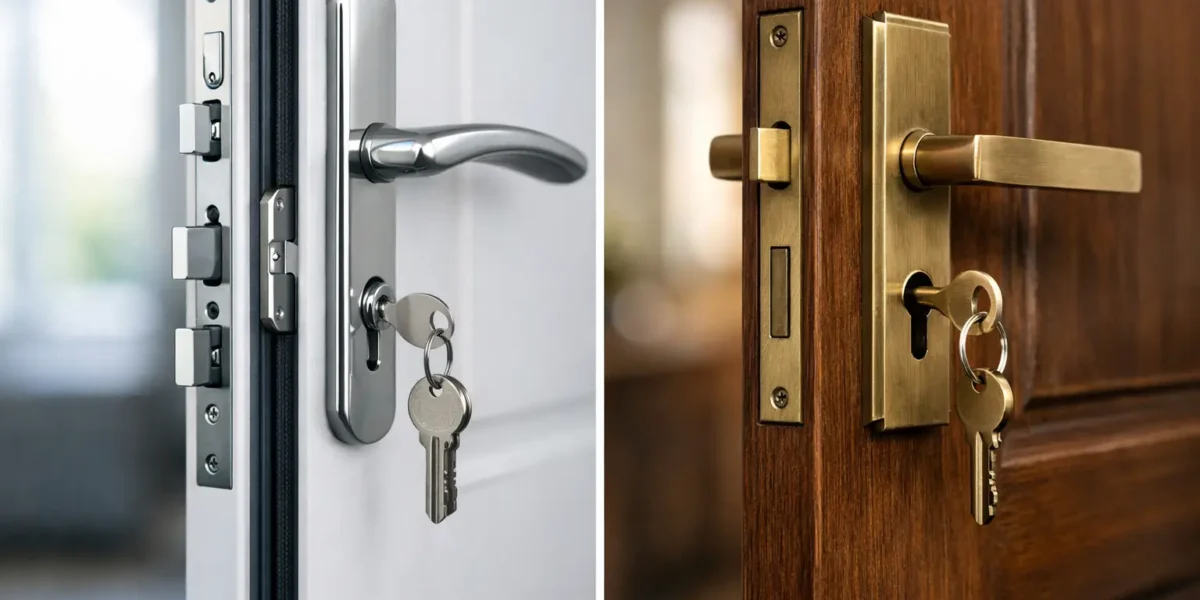
A multipoint lock secures a door at several positions along its edge instead of at one central point. Lifting the handle engages a long locking strip inside the door, which may use hooks, rollers, bolts, mushroom cams, or a combination of these mechanisms. Turning the key then locks the handle in place.
This arrangement spreads the force of an attempted attack across the height of the door. It also helps pull a warped or weather-affected door closer to the frame, which can improve the seal against drafts and rain. That is one reason multipoint systems are a natural fit for modern external doors where security, thermal efficiency, and a tight close all matter.
The cylinder is a key part of the setup. On many multipoint doors, the visible key cylinder controls the entire lock. A high-quality, correctly fitted cylinder with anti-snap, anti-drill, and anti-pick features can make a major difference. A strong locking strip cannot compensate for a vulnerable or poorly fitted cylinder.
Multipoint locks are not maintenance-free. Stiff handles, a key that turns reluctantly, or a door that needs lifting to lock can point to alignment problems. Continuing to force the handle may damage the gearbox or locking strip. In many cases, an adjustment to the hinges, keeps, or door alignment solves the issue before a full replacement is needed.
What Is a Mortice Lock?
A mortice lock is fitted into a pocket, or mortice, cut into the edge of a timber door. Unlike a multipoint system, it generally locks at one main position. The two familiar types are a deadlock, operated only by a key, and a sashlock, which combines a latch operated by a handle with a key-operated deadbolt.
The quality of a mortice lock varies greatly. A basic internal lock is not suitable for an external entrance, while a properly rated five-lever mortice deadlock is a serious security component for many wooden front and back doors. The lock body sits within the door, making it less exposed than surface-mounted hardware, but the strength of the door, frame, strike plate, and screws still matters.
Mortice locks suit period homes and solid timber doors particularly well. They can retain a traditional appearance, work with a wide range of handles and door furniture, and provide dependable everyday security. On a timber front door, they are often paired with a night latch or rim cylinder for convenient access and an additional locking point.
Multipoint Versus Mortice Locks: The Key Differences
The main difference is the number and placement of locking points. A multipoint system fastens the door to the frame in several places, usually when the handle is lifted. A mortice lock typically drives one deadbolt into a strike plate at the center of the door edge.
That does not mean multipoint is automatically safer. A correctly installed, high-security mortice deadlock on a sound timber door can be an excellent choice. Equally, an old multipoint mechanism with a weak cylinder, damaged keeps, or poor door alignment can create a real security concern. Security depends on the whole door set, not one product label.
Door material also shapes the decision. Multipoint mechanisms are designed around the profiles of uPVC, composite, and many aluminum doors. Retrofitting a standard mortice lock into these doors is usually impractical and can compromise the structure or warranty. Timber doors have enough depth to house a mortice case, so this remains the conventional and often most attractive option.
Convenience is another consideration. With a multipoint lock, one lift of the handle engages several points before the key secures them. With a mortice deadlock, you operate the key directly. Neither is difficult, but families, tenants, and staff need to understand the correct locking routine. A multipoint door that is only pulled shut without lifting the handle may not be fully secured.
Cost depends on the door, hardware grade, and amount of repair work required. Replacing a cylinder or adjusting a multipoint mechanism can be straightforward. Replacing a failed gearbox, damaged strip, or obsolete mechanism may be more involved. For a mortice lock, costs can rise where the door requires careful cutting, a new strike plate, or repairs to a worn timber frame.
Which Lock Fits Your Property?
For a composite or uPVC front door, a multipoint system is generally the right route. The focus should be on choosing compatible replacement parts and ensuring the door closes and locks without force. If you are upgrading security, ask about the cylinder as well as the mechanism. It is often the most sensible place to improve resistance to common forced-entry methods.
For a traditional wooden door, a mortice lock is often the better fit. A high-quality five-lever deadlock can provide strong protection without changing the character of the entrance. If the door is used frequently, a sashlock may offer the practicality of a latch and handle alongside a key-operated deadbolt.
Landlords should also consider durability and ease of use. A lock that is technically secure but difficult for tenants to operate may be left unlatched or mishandled. Small businesses need to think about staff access, closing routines, and the wear placed on a frequently used entrance. The right solution may include upgraded cylinders, reinforced strike plates, security handles, or door adjustments rather than replacing every part of the locking system.
When Repair Is Better Than Replacement
Not every fault calls for a new lock. A multipoint door that catches at the top or bottom may need hinge or keep adjustments. A loose handle may need new fixings. A key that sticks in a mortice lock can result from worn keys, a dry mechanism, or movement in the timber door caused by changing weather.
Replacement becomes the wiser option when the lock is damaged, obsolete, repeatedly failing, or no longer provides the level of security your property needs. Signs worth acting on include a handle that will not lift properly, a key that spins without locking, visible damage after an attempted break-in, or a door that cannot be locked consistently.
Avoid forcing a stiff lock or spraying it with unsuitable oil. This can attract dirt, mask a more serious alignment issue, and turn a repairable problem into a failed mechanism. A proper inspection identifies whether the fault is in the cylinder, lock case, gearbox, door alignment, or frame keeps.
Make the Choice Around the Whole Door
Choosing between these lock types should start with an on-site assessment, not a guess based on the keyhole. Check the door material, frame condition, alignment, handle operation, cylinder type, and the lock’s current performance. Then choose hardware that suits the property and how people actually use it.
Bee Manchester can assess existing doors, repair worn locking systems, and fit security upgrades that suit both the door and the building. The best result is a lock that closes cleanly, looks right, and gives you confidence every time the door is secured – a small detail that makes a meaningful difference to the safety of the property behind it.