

-
On September 2, 2026
French Doors vs Bifold Doors for Manchester Homes
A rear-door upgrade can change how a home feels every day. It can bring more daylight into a kitchen, make the garden easier to enjoy, and give a tired extension a sharper finish. But when comparing french doors vs bifold doors, the best-looking option is not automatically the best fit for your opening, budget, or routine.
French doors offer a classic, practical route to the garden. Bifold doors create a wider opening and a more contemporary indoor-outdoor feel. Both can be secure, energy-efficient, and tailored to suit your property, but they work differently once they are fitted.
French doors vs bifold doors: the core difference
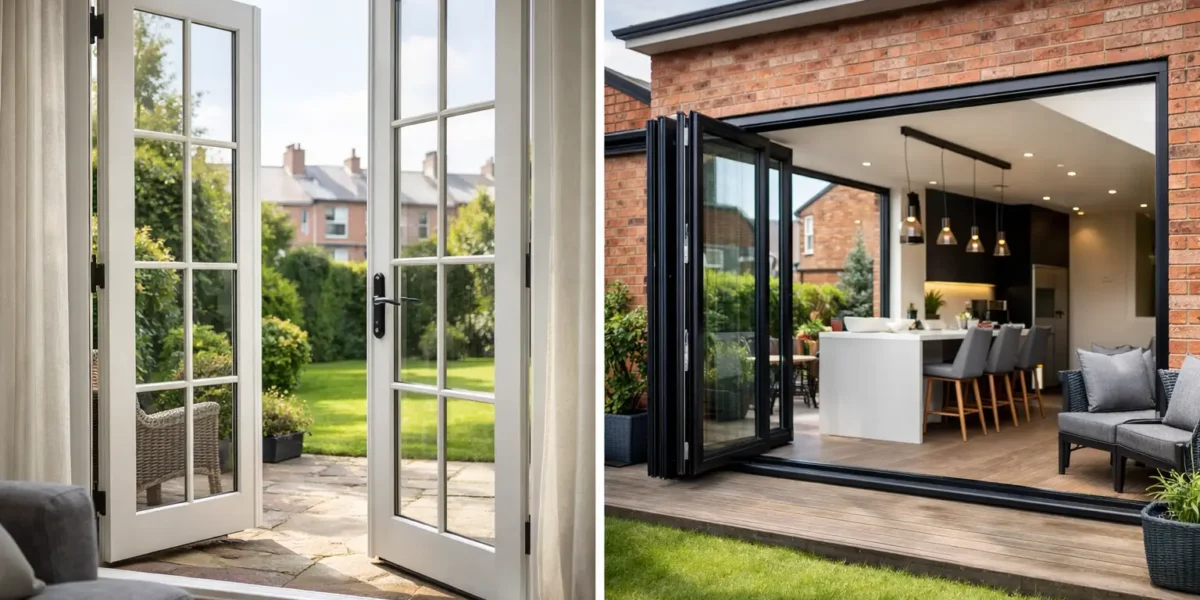
French doors are a pair of hinged glazed doors that meet in the middle. One door is commonly used as the everyday access door, while opening both creates a generous route outside. Their symmetrical design suits traditional homes, new builds, garden rooms, and smaller extensions equally well.
Bifold doors use several glazed panels that fold and slide along a track. When open, the panels stack neatly to one or both sides of the aperture. This can open up a substantial section of wall, making bifolds especially popular for larger kitchen extensions and properties that lead directly onto a patio or garden.
The choice usually comes down to the size of the opening and how you want to use it. If you need a smart, reliable doorway for daily access, French doors are often more than enough. If the goal is to make the boundary between kitchen and garden feel almost removable on warm days, bifolds have the advantage.
Daylight, views, and the look of the room
Both styles use large glazed areas, so either can increase natural light compared with a solid rear door and a separate window. The visual result is different, though.
French doors have a central meeting point where the two opening panels close together. That classic divide gives the doors character and frames the view nicely, particularly in period properties or homes where a more traditional design is wanted. They can be specified with decorative glazing bars, a range of frame colors, and matching hardware for a more individual finish.
Bifold doors usually have more vertical frames because they are made from multiple panels. When closed, those sightlines are part of the design. For some homeowners, the modern panelled appearance is a feature. For others, particularly where an uninterrupted garden view matters most, a large sliding door may be worth considering alongside these two options.
When the bifolds are fully open, however, they create a wide, open connection to the outside that French doors cannot match. For entertaining, summer barbecues, or keeping an eye on children in the garden, that open span can make an extension feel bigger and more social.
Space and everyday access
The way each door opens deserves more attention than it often gets. French door leaves swing inward or outward, so they need clear space on one side of the threshold. Outward-opening doors are common where indoor floor space is limited, but they need a clear patio area and should not obstruct paths, steps, or outdoor furniture.
A bifold system folds its panels to the side, which reduces the swing space required. Yet the stacked panels still need somewhere to sit when open. Depending on the configuration, they can project into the room or across the patio, so the design should be planned around how you use the space.
For quick trips outside with the laundry, bins, or a cup of coffee, ask about a traffic door. This is a standard hinged-style access panel within a bifold setup, allowing you to use one door without folding back the entire system. It is a useful feature, but it adds another decision to the layout and may affect where the panels stack.
French doors are simpler in this respect. Open one leaf and you are out. Open both and you have a broad access point for garden furniture, prams, or larger household items. For standard-sized openings, that simplicity is often a major selling point.
Security should be built into either choice
A large glazed door should never mean a weaker back entrance. Quality French doors and bifold doors can both be fitted with strong multi-point locking, reinforced frames, secure hinges, toughened safety glass, and high-security cylinders where appropriate.
Bifolds have more panels, hinges, handles, and locking points, which means the quality of the system and installation matters greatly. A well-made, correctly fitted bifold door should close smoothly, align properly, and lock with confidence. Poor adjustment can lead to dragging panels, difficult locking, or gaps that undermine performance.
French doors have fewer moving parts, which can make them a reassuringly straightforward option for landlords and homeowners who prioritize ease of use. Look beyond the handle, though. The frame, locking mechanism, hinges, glass specification, and fitting standards all contribute to the finished level of protection.
At Bee Manchester, door choices are treated as more than a style decision. The right configuration should support your property’s security while still giving you the light, access, and curb appeal you want.
Energy efficiency and maintenance
Modern glazed doors can help a home feel warmer and more comfortable when they are specified properly. Energy performance depends on the complete unit, not simply the fact that it has double glazing. Glass type, frame material, weather seals, thermal breaks, installation quality, and the condition of the surrounding opening all play a part.
French doors have a relatively straightforward frame and sealing arrangement. With good-quality double glazing and well-fitted seals, they are an effective choice for improving an older, drafty rear door. They also tend to be easier to inspect and maintain because there are fewer components.
Bifolds can also perform very well, but their multiple panels and folding joints require precise alignment. The bottom track needs occasional cleaning so grit, leaves, and debris do not interfere with smooth operation. Hinges and running gear may need periodic adjustment over the years, particularly in busy family homes where the doors are used often.
That does not make bifolds high-maintenance. It simply means they reward proper installation and a little routine care. If a low-fuss door is your priority, French doors may edge ahead. If you are happy to keep tracks clear in return for a bigger opening, bifolds remain a strong option.
Cost, value, and choosing the right opening
French doors are generally the more budget-friendly choice. They use fewer panels and less specialist hardware, and they can be ideal for replacing existing patio doors or fitting within a modest aperture. They deliver a meaningful upgrade in appearance, insulation, and garden access without requiring a major redesign.
Bifold doors usually cost more because of their size, panel system, tracks, hardware, and fitting requirements. They can also involve structural work if you are widening an opening or adding steel support above it. That added investment can be worthwhile when a kitchen extension or garden room is the heart of the project, but it should be viewed as part of the wider build budget.
Think about value in terms of use, not just first price. A door that opens easily, suits your layout, keeps the weather out, and complements the property will feel like money well spent for years.
When French doors are the better choice
French doors are often the stronger option for a traditional property, a smaller opening, or a homeowner who wants everyday practicality with classic appeal. They are also a sensible choice where budget needs to stretch across other improvements, such as replacement windows, upgraded locks, or new glazing.
They work particularly well if you want a clear route to the garden without the additional mechanics of a folding system. With the right color, handles, glazing style, and frame finish, they can look crisp and contemporary or comfortably in keeping with an older home.
When bifold doors are worth it
Bifolds come into their own where you have a wide rear opening and want the garden to become an extension of the living space. They suit open-plan kitchens, dining areas, extensions, and commercial spaces where flexible access and visual impact matter.
Choose them for the fully open experience, not just because they are fashionable. If they will spend most of the year closed and you only need one easy access door, French doors may offer better day-to-day value. If you regularly host, use the patio, or want to transform how a large room connects to outside, bifolds can create that sought-after wow factor.
Before making a final choice, measure the opening, consider furniture placement and patio clearance, and think honestly about how the door will be used on an ordinary Tuesday as well as a sunny weekend. A professional survey can turn those details into a door solution that is buzzing with quality long after installation day.