

-
On September 16, 2026
How to Maintain Composite Doors Year-Round
A composite door is built to handle everyday life: wet coats, muddy shoes, school-run rushes, parcel deliveries, and Manchester weather that can change before lunch. That durability does not mean it needs no attention, though. Knowing how to maintain composite doors helps preserve the finish, keeps the lock operating properly, and gives you the best chance of avoiding a small adjustment becoming an urgent repair.
The good news is that maintenance is usually straightforward. You do not need harsh chemicals, specialist polishing kits, or a free weekend. A regular wipe-down, a few sensible checks, and prompt action when something feels wrong will keep a quality composite door looking sharp and working as it should.
Why composite door care is worth doing
Composite doors combine several materials to create a strong, insulated external door. Their weather-resistant skin and solid construction make them a popular choice for homeowners who want security, curb appeal, and less upkeep than a traditional timber door. Still, the outer surface can collect grime, the moving hardware can loosen or dry out, and the seals can pick up debris.
Ignoring these details may affect more than appearance. A stiff handle, a door that catches on the frame, or worn weatherstripping can compromise ease of use, drafts, and security. Regular care protects the investment you have made in your property and helps your entrance continue to make the right first impression.
How to maintain composite doors with routine cleaning
For most households, cleaning the door every month or two is enough. Properties on busy roads, near construction work, or exposed to coastal air may need more frequent attention because dirt and airborne residue can build up faster.
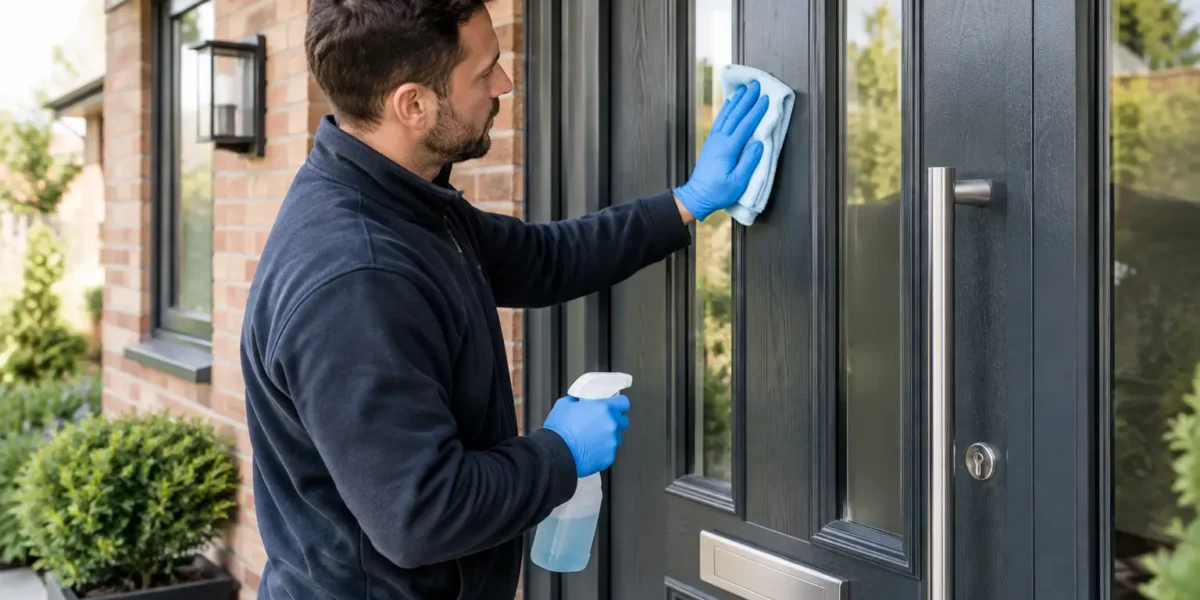
Start with a bucket of warm water and a small amount of mild dish soap. Use a soft microfiber cloth or non-abrasive sponge to wipe the door slab, frame, threshold, and visible edges. Work from top to bottom so dirty water does not run over areas you have already cleaned. Rinse with clean water and dry with another soft cloth to prevent streaks.
Pay attention to the lower portion of the door, where splashes from rain, dirt, and de-icing products tend to gather. Do not forget the hinge side and the area around the letter plate, knocker, and handle. These are easy to overlook but can hold moisture and grime.
Avoid scouring pads, steel wool, abrasive cream cleaners, bleach, and solvent-based products. They can dull, scratch, or damage the colored finish. The same caution applies to pressure washers. A powerful jet can force water around seals and hardware, so a gentle hand wash is the safer choice.
Clean glass and decorative panels carefully
If your composite door includes glazed panels, clean the glass with a standard non-abrasive glass cleaner applied to a cloth rather than sprayed heavily around the frame. This reduces the chance of cleaner settling in seals or flowing into hardware.
For decorative glass, leaded details, or textured panels, use a soft brush only if needed and avoid scraping stubborn marks with blades. If paint, cement, or adhesive has landed on the door during nearby work, stop before reaching for a strong remover. Ask a door professional for advice based on the door finish and the substance involved.
Check locks, handles, and hinges twice a year
Your door hardware does the security work, so it deserves a simple spring and fall inspection. Open and close the door slowly. The latch should engage cleanly, the handle should return smoothly, and the key should turn without force. If you need to lift, pull, or shoulder the door into position before locking it, the door may need adjustment.
Wipe hardware with a damp cloth and dry it thoroughly. Then use a light lubricant suitable for door locks on the key cylinder and moving lock parts. Follow the product instructions and use only a small amount. Thick oils can attract dust, while the wrong lubricant can leave a sticky residue inside the mechanism.
Hinges may also benefit from a small amount of appropriate lubricant if they squeak or feel stiff. Wipe away excess immediately so it does not run onto the frame or door surface. Check visible screws in handles, knockers, letter plates, and hinges for looseness, but do not overtighten them. Overdoing it can strip threads or affect alignment.
A multipoint locking system should never be forced. If the handle is difficult to lift or the key feels like it is catching, the issue could be alignment rather than the lock itself. Continuing to force it can cause more expensive damage. A qualified door and lock specialist can diagnose whether the keeps, hinges, frame, or mechanism need adjustment.
Keep seals, drainage, and the threshold clear
The seals around a composite door help block drafts, rain, and noise. Every few months, wipe them with a clean damp cloth to remove dust, leaves, and grit. Look for cracks, flattening, tears, or sections that have come loose from the frame. Damaged seals are usually a straightforward fix, but they should not be left until cold weather exposes the problem.
Check the threshold and drainage channels at the bottom of the frame, especially after autumn leaf fall or heavy rain. Sweep away soil and debris so water can drain as designed. Standing water around the sill is not something to ignore, even if the door itself appears watertight.
While you are there, inspect the door frame for cracks, gaps, or deteriorating sealant where it meets the wall. The door may be in excellent condition while the surrounding sealant is allowing moisture or drafts into the property. This is particularly worthwhile for landlords between tenancies and small commercial owners managing regular foot traffic.
Watch for changes in fit through the seasons
Composite doors are designed for outdoor conditions, but seasonal temperature changes can reveal minor alignment issues. The signs are usually clear: the door rubs on the frame, the gap looks uneven, the latch misses its keep, or the handle has become harder to operate.
Do not assume a sticking door will settle on its own. First, check whether dirt or an object is obstructing the threshold. If it is clear, avoid sanding, planing, or modifying the door yourself. Composite doors are engineered products, and altering the slab can affect its finish, weather resistance, and warranty terms. Professional adjustment is the sensible route.
This is also a good time to look at energy performance from inside the house. On a windy day, feel carefully around the edges for noticeable drafts. Condensation on nearby glass does not always mean the door has failed, as indoor humidity and ventilation play a part, but persistent cold spots or water ingress deserve investigation.
Protect the finish without overdoing it
One reason composite doors are so appealing is that they generally do not need repainting or staining. Their finish is intended to retain its color with minimal effort. The best protection is regular gentle cleaning and avoiding impacts from bikes, bins, garden tools, and heavy furniture.
If a light surface mark appears, try warm soapy water first. For more stubborn marks, use only a cleaner approved for composite door surfaces and test it on a small, discreet area. Deep scratches, chips, fading, or cracking should be assessed professionally. A repair may be possible, but the right approach depends on the door’s finish, color, and extent of damage.
Be cautious with seasonal decorations too. Adhesive hooks, tapes, and wreath fixings can mark the surface or leave residue behind. A removable hanging method that does not rub against the door is usually the better option.
When to call a professional
Some maintenance jobs are ideal for a homeowner, but security and alignment issues are not worth guessing at. Arrange an inspection if the lock jams, the key turns inconsistently, the handle droops, the door has dropped, you can see daylight around closed edges, or water is entering the property.
It is also wise to get help after an attempted break-in, even if the door still locks. Damage to the cylinder, keeps, hinges, or multipoint mechanism may not be obvious from the outside. For Manchester property owners, Bee Manchester can assess composite door hardware, adjustments, seals, and security concerns before a minor fault disrupts your day.
A well-maintained composite door should feel reassuring every time you close it: clean at the curb, snug against the weather, and secure under lock and key. Give it a little attention before problems take hold, and it will keep working hard at the front of your home or business.