

-
On September 14, 2026
Door Security That Protects Your Property
A front door can look solid, close neatly, and still be the weakest point in a property. Effective door security is not just about fitting a more expensive lock. It is about how the lock, cylinder, handle, hinges, frame, glazing, and installation work together when someone tries to force their way in.
For homeowners, landlords, and small business owners, that distinction matters. A new lock may solve a specific problem, but a complete security upgrade can protect the property, improve day-to-day confidence, and often make an entrance look sharper at the same time.
Door Security Starts With the Whole Door Set
The lock gets most of the attention, and rightly so, but it cannot compensate for a weak frame or poorly fitted door. A determined intruder will usually target the easiest failure point. That could be a vulnerable cylinder, a loose strike plate, exposed hinges, thin glass, or a frame that moves under pressure.
Think of the door as a system. The leaf is the moving part, the frame anchors it to the building, the hinges hold its weight, and the lock keeps it closed. If one element is worn, damaged, or poorly installed, the rest of the system has less to work with.
This is why a professional inspection is useful before choosing hardware. A timber door with a sound frame may only need upgraded locking and reinforcement. An older uPVC door that has dropped on its hinges may need adjustment before a new lock will operate correctly. A warped external door may be better replaced than repeatedly repaired.
Choose the Right Lock for the Door and Property
There is no single best lock for every entrance. The right choice depends on the door material, whether it is front or rear access, the property type, and how the door is used.
Many uPVC and composite doors use a multipoint locking mechanism. When the handle is lifted, several hooks, rollers, bolts, or mushroom cams engage around the frame. This spreads resistance across the door rather than relying on one latch point. It is a strong setup, provided the door is aligned correctly and the mechanism is in good working order.
The cylinder at the center of this type of lock deserves particular care. Anti-snap cylinders are designed to reduce the risk of a common forced-entry technique in which an exposed cylinder is broken. A good cylinder should also offer resistance to picking, drilling, and bumping. The correct size matters just as much as the security rating. If a cylinder protrudes too far beyond the handle, it can create an unnecessary point of attack.
Traditional timber doors often use a combination of a night latch and a deadbolt. A deadbolt gives a deeper, more secure fixing into the frame, while a quality night latch can provide convenient everyday access. For commercial premises, lock selection may also need to account for staff access, emergency exit requirements, shutters, and insurance conditions.
A lock upgrade should never make safe exit more difficult. On occupied homes and workplaces, people must be able to leave quickly in an emergency. That is one reason professional advice is worth having, especially where thumb turns, shared access, or escape routes are involved.
Do Not Overlook Handles and Strike Plates
Handles are not simply decorative. On doors with euro cylinders, a security handle can help shield the cylinder from gripping, twisting, and drilling attempts. Look for hardware that is firmly fixed through the door rather than attached with short screws that only bite into the outer skin.
Inside the frame, the strike plate is where the latch or bolt engages. A basic plate held in place with small screws offers limited resistance. Reinforced strike plates fitted with longer screws that reach solid framing can make forced entry much harder. This is a small improvement with a meaningful effect, particularly on older timber doors.
Strengthen the Frame, Hinges, and Glazing
A strong lock fitted to a tired frame is like putting a heavy padlock on a damaged gate. The hardware may hold, but the surrounding material can still fail.
Check for cracks, movement, rot, loose trim, or gaps around the frame. On uPVC doors, look for signs that the sash has dropped, such as scraping at the threshold, a handle that needs force to lift, or uneven gaps around the edges. These issues can stop multipoint locks from engaging fully and accelerate wear on the mechanism.
Hinges need equal attention. Doors that open outward should have hinge bolts or security studs so they cannot simply be lifted away if hinge pins are attacked. Even inward-opening doors benefit from correctly adjusted, good-quality hinges because sagging can weaken lock engagement over time.
Glazing near a lock can also affect the security of the entrance. Toughened or laminated safety glass offers greater resistance than ordinary glass. Laminated glass remains held together by an interlayer if broken, which can slow an attempted entry. Decorative glazed panels and sidelights do not have to be avoided, but they should be specified with security and privacy in mind.
The Small Gaps That Create Big Risks
Not every security issue requires a major installation. Sometimes the most useful improvements are simple repairs and better habits.
A loose letter plate can allow someone to reach toward internal handles or thumb turns. A suitable letter plate guard can reduce that risk. Keys should not be left within reach of the door, including on a nearby table or hook. Spare keys hidden under mats, plant pots, or bins are familiar to opportunistic thieves and offer very little real protection.
For rental properties, changing or rekeying locks between tenancies is a sensible safeguard. Landlords should also make sure every external door closes, locks, and opens properly. A tenant who has to pull hard on a door or force a handle upward may stop locking it correctly, leaving the property less secure and creating a maintenance issue that grows over time.
For small businesses, closing procedures matter as much as hardware. Staff should know who holds keys, when doors are checked, and how faults are reported. A rear service door that is rarely used can become a weak point if its lock has been sticking for months.
Smart Door Security Has a Place, but It Is Not a Shortcut
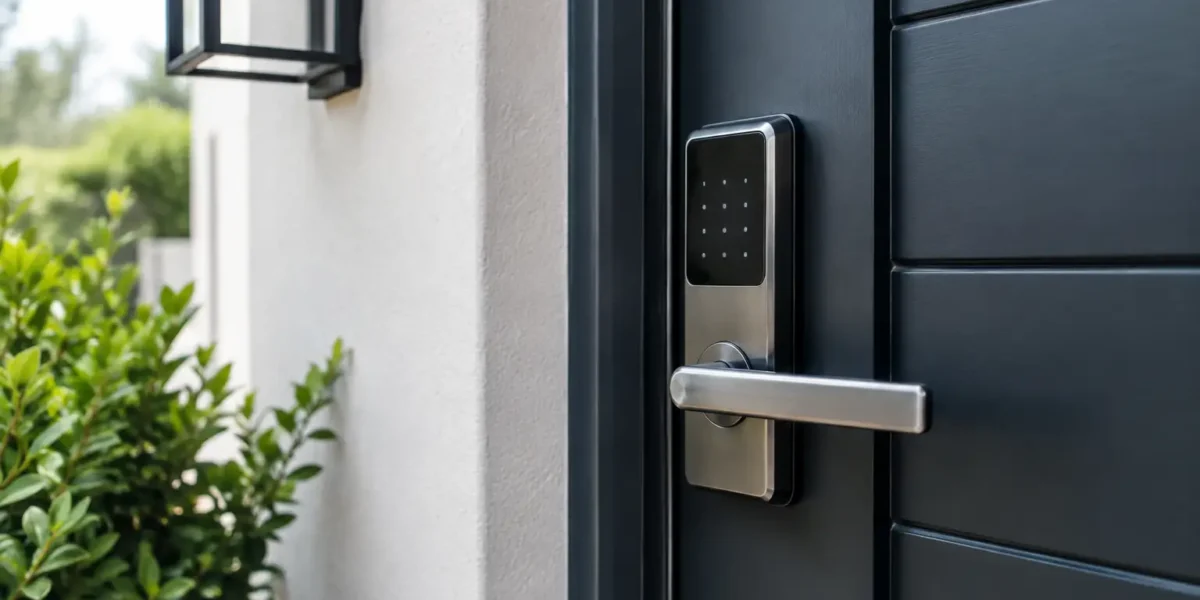
Video doorbells, smart locks, alarms, and exterior lighting can add useful layers of protection. They can also make daily access easier for busy households, rental managers, and business owners who need to control entry without handing out multiple keys.
However, smart technology does not replace physical strength. A smart lock on a misaligned door, or a camera watching a weak frame, will not stop forced entry. Start with a well-fitted door, strong locking, protected hardware, and a stable frame. Add technology where it solves a real need.
For example, motion-activated lighting can make a dark side entrance less attractive to intruders. A video doorbell can help identify callers and deliveries. Keyless access can be practical for a managed rental or small office. Each option has trade-offs, including battery changes, app access, Wi-Fi reliability, and the need to manage user permissions carefully.
When Repair Makes Sense and When Replacement Is Better
Door repairs are often the fastest route to better security. A lock that has become stiff may need an adjustment, replacement gearbox, or new cylinder. A door that catches may only need hinge realignment. Replacing worn handles, damaged keeps, or failed multipoint components can restore secure operation without replacing the whole entrance.
Replacement is usually the better long-term choice when the door is warped, severely damaged, poorly insulated, repeatedly failing, or no longer capable of accepting suitable security hardware. A modern composite or quality uPVC external door can combine multipoint locking, reinforced construction, weather resistance, thermal efficiency, and a wide choice of colors and styles.
That combination is especially valuable at the front of a property. Security should not force you to settle for a plain or industrial-looking entrance. The best door is one that suits the building, works reliably every day, and gives intruders very few easy options.
If your door feels loose, sticks when it locks, has visible damage, or simply no longer gives you confidence, act before it becomes an urgent problem. A local specialist such as Bee Manchester can assess the complete setup, from the cylinder and hinges to the frame and finish, so your next step is built around what your property genuinely needs. A secure door should close with a reassuring click, look right on the property, and leave you free to get on with the rest of your day.