

-
On September 30, 2026
Best Door Lock Upgrades for Safer Manchester Homes
A smart-looking front door can still leave a property exposed if the lock behind the handle is worn, basic, or incorrectly fitted. The best door lock upgrades do more than make a key harder to copy. They strengthen the points burglars commonly target, improve everyday reliability, and give homeowners, landlords, and business owners greater confidence when they close up for the night.
For Manchester properties, the right answer depends on the door itself. A uPVC door with a multipoint strip needs a different approach from a timber door with a traditional mortise lock, while a commercial entrance may need controlled access as well as physical strength. A good upgrade starts with a proper assessment, not a one-size-fits-all lock on the shelf.
Start With the Weak Point, Not the Latest Feature
It is tempting to replace a visible handle or choose a smart lock because it feels modern. Those changes can be worthwhile, but security is only as strong as the weakest part of the door set. That could be an outdated euro cylinder, a loose keep plate, misaligned hooks, a weak frame, or a handle that offers little protection to the cylinder.
Before choosing an upgrade, check how the door behaves. Does it need lifting before the key turns? Does the key stick, spin, or feel rough? Can you see movement around the handle or gaps between the door and frame? These are not minor irritations. On a multipoint system, poor alignment can stop locking points from engaging fully and add strain to the gearbox.
For rental homes and commercial units, consider who has had keys over the years. A lock may work perfectly but still be due for replacement after a change of tenant, staff turnover, lost keys, or a security concern. Rekeying or replacing the cylinder is often a sensible, cost-effective first move.
Best Door Lock Upgrades by Door Type
Anti-snap euro cylinders for uPVC and composite doors
For many uPVC and composite doors, an anti-snap euro cylinder is one of the most valuable security upgrades available. Standard cylinders can be vulnerable to forced attack when they protrude beyond the handle. A quality anti-snap cylinder is designed to break at a controlled point while protecting the internal locking mechanism, making it far more difficult to gain access.
Look for a cylinder that is correctly sized for the door and furniture. Even a high-security cylinder loses much of its benefit if it sticks out too far from the handle. A professional measurement accounts for the door thickness, handle depth, and both sides of the door.
The best choice may also include anti-drill, anti-pick, and anti-bump protection. These features are useful, but fitting and sizing matter just as much as the specification on the box. A lock should sit neatly, operate smoothly, and allow the door to lock without force.
High-security handles and reinforced door furniture
On many modern doors, the handle is the first line of defense around the cylinder. Security handles with reinforced backplates can shield the cylinder from gripping, twisting, and pulling attacks. They also give an older door a more finished appearance, with options to suit white, black, chrome, gold, and other hardware styles.
This upgrade works particularly well alongside an anti-snap cylinder. Think of the handle and cylinder as a team: the handle reduces access to the cylinder, while the cylinder resists attack if pressure is applied. Replacing only one can help, but replacing both creates a stronger overall result.
There is a practical trade-off. Decorative handles are not automatically security handles. If curb appeal is a priority, choose furniture that delivers the finish you want while still meeting an appropriate security standard for the door.
Multipoint lock repairs and replacements
Most uPVC and composite doors use a multipoint locking system. When the handle is lifted, hooks, rollers, bolts, or mushrooms engage at several points along the frame. This spreads resistance across the door rather than relying on one latch.
If your handle is stiff, the door will not lift properly, or the key turns without securing the door, the issue may be within the multipoint mechanism or gearbox. In some cases, adjustment is enough. In others, a worn gearbox, damaged strip, or failed locking point requires repair or replacement.
A replacement multipoint lock should match the door’s dimensions and locking configuration. It should also be aligned carefully with the keeps in the frame. Forcing a stiff handle can turn a manageable alignment issue into a more expensive lock failure, so it pays to act early.
British Standard mortise locks for timber doors
Traditional timber doors often use a mortise sashlock or deadlock fitted into the edge of the door. For front, rear, and side entrances, upgrading to a British Standard-rated mortise lock can offer a significant improvement over older basic locks.
A five-lever mortise deadlock is commonly chosen for external timber doors because it offers stronger resistance than lighter internal-door locks. A sashlock combines a latch and a deadbolt, which can be convenient when the door needs to close securely behind you. The right option depends on how the door is used and whether another lock, such as a night latch, is already fitted.
The surrounding timber matters here. A strong mortise lock in a split door edge or a loose frame is not the full solution. Reinforcing the strike area and checking the condition of the door, hinges, and frame helps the lock perform as intended.
Smart locks where convenience genuinely helps
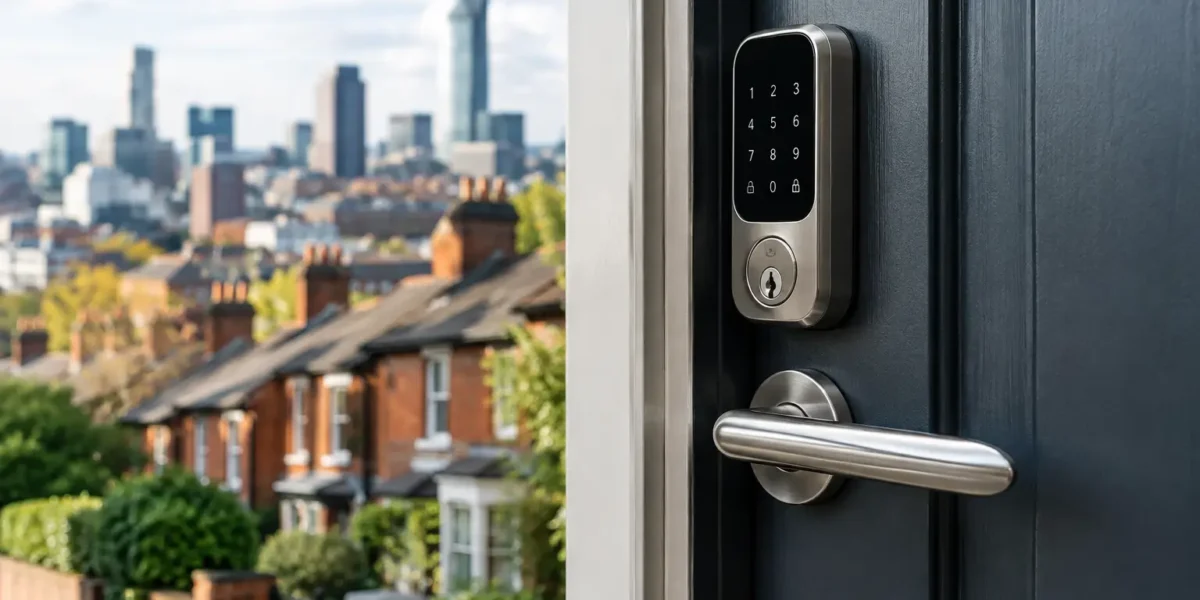
Smart locks can be a useful upgrade for households that want keyless entry, temporary codes, or activity management. They can be particularly practical for landlords, holiday lets, small offices, and families tired of coordinating spare keys.
However, convenience should not replace mechanical security. Choose a smart lock that works with a secure existing door and locking system, and make sure every household member can operate it confidently. Battery maintenance, emergency access, mobile-phone reliance, and compatibility with multipoint locks all deserve consideration before installation.
For some properties, a smart lock is best used as part of a wider access plan rather than as a stand-alone answer. A sturdy cylinder, correctly adjusted multipoint lock, and secure handle remain the foundations.
Do Not Overlook the Frame, Keeps, and Hinges
A lock can only hold against the structure it is fitted into. On outward-opening doors, hinge security is especially important because the hinges sit on the outside. Hinge bolts or security hinges can help prevent the door being forced from the hinge side.
The keeps or strike plates in the frame deserve equal attention. These receive the locking points when the door is secured. Loose screws, worn holes, cracked uPVC, or rotten timber can reduce their holding strength. Reinforcement plates and longer fixings may be appropriate, depending on the frame material and condition.
Door alignment is another quiet but crucial part of security. Seasonal movement, worn hinges, and repeated use can cause a door to drop. When that happens, locking points may only partly engage. Correct adjustment restores smooth operation and reduces stress on expensive hardware.
How to Choose the Right Security Level
The strongest lock is not always the best upgrade if it is unsuitable for the door or inconvenient for the people using it. A family home may prioritize an anti-snap cylinder, secure handles, and a reliable multipoint system. A landlord may value key control and easy cylinder changes between tenancies. A shop, office, or shared building may need restricted keys, access management, and durable hardware built for frequent use.
Insurance requirements are worth checking, especially for external doors. Some policies specify particular lock types or standards. If you are replacing a lock after a break-in, do not assume matching the old lock is enough. The incident may reveal a weakness in the cylinder, door furniture, frame, or installation that should be addressed at the same time.
It is also wise to consider fire safety and escape. Occupants must be able to leave safely in an emergency. The locking arrangement should support security without creating confusion or delay from inside the property.
Professional Fitting Makes the Upgrade Count
Lock upgrades can look straightforward, but small errors can compromise the result. The wrong cylinder length, a poorly aligned keep, overtightened handle screws, or an incorrectly positioned mortise lock can affect both security and day-to-day use.
A local specialist can assess the whole door, explain the options in plain terms, and fit compatible hardware that complements the property. Bee Manchester can help property owners choose locks, handles, and door repairs that bring security, performance, and appearance together in one well-fitted solution.
If your door is hard to lock, your keys are no longer under your control, or the hardware simply looks past its best, treat it as a useful prompt to improve the whole entrance. The right upgrade should feel effortless every time you come home, while quietly giving unwanted visitors a much harder job.