

-
On October 4, 2026
Multipoint Lock Review for Safer Front Doors
A front door can look firmly shut while the lock is doing far less work than you think. A standard single-bolt lock holds at one point near the handle, which can leave the top and bottom of a tall door more vulnerable to movement, warping, and forced entry. This multipoint lock review looks at why locking at several points can make such a practical difference, especially on composite, uPVC, French, and patio doors.
For homeowners, landlords, and small business owners, the appeal is not just stronger security. A well-fitted multipoint lock can help a door close more tightly, reduce drafts, and feel noticeably more solid every day. The catch is that the best lock is only as good as the door, frame, cylinder, and installation around it.
What a Multipoint Lock Actually Does
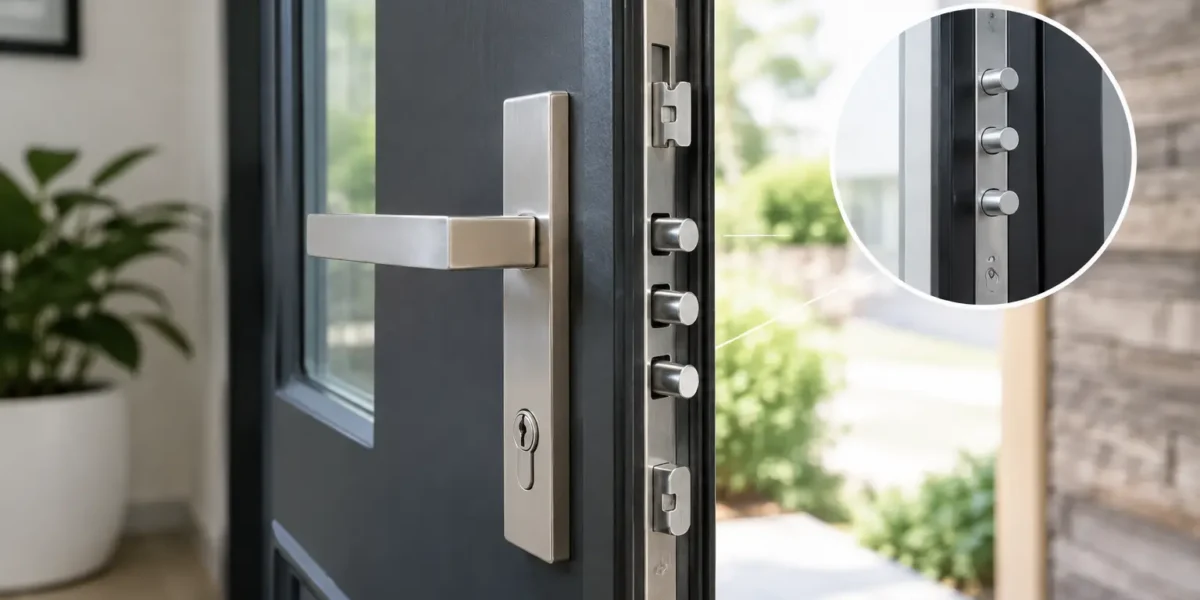
A multipoint locking system secures a door to its frame at three or more positions when you lift the handle and turn the key or thumbturn. Instead of relying on one deadbolt, the mechanism sends locking points up, down, and sometimes into the side of the frame.
Those points may include hooks, rollers, mushrooms, bolts, or shootbolts. Their names matter less than how well they engage with correctly positioned keeps in a strong frame. Hooks can resist pulling the door away from the frame, while rollers can help pull the sash in close for a better weather seal. Many quality systems use a combination of these features.
This makes multipoint hardware particularly well suited to doors that are taller, wider, glazed, or exposed to changing weather. It also explains why it is common on modern uPVC and composite doors. The system spreads the load across the door rather than concentrating it around a single lock case.
Multipoint Lock Review: The Real Security Benefits
The main benefit is resistance to forced entry. An intruder trying to pry one corner of a door away from its frame has more points to overcome. A multipoint lock also keeps the door better aligned when the mechanism and hinges are maintained, helping prevent gaps that can be exploited.
That said, more locking points do not automatically mean a secure door. The cylinder is often the most targeted part of the setup. If it protrudes too far, is poorly rated, or lacks protection against snapping, drilling, or picking, it may weaken an otherwise excellent system. A high-quality security cylinder and properly fitted security handle are worth discussing when upgrading the lock.
The door frame is equally important. Weak, loose, or damaged keeps can compromise the system, as can a frame that has shifted over time. Security is a complete package: door slab, frame, hinges, lock strip, cylinder, handles, and workmanship all need to work together.
For commercial premises, this point is especially relevant. A rear service door, small office entrance, or rental property can see heavy daily use. The right multipoint system can provide reassurance, but it should be selected for the door type and traffic level rather than chosen on locking-point count alone.
Where Multipoint Locks Shine
Multipoint locks are a strong choice for front and back doors where security, weather resistance, and a snug closing action matter. They are also a natural fit for French doors, where the inactive leaf may use top and bottom shootbolts, and for many patio door configurations.
On a composite or uPVC door, a good system helps the door sit evenly against its seals. That can limit rattling in windy weather and help retain heat in the home. It is a small mechanical detail with a real impact on comfort and energy efficiency.
They are not always necessary for every door, however. A solid wood door with a professionally installed quality deadbolt, reinforced strike plate, and suitable hinges can still be very secure. Retrofitting a multipoint system to an older door may require major alteration, and in some cases a replacement door is the cleaner long-term solution.
What Can Go Wrong With a Multipoint System?
The most common complaint is a handle that becomes difficult to lift or a key that suddenly feels stiff. People often assume the cylinder has failed, but the underlying cause may be door misalignment. Seasonal expansion, worn hinges, loose fixings, or a settling building can stop the locking points from lining up with the keeps.
Forcing the handle is rarely a good idea. It can damage the gearbox inside the lock strip, turn a simple adjustment into a more costly repair, or leave you locked out. If you need to pull, push, lift, or shoulder the door into position to lock it, that is a clear sign it needs attention.
Other warning signs include a handle that droops, a key that turns without engaging the mechanism, scraping along the frame, or a door that locks only when it is open. A stiff lock may also result from dirt, corrosion, or unsuitable lubricant. Avoid using heavy oil or spray products indiscriminately, as they can attract grime and make matters worse over time.
How to Judge Lock Quality Before You Buy
A useful multipoint lock review should look beyond marketing claims. Start by asking whether the lock is designed for your exact door material, thickness, and handing. A mechanism that suits one uPVC door may not be correct for a composite door or an aluminum storefront system.
Next, look at the locking action. Multiple points should engage smoothly without excessive force. The keeps should be securely fixed and adjustable where appropriate, allowing a professional installer to fine-tune the fit. The handle should feel firm, and the cylinder should sit neatly within the door furniture rather than sticking out.
Consider the following questions when comparing options:
- Does the system use a security cylinder suited to the property and door type?
- Are the handles and keeps reinforced, secure, and correctly matched to the lock?
- Can replacement parts be sourced if a gearbox, handle, or cylinder fails later?
- Is the lock being fitted by a specialist who will adjust the door as part of the job?
The final question is often the deciding factor. Even a premium lock can feel unreliable if it is installed on a dragging door or paired with poorly aligned keeps. Good fitting is where security and day-to-day convenience meet.
Repair or Replace? Making the Sensible Call
A repair is often worthwhile when the door itself is in good condition and the issue is isolated. A locksmith or door specialist may be able to realign the door, replace a worn gearbox, renew the cylinder, fit new handles, or adjust the keeps. This can restore smooth operation without replacing the entire door.
Replacement becomes more sensible when there is significant frame damage, repeated lock failures caused by door movement, severe warping, failed glazing, or an old door that no longer provides the security or insulation you need. Replacing a tired door can also give you more choice over color, glazing, hardware, and overall curb appeal.
For landlords, repairing a lock quickly is usually the priority, but recurring faults deserve a closer look. A door that regularly jams can create a safety issue for tenants and a maintenance headache for everyone involved. Spending slightly more on a correctly specified replacement can be better value than repeated emergency callouts.
Everyday Care That Protects Your Lock
A multipoint lock does not need constant attention, but it does benefit from basic care. Keep the door track and frame clean, check that screws in the handles and hinges remain secure, and watch for changes in how the door closes. Small alignment problems are easier to correct before they strain the internal mechanism.
When locking up, lift the handle fully before turning the key if your door is designed to work that way. Do not leave keys in the inside cylinder where they could interfere with access or be reachable through nearby glazing. If the handle starts to stick, arrange an inspection rather than waiting for the mechanism to fail at the worst possible moment.
At Bee Manchester, we see the best results when a lock upgrade is treated as part of the whole door system, not a standalone purchase. The right multipoint lock should feel almost effortless to use while quietly doing the hard work of protecting your property. If yours is stiff, loose, or no longer inspires confidence, a professional assessment can help you decide whether a simple adjustment, targeted repair, or full replacement is the smartest next move.