

-
On October 2, 2026
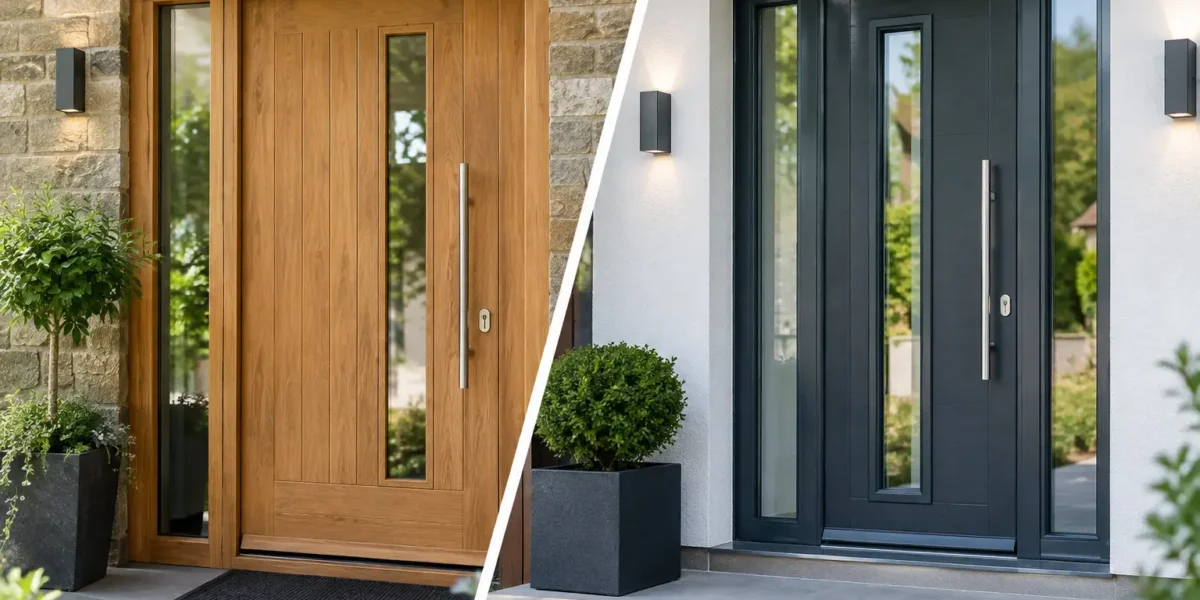
Timber Versus Composite Doors for Your Home
A front door has a demanding job. It needs to make the right first impression, stand up to wet Manchester weather, keep heated air where it belongs, and give you confidence when you lock up at night. When weighing up timber versus composite doors, the better choice is not simply the one that looks best in a showroom. It is the one that suits your property, your priorities, and the amount of maintenance you are realistically prepared to take on.
A well-made timber door can bring genuine character that is hard to imitate. A quality composite door, meanwhile, offers strong security and low-maintenance performance in a huge range of designs. Both can be excellent investments when properly specified and professionally fitted.
Timber versus composite doors: the main difference
A timber door is made primarily from natural wood, often engineered timber rather than one solid piece. Engineered construction uses layers of wood bonded together to improve stability and reduce the risk of warping. Timber doors may be painted, stained, or finished to show the natural grain.
A composite door uses several materials in one structure. Its exact build varies by manufacturer, but it commonly combines a solid insulating core with a reinforced frame, durable outer skin, and weather-resistant seals. The result is a thick, substantial door designed to deliver reliable insulation, security, and everyday durability.
That construction is why composite doors are such a popular choice for busy households, rental properties, and commercial entrances. Timber remains the natural favorite where period details, authenticity, and a distinctive finish matter most.
Appearance and curb appeal
For many homeowners, this decision starts at the curb. Timber has depth, warmth, and variation that comes from being a natural material. It can be especially well suited to Victorian terraces, cottages, heritage-style homes, and properties with original wooden sash windows or traditional architectural details.
A painted timber door can also be highly personal. From a classic deep blue to a bright statement color, it can be refreshed when your tastes change. Stained finishes are equally appealing when you want the grain to remain visible.
Composite doors have moved far beyond the plain, molded designs of the past. They are available in traditional and contemporary styles, with woodgrain effects, smooth finishes, decorative glazing, sidelights, letter plates, knockers, and a broad choice of colors. A well-chosen composite door can complement a period home without looking out of place, but close up, it will not have exactly the same natural texture as timber.
The practical question is whether you value authentic material character or want the look you love with less ongoing work. There is no wrong answer. A thoughtfully designed entrance should work with the proportions, brickwork, windows, and personality of the property.
Security and strength
Your front door should be more than attractive. It is a key part of your home security setup.
Composite doors are known for their solid feel. Their multi-layered construction, reinforced sections, and compatibility with modern multipoint locking systems make them a strong option for homeowners who want dependable protection. Quality hinges, handles, cylinders, and correct alignment all matter just as much as the door itself. Even the strongest door can be compromised by poor hardware or a rushed installation.
Timber doors can also be very secure. A thick, well-built hardwood or engineered timber door fitted with a suitable multipoint lock, secure hinges, and reinforced strike plates can offer excellent protection. The difference is that timber needs to remain in good condition. If paint fails, water gets into joints, or the door begins to move, locks and seals may not perform as intended.
For landlords and small business owners, composite doors often provide a straightforward security upgrade with less maintenance between inspections. For a homeowner restoring an older property, a properly specified timber door can deliver security without sacrificing the building’s original character.
Insulation, drafts, and weather resistance
A drafty entrance can make a hallway feel cold and increase the workload on your heating system. Door performance depends on the full installation – including the frame, threshold, weather seals, glazing, and fitting – not just the slab itself.
Composite doors generally offer excellent thermal performance because of their insulated cores and close-fitting seals. They are designed to resist rain, wind, and day-to-day temperature changes with minimal movement. This makes them particularly attractive for exposed doorways and families who want lower-maintenance energy efficiency.
Timber is naturally insulating, and a modern engineered timber door can perform very well. However, it needs a quality finish and regular care to maintain that performance. Wood absorbs and releases moisture. Over time, changing weather conditions can cause slight expansion or contraction, particularly if the door is poorly protected or exposed to heavy rain.
Neither option should be selected on material alone. Ask about the door’s energy rating, glazing specification, seals, threshold, and the condition of the existing opening. Replacing a door without addressing a damaged frame or uneven threshold can leave you with the same draft problems in a newer package.
Maintenance is where the choice often becomes clear
Composite doors are designed for easy ownership. Usually, a wipe down with warm soapy water and a periodic check of the locks, hinges, and seals is enough to keep them looking smart. Their finish does not normally need repainting, and they are less likely to swell, crack, or fade than a neglected timber door.
That low-maintenance appeal is a major advantage for landlords, households with limited free time, and anyone who simply wants to fit a door and get on with life.
Timber requires more attention, but that does not make it impractical. A painted or stained door needs to be inspected regularly for chips, peeling finish, cracks around joints, and areas where water may sit. Depending on the exposure and finish, it may need repainting or refinishing every few years. Prompt care is far cheaper than waiting for moisture damage to take hold.
If you enjoy maintaining your home and want a door that can be sanded, repaired, and refinished, timber can be satisfying to own. If that sounds like another weekend job you would rather avoid, composite is likely the more sensible fit.
Cost and long-term value
Upfront prices vary widely depending on size, design, glazing, hardware, security specification, and installation requirements. It is easy to compare two headline prices and miss the details that affect value.
Composite doors are often competitively priced for the level of insulation, security, hardware, and finish they provide. Their lower upkeep costs can make them a strong long-term option, particularly where weather exposure is high.
Timber doors can cost more, especially when made to unusual dimensions or designed to match period details. They also have ongoing finishing costs to consider. Yet a beautifully made timber door can add real visual value to the right property, and repairability may appeal to owners planning to stay for many years.
Do not make the choice based solely on the initial quote. Compare what is included: the frame, locks, handles, glazing, threshold, removal of the old door, finishing work, and warranty. A precise survey before ordering is worth its weight in honey because it helps prevent gaps, sticking, and costly surprises on installation day.
When timber is the better choice
Timber is often the right route when preserving a period look is your top priority, when natural grain is central to your design plans, or when you want a door made to a nonstandard size or style. It also suits owners who are happy to keep up with regular maintenance in return for a more authentic finish.
Choose a durable, properly engineered product rather than assuming any solid-looking wood door will perform well. The quality of the timber, joinery, coatings, and installation will shape its lifespan.
When a composite door makes more sense
A composite door is usually the easier recommendation if security, insulation, weather resistance, and minimal maintenance sit at the top of your list. It is a practical all-rounder for family homes, rental homes, and busy properties where the front door gets frequent use.
It is also a smart choice if you want to coordinate color, decorative glass, and hardware without committing to a repainting schedule. With the right design, you can get a crisp modern entrance or a traditional panelled look that gives your home serious curb appeal.
The fitting matters as much as the door
Whether you choose timber or composite, an accurate survey and skilled installation are essential. The frame needs to be square, the door needs even gaps, the seals need to compress correctly, and locks must engage smoothly. A door that catches, rattles, or needs force to lock is not something to ignore.
Bee Manchester helps property owners choose doors that suit the way they live, then fits them with close attention to security, weatherproofing, and finish. The best choice is the one that makes you happy each time you come home while quietly doing its job through every season.