

-
On August 27, 2026
Are Composite Doors Secure? What Protects Your Home
A front door should do more than look smart from the curb. It needs to resist forced entry, protect the lock from attack, close firmly in poor weather, and keep doing its job year after year. So, are composite doors secure? In most cases, yes – provided you choose a quality door specification and have it fitted correctly.
A composite door is not simply a decorative door with a tough outer skin. Its security comes from several components working together: the door slab, reinforced frame, multipoint locking system, cylinder, hinges, glazing, and installation. Get those details right and you have a seriously strong first line of defense for your home, rental property, or business premises.
Are Composite Doors Secure Against Forced Entry?
Composite doors are widely considered among the most secure residential entrance-door options. Unlike a basic timber door that can warp or split, or a lightweight panel door that may flex under pressure, a good composite door has a solid, layered construction. The exact core varies by manufacturer, but it may include high-density foam, timber, steel reinforcement, or other engineered materials beneath a durable outer skin.
That layered build matters because intruders often look for the quickest point of failure. A secure door should be difficult to kick, pry, drill, or force out of alignment. Composite slabs are generally thick, rigid, and designed to maintain their shape, helping the locking points stay properly aligned with the frame.
Still, “composite” is not a security rating by itself. Doors vary in construction, frame quality, lock specification, and fitting standard. A low-cost door with an ordinary cylinder or poorly installed frame will not offer the same protection as a properly specified system. The best results come from treating the door as a complete security setup, not just choosing the strongest-looking slab.
The Lock Is the Detail That Makes the Difference
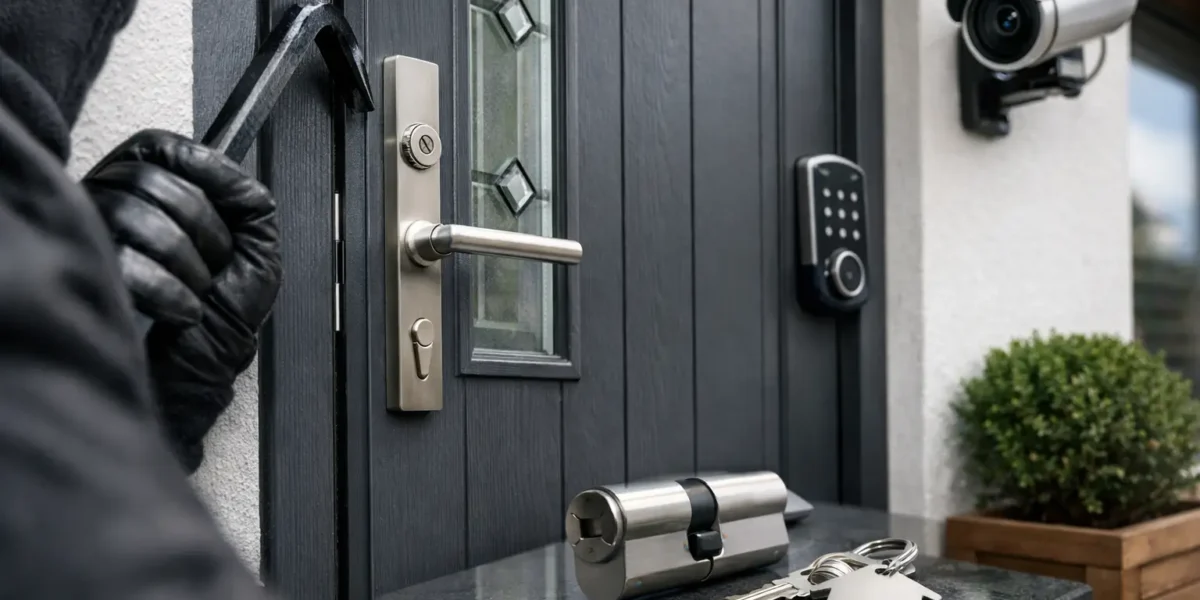
A composite door can have an impressive-looking exterior and still be vulnerable if its lock cylinder is weak. The cylinder is the part where the key goes, and it is often the component criminals target first.
For a front door, a high-security, anti-snap cylinder is a sensible upgrade. Cylinder snapping is an attack method that targets certain euro cylinder locks. A quality anti-snap cylinder is designed to break in a controlled way if attacked, while protecting the internal mechanism and helping prevent access to the lock.
The door should also use a multipoint locking system. Rather than relying on a single latch or deadbolt, this system secures the door at several positions around its edge when the handle is lifted and the key is turned. Depending on the design, those points may include hooks, rollers, bolts, or mushroom cams. This spreads force across the frame and makes prying the door open much more difficult.
For day-to-day security, make sure everyone using the door understands the lock sequence. On many composite doors, simply pulling the door shut does not fully engage the multipoint locks. Lift the handle, turn the key, and check that the door is locked before leaving or going to bed.
Handles, Escutcheons, and Letter Plates Matter Too
Security is often won or lost in the smaller hardware details. A security handle or protective escutcheon can shield the cylinder from drilling, pulling, and twisting attacks. It also reduces the amount of the cylinder exposed outside the door.
If your door has a letter plate, it should be designed to limit reach-through access to the internal handle or lock. On a door with glass panels, toughened or laminated safety glass adds another useful barrier. Decorative glazing does not automatically make a door insecure, but its placement and specification should be chosen carefully.
A Strong Frame Is Just as Important as a Strong Door
The door frame carries the locking keeps and is the structure the slab locks into. If it is weak, poorly secured, or not aligned correctly, even the best lock cannot perform as intended.
A quality composite door installation includes a frame that is fixed securely to the surrounding brickwork or opening, with the door adjusted so it closes cleanly and locks without excessive force. The keeps must line up accurately with every locking point. If the door has dropped, catches on the frame, or needs a hard shove to close, it is worth arranging an adjustment before the problem affects security.
Hinges deserve attention as well. On outward-opening doors in particular, hinges need protection against lifting or removal. Many modern systems include hinge bolts, security hinges, or other features that help hold the door in place if hinge pins are attacked.
This is why professional fitting is not an optional extra. A door can be well made in the factory, but poor installation can leave gaps, misaligned locks, loose fixings, or an easy leverage point around the frame. Good workmanship makes the whole system buzz with quality, rather than leaving costly security features underperforming.
What Security Standards Should You Look For?
When comparing composite doors, ask about independent testing and the security specification of the complete door set. In the UK market, PAS 24 is a recognized enhanced-security standard for doors and windows. It assesses resistance to common methods of forced entry, rather than judging only one component in isolation.
You may also see products associated with Secured by Design, a police-backed initiative that promotes improved security in buildings. These labels can be useful indicators, but always confirm what is included in the quoted door. A model may be available in several configurations, and upgraded locks, glazing, or hardware may be required to meet a particular standard.
For lock cylinders, look for recognized security testing and anti-snap protection. Ask the installer to explain the cylinder grade, the multipoint locking mechanism, and whether security hardware is included as standard. Clear answers are a good sign that you are buying a carefully specified door rather than a basic product with premium marketing.
Where Composite Door Security Can Be Weakened
Even a secure composite door has potential weak spots if the specification is not right. The most common issue is an outdated or low-security cylinder, particularly on an otherwise modern door. Replacing the cylinder can be a practical way to improve security without replacing the entire door.
Glazing is another consideration. Large glass areas can look excellent and bring welcome natural light into a hallway, but they should use suitable safety glass and be fitted in a way that prevents easy removal. Side panels also need the same careful attention as the main door.
The surrounding property matters too. A solid front door will not compensate for an open side gate, an exposed key safe, weak patio doors, or windows left on ventilation settings while the building is empty. Good security works best in layers: secure doors and windows, suitable lighting, sensible key control, and reliable locks throughout the property.
For landlords and small commercial owners, consider who has access to keys. Rekeying or changing cylinders between tenancies, after lost keys, or when staff access changes is often a straightforward step that offers valuable peace of mind.
How to Make Your Composite Door More Secure
If you are buying a new door, focus on the full specification rather than color and style alone. You can still choose from traditional, modern, glazed, and solid designs while making security a priority. Ask about the lock cylinder, multipoint mechanism, reinforced frame, hinges, glazing, and tested security standard before approving the order.
If you already own a composite door, carry out a quick practical check:
- Close the door and make sure the handle lifts smoothly and all locking points engage.
- Check that the door does not rattle, stick, drag, or show visible gaps around the frame.
- Inspect the cylinder and external handle for damage, looseness, or excessive exposure.
- Confirm that everyone locks the door fully, rather than relying on the latch alone.
- Arrange a lock or hinge repair promptly if the door has become difficult to operate.
Small signs of wear are worth addressing early. A stiff lock may be caused by alignment, a worn mechanism, or a failing cylinder. Leaving it can lead to a lockout at the worst possible time, or encourage people to stop fully locking the door because it feels inconvenient.
Security Without Sacrificing Curb Appeal
One reason composite doors are so popular is that they combine protection with personality. You do not have to settle for an industrial-looking entrance to get a secure one. There are plenty of panel styles, glass designs, hardware finishes, and colors that can suit period homes, new builds, rental properties, and business entrances.
The practical trade-off is that extra security features can add to the initial price. Better cylinders, security handles, laminated glass, and tested door sets cost more than entry-level alternatives. Yet a front door is used multiple times a day and protects one of the main access points to your property, so it is usually a worthwhile place to invest.
For Manchester property owners who want a door that looks the part and works hard behind the scenes, Bee Manchester can help match the right composite door, locks, and installation details to your property. The most reassuring choice is a door you can close at night knowing the strength is more than skin deep.