

-
On August 21, 2026
Office Door Repair That Keeps Business Moving
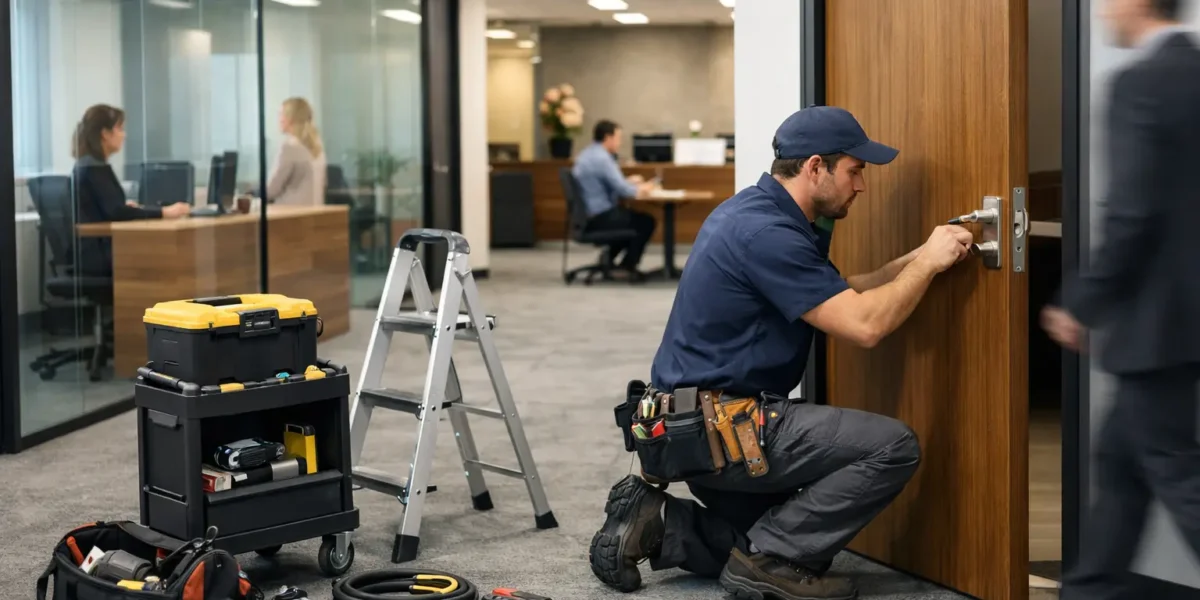
A door that sticks at reception, bangs shut beside a meeting room, or will not lock at closing time is more than a minor nuisance. Office door repair protects the flow of a working day: staff can move safely, clients can enter confidently, and sensitive areas remain secure. Left alone, a loose hinge or failing lock can quickly become a damaged frame, a security risk, or a costly interruption.
For Manchester businesses, landlords, and property managers, the right repair depends on the door’s location, material, hardware, and the way people use it. A quiet internal office door needs a different solution than a heavy external entrance serving dozens of people every day.
Start With the Problem, Not the Visible Symptom
Doors give early warnings before they fail completely. You may notice a latch that needs a hard push to catch, a handle that feels loose, a draft around an external door, or a gap that has appeared at the top or bottom. These signs can point to simple wear, but they can also reveal movement in the frame, a misaligned multipoint lock, or a door slab that has warped over time.
A door that will not close smoothly is often blamed on the hinge. Sometimes that is correct. Screws can loosen, hinges can wear, and a heavy door can gradually drop. But tightening the hinge alone will not solve a frame that has shifted or a door that is swelling from moisture. The best repair begins with a proper assessment of how the door meets the frame, lock keep, threshold, and seals.
For external uPVC, composite, aluminum, or glazed office doors, alignment matters especially. If the handle has become difficult to lift or the key only turns when you pull the door toward you, the locking points may not be engaging correctly. Forcing the handle can damage the gearbox or cylinder, turning a manageable adjustment into a more involved repair.
When Office Door Repair Is the Better Choice
Repair is often the sensible option when the door itself is structurally sound and the problem is isolated to hardware, alignment, glazing, or weather protection. It preserves a working door, reduces disruption, and can extend the useful life of quality materials.
Loose handles, worn hinges, and faulty closers
These are common issues in busy offices. Handles endure hundreds of pulls, hinges carry repeated weight, and door closers work hard to control traffic and fire-door function. A professional can secure or replace the affected parts, realign the door, and check that it closes correctly without slamming.
Door closers deserve particular attention. A closer that shuts too fast can create a safety issue, while one that does not shut fully may compromise privacy, heating efficiency, or fire safety requirements. The adjustment must suit the door’s weight and usage, not simply make the door feel easier to open.
Lock and key problems
A faulty lock can leave a business exposed after hours or prevent staff from accessing a workspace. Depending on the system, office door repair may involve replacing a worn cylinder, repairing a multipoint mechanism, fitting new handles, or adjusting the keeps in the frame.
If keys have been lost, staff have changed, or a former tenant may still have access, changing the cylinder or upgrading the locking arrangement is usually more practical than waiting for a failure. This is also a good time to consider whether the current lock provides the level of security the premises needs.
Drafts, rattles, and damaged seals
A cold draft around an exterior office door makes a reception area less comfortable and can add to heating costs. Worn weatherstripping, compressed gaskets, cracked glazing units, and gaps caused by poor alignment are all potential causes. Replacing seals or adjusting the door can make a noticeable difference without replacing the entire entrance.
That said, a repair cannot correct every efficiency problem. If an older door has a badly damaged panel, failed double glazing, or widespread frame deterioration, replacement may provide better long-term value.
Signs It Is Time to Replace Rather Than Repair
Repairing a door is not always the most cost-effective decision. If the door has repeated faults, visible structural damage, significant corrosion, or a frame that no longer holds the door securely, replacement deserves serious consideration.
An external office door that has been forced, split around the lock area, or severely warped may no longer deliver reliable security, even if a temporary repair makes it usable. Similarly, an entrance with outdated single glazing or poor seals can undermine comfort and energy performance year after year.
Replacement also makes sense when your business needs have changed. A growing practice may need a more durable commercial entrance. A landlord may want a low-maintenance composite door between tenancies. A client-facing office may benefit from a door design that improves curb appeal while adding stronger locks and better insulation.
The trade-off is simple: repairs usually cost less upfront and cause less immediate disruption, while a replacement can solve several problems at once. A specialist should be able to explain which route is justified without pushing a new door where a dependable repair will do.
Security Should Be Part of Every Repair Decision
An office may hold computers, documents, stock, equipment, or personal information. Even a small weakness at the entrance can create an opportunity for unauthorized access. That is why a repair visit should look beyond the obvious broken component.
Check whether the lock engages smoothly, the strike plate is firmly fixed, hinges are secure, glazing is intact, and the frame has no weak or damaged points. For external doors, security hardware should work together rather than relying on one component. A high-quality lock is less effective if the door is poorly aligned or the handle is loose.
Privacy matters internally too. Meeting rooms, treatment rooms, storage spaces, and staff-only areas may need reliable latches and closer systems to stay private and controlled. A door that does not latch can lead to awkward interruptions as well as practical security concerns.
Do Not Ignore Fire Doors
If the door is a designated fire door, repairs need extra care. Fire doors are designed as a complete system: the door leaf, frame, hinges, intumescent seals, closer, glazing, and latch all have a role. Replacing parts with unsuitable hardware or wedging the door open can affect its performance in a fire.
Common warning signs include a fire door that drags on the floor, fails to self-close, has gaps around the edges, or has damaged seals. These should be assessed promptly by a competent professional. The goal is not only to make the door easier to use, but to ensure it can perform as intended when it matters most.
A Practical Maintenance Routine for Busy Premises
A little routine attention helps catch issues before they disrupt the workday. Every few months, open and close each high-use door several times. Listen for scraping, clicking, or slamming. Test handles and locks without forcing them, and look for loose screws, worn seals, cracked glass, or movement around the hinges.
For exterior doors, keep thresholds and drainage channels clear of dirt and debris. Avoid harsh cleaners on uPVC, composite finishes, or hardware, as they can damage protective surfaces. Light lubrication may help some moving components, but the wrong product can attract dirt or interfere with a lock, so it is wise to follow professional guidance.
It is also helpful to record recurring faults. If a door needs adjustment every few months, there may be an underlying frame, hinge, or usage issue that needs a more lasting solution.
Choose a Repair Specialist Who Looks at the Whole Door
A quick fix has value when it is genuinely the right fix. But office doors are made up of connected parts, and treating only the symptom can create repeat callouts. Look for a local specialist who can assess doors, glazing, locks, handles, hinges, seals, and frames together, then clearly explain the options.
Bee Manchester approaches repairs with the same practical focus used for new doors: dependable security, efficient performance, durable hardware, and a finish that looks right for the property. Whether the answer is a lock repair, hinge adjustment, replacement handle, new seal, or a complete door upgrade, the work should make everyday access easier and the premises more secure.
A well-repaired office door rarely draws attention, and that is exactly the point. It opens when it should, closes properly, keeps the weather out, and lets your team get on with the work that matters.