

-
On August 19, 2026
Double Glazing Repair Options That Make Sense
A foggy window is more than a frustrating view of the Manchester weather. It can signal lost insulation, trapped moisture, and a double glazed unit that is no longer doing its job. The good news is that double glazing repair options are often more practical than replacing an entire window. The right fix depends on what has failed, how old the unit is, and whether the frame, glass, and hardware are still in good working order.
For homeowners, landlords, and small business owners, acting early can protect comfort, security, and curb appeal. A professional assessment helps separate a repairable fault from a window that has reached the end of its useful life – saving you from paying for more work than your property needs.
When Is Double Glazing Repair the Right Choice?
Double glazing is made from two panes of glass separated by a sealed gap. That gap is usually filled with air or insulating gas, helping reduce heat transfer and outside noise. If one component fails, the whole window does not automatically need replacing.
Repair is usually a strong option when the window frame is structurally sound, the opening and drainage channels are intact, and the problem is limited to the sealed glass unit, handle, hinges, locks, or weather seals. This is especially common with uPVC windows that still look good but have developed misting or become difficult to operate.
Replacement becomes more likely if there is extensive frame damage, severe warping, repeated leaks, major rot in timber, or several faults across old units. A repair can solve a specific issue brilliantly, but it cannot turn a worn-out window system into a modern high-performance one. That is why the condition of the complete window matters, not just the visible symptom.
Common Double Glazing Repair Options
Replacing a misted or failed glass unit
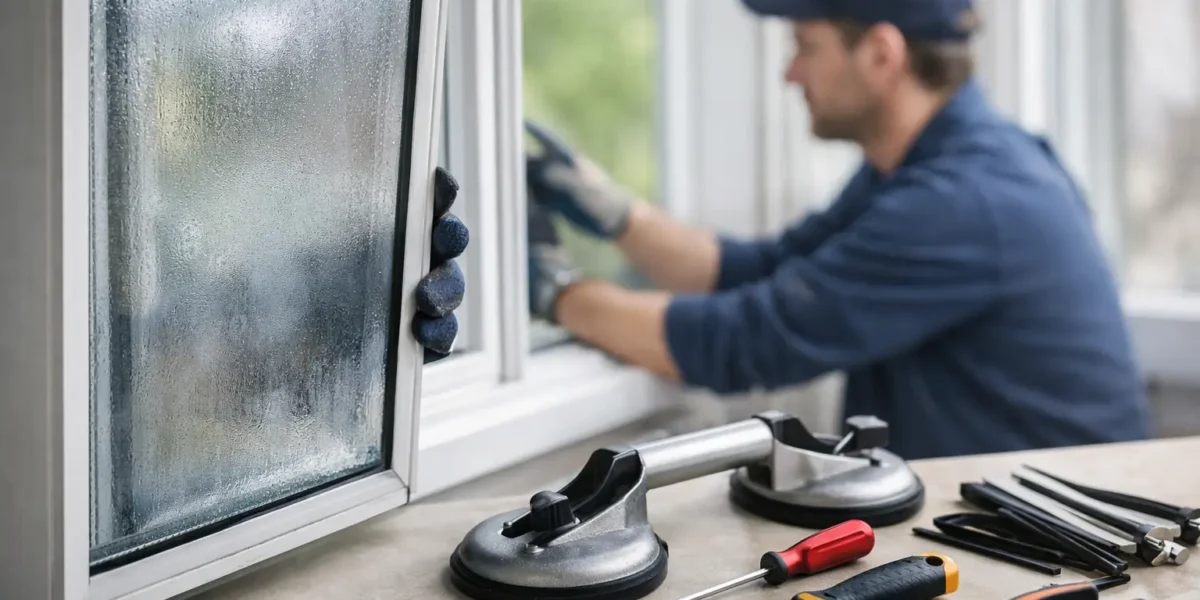
Condensation between the two panes is one of the clearest signs of a failed seal. Once the perimeter seal breaks down, moisture enters the cavity and creates the familiar cloudy or misted appearance. Wiping the inside or outside of the glass will not remove it because the moisture is trapped between the panes.
In many cases, the answer is to replace the sealed unit rather than the full frame. The existing window can stay in place while a correctly measured new double glazed unit is fitted. This restores a clear view and can improve thermal performance without the disruption and cost of a complete window replacement.
Not every cloudy pane needs emergency attention, but delaying the work can leave a room colder and less attractive. For a rental property or shopfront, it can also make an otherwise well-maintained building look neglected.
Repairing window locks, handles, and hinges
A double glazed window is only as secure as the hardware that keeps it shut. Stiff handles, loose hinges, jammed mechanisms, and locks that no longer engage should be addressed quickly. These faults can make a window difficult to close tightly, which affects both security and drafts.
Sometimes the solution is simple: adjustment, lubrication, or replacement of a worn handle. In other cases, the internal locking gearbox, espagnolette mechanism, or hinge set may need replacing. A skilled repairer can identify whether the fault is in the handle itself or deeper inside the window mechanism.
This is one area where a quick DIY fix can create bigger trouble. Forcing a stuck handle may damage the lock or leave the sash misaligned. Proper repair keeps the window closing smoothly and gives the locking points the pressure they need to work as intended.
Renewing worn seals and gaskets
Rubber gaskets and seals sit around the edge of the opening sash and glass. Over time, they can flatten, shrink, crack, or pull away from the frame. The result may be cold drafts, rattling panes, rainwater ingress, or increased outside noise.
Replacing perished seals can be a cost-effective repair where the glass and frame remain sound. It is not a cure for every leak, however. Water may also enter through blocked drainage holes, failed external sealant, poorly aligned sashes, or damage around the frame. The source needs to be identified before any repair is selected.
Fresh seals can make a noticeable difference in comfort, particularly in rooms exposed to driving rain or strong winds. They also help the window close with a more secure, cushioned fit.
Adjusting misaligned windows and doors
If a window catches on the frame, needs a hard push to close, or leaves an uneven gap, it may be out of alignment. This can happen as hinges wear, fixings loosen, or a building settles over time. uPVC windows and doors can often be adjusted to restore a better fit.
Alignment work may involve setting the hinges, adjusting locking keeps, re-positioning the sash, or correcting the glazing packers that support the glass inside the frame. The aim is not simply to make the handle turn again. It is to ensure the sash sits correctly, seals evenly, drains properly, and locks securely.
Doors deserve the same attention. A composite, French, or patio door that drops or drags can place unnecessary strain on hinges and locking hardware. Early adjustment is normally far easier than waiting for components to fail.
Repairing damaged frames and external finishes
Minor damage to uPVC frames, such as small chips, scuffs, or failed silicone around the outside, may be repairable. Re-sealing joints can help prevent water from reaching gaps between the frame and wall, while specialist surface repairs may improve appearance without replacing the full unit.
The trade-off is that cosmetic repairs are not always invisible, especially on heavily weathered or colored frames. If cracking is deep, the frame is distorted, or water has caused wider structural damage, replacement may offer better long-term value. An honest inspection should focus on whether the frame can still support the glazing, operate correctly, and provide reliable weather protection.
Repair or Replace: What Should You Consider?
The lowest upfront price is not always the best value. A single failed unit in a sound frame is usually a sensible repair. Several misted panes, outdated glazing, recurring lock faults, and poor overall insulation may point toward replacement instead.
Consider the age of the windows, the number of affected units, the condition of frames, and your plans for the property. If you are preparing a home for sale, repairing obvious faults can sharpen presentation and reassure buyers. If you intend to stay for years, upgraded glazing or new windows may produce stronger comfort, security, and energy-efficiency benefits over time.
For commercial properties, reliability is often the deciding factor. A faulty lock or damaged glazed panel can affect staff safety, access, insurance requirements, and how customers see the premises. A targeted repair may be ideal, but a repeatedly failing entrance system needs a more durable solution.
Why Accurate Measurement and Fitting Matter
Double glazed units are not one-size-fits-all. Glass thickness, spacer bars, coatings, safety glass requirements, obscure patterns, and dimensions must match the existing frame and the purpose of the window. A bathroom window, for example, may need privacy glass, while a ground-floor commercial unit may need stronger safety or security glazing.
Poor measurements or incorrect fitting can create drafts, stress the glass, interfere with locking, or shorten the life of the new unit. That is why a repair should begin with inspection, not guesswork. Bee Manchester can assess the condition of your glazing, frames, locks, handles, and hinges, then recommend a tailored repair or replacement route that fits the property.
Signs You Should Book an Assessment Soon
Some problems are inconvenient, while others affect security or allow water into the building. It is worth arranging professional help promptly if you notice moisture between panes, a window that will not lock, loose glass, visible frame cracks, persistent drafts, water staining around the opening, or a door that no longer closes squarely.
You do not need to wait until a window fails completely. A small hinge issue, failing seal, or stiff lock is often easier to repair before it affects surrounding parts. Timely attention keeps your home or business looking sharp, feeling warmer, and staying better protected.
The best repair is the one that solves the real problem for the long term. With a clear assessment and quality workmanship, your windows can get back to doing what they should: keeping warmth in, weather out, and your property buzzing with confidence.