

-
On August 5, 2026
Best Front Door Materials for Security and Style
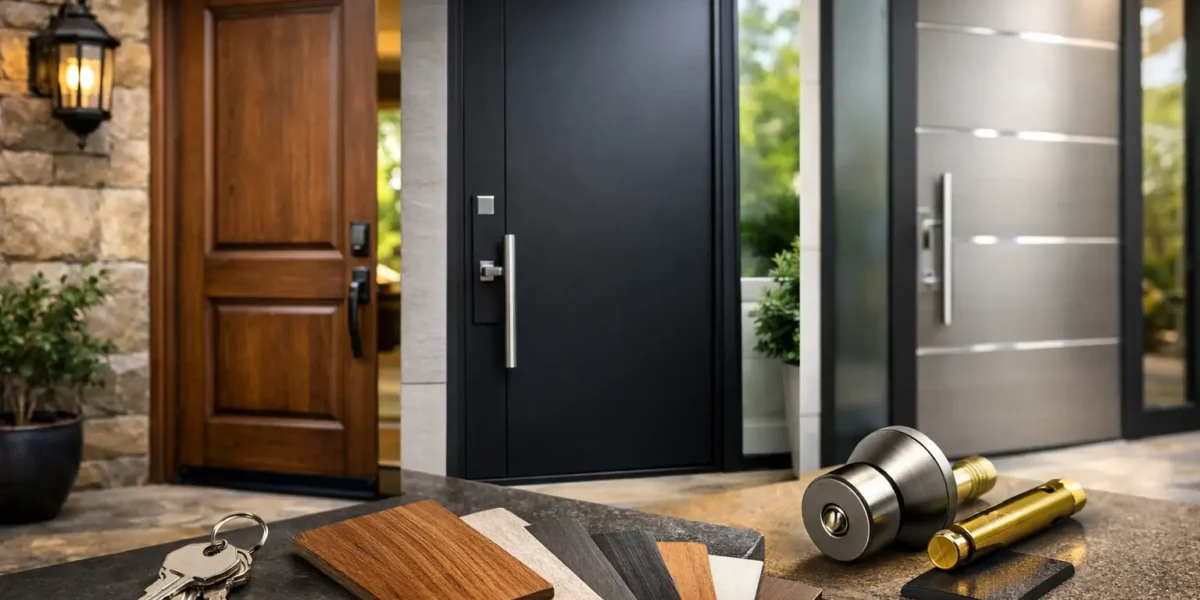
A front door has a tougher job than most parts of your home. It has to make a strong first impression, stand up to rain and changing temperatures, help keep energy bills in check, and provide a secure barrier every time you lock up. That is why choosing the best front door materials is less about picking a color you like and more about matching the door to your property, priorities, and budget.
For many homeowners, landlords, and small business owners, the right answer comes down to four leading options: composite, fiberglass, steel, and wood. Each can look fantastic when properly specified and professionally installed. The difference is in how they handle security, maintenance, insulation, cost, and the daily wear that comes with a busy entrance.
What Makes a Front Door Material a Good Choice?
A door slab is only one part of a secure, efficient entryway. Its frame, glazing, weatherstripping, hinges, threshold, and lock all matter too. Still, the material sets the foundation for how the door performs over time.
The best choice should feel solid, close tightly, resist warping or damage, and complement the style of the building. A sleek contemporary home may suit a smooth composite or fiberglass door, while a period property may call for a carefully finished wood design. For a rental property or business entrance, low maintenance and dependable security may take priority over architectural detail.
Think beyond the showroom. Ask how the door will cope with direct sun, driving rain, pets, children, deliveries, and everyday use. A beautiful door that needs constant attention is not always the best value.
Best Front Door Materials Compared
Composite doors: the all-around favorite
Composite doors combine multiple materials to create a thick, durable, insulated door. Exact construction varies by manufacturer, but it often includes a reinforced core, insulating layers, a weather-resistant outer skin, and a strong frame. The result is a door designed to deliver the benefits homeowners want without the upkeep associated with traditional timber.
Composite is often one of the best front door materials for homeowners who want security, energy efficiency, and a broad choice of styles in one package. It can be made to resemble painted wood grain or finished in a cleaner modern look, with a wide selection of colors, decorative glazing, handles, knockers, and letter plates.
The trade-off is initial cost. A quality composite door generally costs more than a basic uPVC entry door, but its strength, insulation, and long service life can make it a sensible investment. It is particularly well suited to exposed entrances and busy family homes where a light-duty door will quickly show its limits.
Fiberglass doors: durable and versatile
Fiberglass is another strong contender, especially where homeowners want the appearance of wood with less routine maintenance. It does not naturally rot, and it is far less likely than wood to swell or warp in damp conditions. Many fiberglass doors have a textured finish that closely imitates timber grain.
Insulated fiberglass models can perform very well thermally, provided the surrounding frame and installation are equally well executed. They are also relatively resistant to dents and scratches compared with many other options.
However, quality varies considerably. A budget fiberglass door may feel lightweight or have less convincing detailing, while a premium model can be difficult to distinguish from a painted wood door from a few steps away. Check the construction, insulation, finish warranty, and lock compatibility before making a decision.
Steel doors: serious security at a sensible price
Steel front doors are valued for strength and affordability. They are commonly used at side entrances, rental properties, workshops, and commercial spaces, but modern residential steel doors can also look sharp at a main entrance. Their solid feel can be reassuring, particularly when paired with a reinforced frame and high-quality deadbolt or multipoint locking system.
Steel can offer good energy performance when it has an insulated core. It is also a practical choice for properties where security is the clear priority. For commercial owners, a steel door may make sense at a service entrance that receives heavy use and does not need elaborate decorative features.
There are limitations. If the exterior coating is badly scratched and the exposed metal is not treated, rust can develop. Steel can also dent from hard impacts, and repairs are not always invisible. A quality finish, proper weather protection, and careful installation make a major difference to its lifespan.
Wood doors: timeless character with more commitment
A real wood front door brings warmth and character that other materials work hard to imitate. It can be painted, stained, carved, glazed, and customized to suit traditional homes, heritage-style properties, or a distinctive commercial frontage. For curb appeal, few materials have the same natural depth and presence.
Wood also comes with a maintenance commitment. Moisture, temperature swings, and sun exposure can lead to movement, fading, cracking, or peeling if the finish is neglected. The type of wood matters as well. Engineered wood construction can offer better stability than a door made from a single piece of timber, while hardwood species generally stand up better than softwood when maintained correctly.
A wood door is a great choice when its appearance is central to the property and the owner is prepared to inspect and refinish it as needed. It is less ideal for an exposed entry where low maintenance is non-negotiable.
Do Not Forget uPVC for Value and Everyday Performance
uPVC is often discussed separately from premium front-door materials, but it remains a practical option for many homes. Modern uPVC doors are affordable, low maintenance, and available in more colors and finishes than older designs. They can provide good insulation and reliable weather resistance, especially for secondary entrances or budget-conscious replacement projects.
The key is selecting a well-made, reinforced product rather than judging all uPVC doors by outdated examples. A basic model may not deliver the same weight, security feel, or visual impact as a composite door. Yet for landlords, utility doors, and homeowners looking for a cost-effective upgrade, it can be a smart, hardworking choice.
How Security Changes the Decision
A strong material helps, but front-door security depends on the full system. A door with a weak lock, poorly fitted hinges, or a flimsy frame can still be vulnerable. Conversely, a well-installed door with reinforced hardware and quality locking can significantly improve peace of mind.
For main entrances, look for a door and frame designed to work with a multipoint lock or a high-quality deadbolt, depending on the product and local requirements. Consider reinforced hinge points, anti-drill cylinders, secure glazing where glass panels are included, and a solid strike plate fixed into the structural frame.
Glass does not automatically make a door less secure. Decorative or sidelights can bring valuable natural light into a hallway, but the glazing should be toughened, laminated, or otherwise specified for security. A professional installer can help balance the look you want with the protection your property needs.
Insulation, Weatherproofing, and Energy Bills
Cold drafts around an entry door are frustrating, but they can also signal a bigger issue with fitting or worn seals. The material affects insulation, yet air leakage around the edges often has just as much impact on comfort.
Composite and insulated fiberglass doors are popular for energy-conscious homes because their cores are designed to slow heat transfer. Insulated steel can also perform well. Wood has natural insulating qualities, though its performance depends on thickness, construction, condition, and how tightly it seals. uPVC can be efficient too when combined with a quality frame and proper weatherstripping.
Before replacing a door solely because it feels cold, have the entire opening assessed. In some cases, damaged seals, misalignment, glazing problems, or a failing threshold can be repaired. In others, a replacement door will provide a clearer long-term improvement.
Choosing a Style That Will Still Look Right in Five Years
A front door should add personality without fighting the rest of the building. Match the proportions of the door, panel layout, glazing, and hardware to the architecture. Traditional properties often suit grained finishes, classic knockers, and divided-glass details. Contemporary homes can carry bold colors, long pull handles, flush panels, and narrow glazed inserts.
Color deserves practical thought too. A deep statement shade can look brilliant, but doors facing strong sun may benefit from finishes designed to resist fading. If the property is being prepared for sale or rental, a neutral but characterful color may appeal to the broadest range of buyers or tenants.
At Bee Manchester, the best results come from treating the door as a complete entrance system, not an isolated product. The right material, secure hardware, careful measurements, and skilled fitting all need to work together.
The Best Material Depends on Your Priority
Choose composite if you want a high-performing, low-maintenance main door with plenty of design choice. Choose fiberglass if you like a wood-inspired finish and want strong resistance to moisture and everyday wear. Choose steel when security, value, and durability are at the top of the list. Choose wood when authentic character is worth regular care. Choose reinforced uPVC when you need a practical, efficient solution at a more accessible price point.
The most helpful next step is to look at your entrance honestly: how exposed it is, how often it is used, what security concerns you have, and what level of maintenance you will realistically keep up with. A door chosen for those real conditions will keep working hard long after the excitement of a new color has passed.