

-
On September 12, 2026
When Should Locks Be Changed? 9 Signs to Act
A front door can look perfectly sound while the lock behind it is no longer doing its job. So, when should locks be changed? Usually, the answer is not a date on the calendar. It is the moment control over who can enter your property becomes uncertain, or when the lock begins showing signs that it cannot protect you as it should.
For Manchester homeowners, landlords, and business owners, changing a lock is a practical security decision, not a job to keep putting off. A quality replacement can also improve everyday convenience, suit a new door, and bring an older property closer to modern security expectations.
When Should Locks Be Changed After Moving In?
Change the external door locks as soon as you move into a newly purchased home, take possession of a rental, or open a commercial unit. You may receive every key you were told about, but there is no reliable way to know whether previous owners, tenants, contractors, cleaners, family members, or neighbors still have copies.
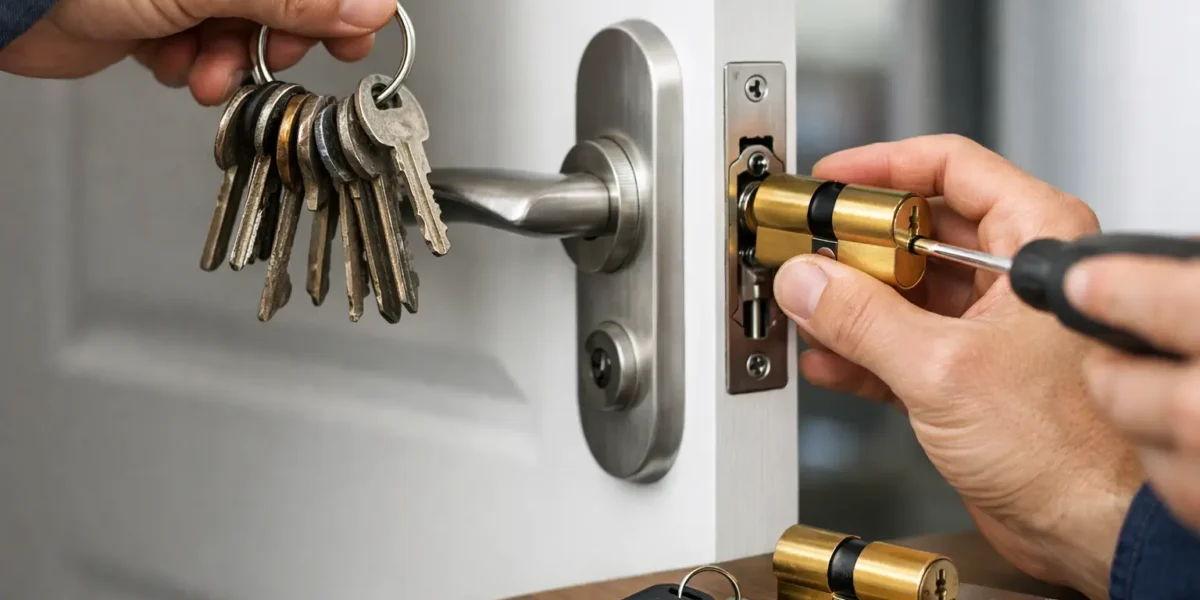
This is one of the clearest situations where a lock change makes sense. It gives you a clean starting point and puts key control back in your hands. If the doors themselves are in good condition, you may only need new cylinders rather than a complete lock replacement. A professional can assess the existing setup and recommend a compatible, higher-security option where needed.
For landlords, this should be part of a consistent turnover process. New tenants deserve confidence that old keys cannot be used, while landlords benefit from a clear record of who has access. The same principle applies to small offices, shops, and shared workspaces when staff arrangements change.
After Lost, Stolen, or Unreturned Keys
A missing key is not always an emergency, but it should never be dismissed. The level of risk depends on what was lost and who could identify the property. If a key was lost alongside a wallet, bag, address label, vehicle document, or anything linking it to your home or business, change the relevant lock promptly.
Stolen keys call for faster action. Even if the theft appears random, you do not want to rely on hope when securing your property. For a rental, keys not returned at the end of a tenancy should also be treated as a reason to replace or rekey the lock, rather than simply asking the former occupant to look again.
A spare key hidden outdoors is another weak point. If someone has found it, or if its location has become known, replace the lock and rethink the arrangement. A trusted keyholder or a professionally managed access solution is far safer than the traditional key-under-the-pot approach.
Following a Break-In or Attempted Break-In
Always have locks inspected after a burglary or attempted entry, even if the door still locks. Damage is not always obvious. A cylinder can be weakened, a mechanism can become misaligned, or a strike plate and frame can be compromised by force.
Visible clues include scratches around the keyway, a loose handle, a lock that turns roughly, cracked trim, bent hardware, or a door that no longer closes squarely. These issues can make a repeat attempt easier and may worsen quickly with normal use.
Replacement is often wiser than a simple repair after an attack, particularly if the lock was forced or is an older basic model. Security upgrades should be considered as part of the repair, not an afterthought. Stronger cylinders, reinforced hardware, and correctly aligned doors work together to make forced entry more difficult.
When Your Lock Starts Showing Wear
Locks do not need to fail completely before they deserve attention. A key that sticks, needs repeated jiggling, turns only with pressure, or occasionally gets trapped is signaling a problem. So is a handle that feels loose or a latch that does not catch consistently.
Sometimes the issue is door alignment rather than the lock itself. uPVC and composite doors can shift slightly over time because of temperature changes, hinge wear, or settlement. If lifting the handle has become difficult, the multipoint mechanism may be under strain. Adjusting the door early can prevent unnecessary damage to more expensive components.
That said, lubrication is not a cure for every fault. The wrong product can attract dirt or mask a developing issue. If the lock is unreliable, have it checked by a qualified professional rather than waiting for the key to snap or the door to become stuck shut. A timely repair may be enough, but a worn or failing cylinder should be replaced.
When Should Locks Be Changed for Better Security?
Many properties still have locks that work but no longer offer the level of resistance expected from a modern external door. This is common after buying an older home, fitting a new door to an existing frame, or inheriting hardware that has not been reviewed in years.
A security upgrade is worth considering when your locks are basic, visibly dated, easy to manipulate, or not suited to the door type. The best option depends on whether you have a wooden, composite, aluminum, or uPVC door, and whether it uses a mortise lock, rim cylinder, euro cylinder, or multipoint system.
Look beyond the cylinder alone. A strong lock fitted to a weak handle, poorly adjusted door, or damaged frame cannot deliver its full benefit. Good security is a system: the door closes correctly, the lock engages fully, the hardware resists attack, and the installation is precise.
For commercial premises, think about access patterns as well as strength. A growing team, temporary staff, contractors, and multiple keyholders can make traditional keys difficult to manage. Restricted key systems or other managed access options may offer better accountability, though the right choice depends on the premises, budget, and day-to-day operations.
After a Relationship, Household, or Staffing Change
Changing locks can be sensible after a breakup, separation, dispute, or any situation where access rights have changed. It is not about escalating conflict. It is about establishing clear, safe boundaries around a property.
The same applies when an employee with keys leaves a business, especially if keys were not formally tracked or returned. If several people may have copied a key over the years, replacement can be more practical than trying to account for every copy.
If there are legal, tenancy, or ownership questions involved, make sure you have the right to authorize the work before changing access. A reputable locksmith or door specialist will take security and authorization seriously.
How Often Should You Review Your Locks?
There is no rule that every lock must be replaced every few years. A well-made lock that operates smoothly, has not been compromised, and provides suitable security may last a long time. Replacing hardware on a fixed schedule can mean spending money before it is necessary.
A yearly visual and functional check is a better habit. Test each external door, make sure keys turn without force, inspect handles and hinges, and check that the door closes and locks cleanly. Review access after a move, a tenancy change, a lost key, or a staffing change. These moments matter more than the lock’s age alone.
It is also smart to review locks when planning other improvements. A replacement composite door, new glazing, or upgraded handles can be the ideal time to choose locking hardware that matches the new installation. This avoids mixing attractive new components with tired security hardware that lets the whole entrance down.
Choose the Right Fix, Not Just the Fastest One
Not every lock concern requires a full replacement. A simple adjustment may solve a door alignment issue, and a damaged handle may be replaceable without changing the cylinder. But where keys are unaccounted for, security has been compromised, or the mechanism is worn, a new lock is the safer choice.
Bee Manchester can assess doors, locks, handles, hinges, and multipoint mechanisms as part of a practical, tailored repair or upgrade. The aim is not to replace parts that still have life in them. It is to make sure your entrance looks good, works properly, and gives you the security you expect every time you close the door.
If something feels off with your lock, trust that instinct. The best time to act is before a small warning becomes a locked-out emergency or a preventable security risk.