

-
On July 20, 2026
How to Improve Door Security With 8 Upgrades
A good-looking front door can still be the weakest point of a property if its lock, frame, or hardware has been neglected. Knowing how to improve door security means looking beyond the keyhole: the door leaf, hinges, glazing, frame, and installation all need to work together. For homeowners, landlords, and small business owners, a few well-chosen upgrades can make forced entry far more difficult without compromising curb appeal.
How to Improve Door Security Starts With the Door Itself
Security hardware can only do so much when the door is warped, cracked, thin, or loose in its frame. Start by checking for movement. With the door closed, push gently near the lock edge and hinge side. Excessive flexing, rattling, gaps, or daylight around the edges are signs that adjustment, repair, or replacement may be needed.
A solid wood door, quality composite door, or well-made steel door generally offers more resistance than a lightweight or damaged unit. For properties with older uPVC doors, the condition of the internal reinforcement and locking points matters as much as the appearance of the panels. A modern replacement door can bring better insulation and a more secure structure at the same time.
The frame deserves equal attention. A strong lock mounted into a weak, rotted, split, or poorly fitted frame is not a complete security solution. Repairing damaged timber, replacing worn frames, and ensuring the door sits squarely are foundational jobs that should come before adding extra gadgets.
Upgrade the Lock, Not Just the Key
The lock is often the first feature people think about, and for good reason. A quality deadbolt or multipoint locking system gives the door multiple points of engagement rather than relying on a single latch. Multipoint systems are particularly effective on composite, uPVC, French, and patio doors, where the locking mechanism can secure the sash at several positions along the frame.
If your door uses a cylinder lock, choose an upgraded cylinder designed to resist common attack methods. The right option depends on the door type and existing hardware, so compatibility matters. Fitting a high-security lock incorrectly can leave the door misaligned or prevent the bolts from engaging fully.
Avoid relying on a spring latch alone for an exterior door. Latches are useful for keeping a door closed, but a properly fitted deadbolt or multipoint mechanism provides the resistance needed when the property is unattended. For commercial premises, consider access needs too. A lock that is secure but difficult for authorized staff to use can lead to keys being hidden, doors being propped open, or other risky workarounds.
Reinforce the Strike Plate and Frame
The strike plate is the metal fitting on the frame that receives the latch or bolt. It is small, easy to overlook, and extremely important. If it is secured with short screws that only grip the trim, a kick or heavy impact may split the surrounding material.
Upgrade to a heavy-duty strike plate and use long screws that reach the structural framing behind the jamb. This simple improvement helps spread force across a stronger section of the frame. It is especially worthwhile on wooden doors and doors that have seen years of use.
For doors with a multipoint lock, the keeps and receivers in the frame also need to be firm, correctly positioned, and free from damage. If you have to lift, push, or pull the door sharply before it will lock, do not ignore it. Misalignment puts strain on the mechanism and can leave some locking points only partly engaged.
Secure the Hinges and the Hinge Side
Outward-opening doors can expose their hinges, creating a potential point of attack. Security hinges, hinge bolts, or non-removable hinge pins can prevent a door from being lifted away even if the hinge pin is targeted. These upgrades are discreet and can be matched to the finish of the existing door furniture.
Even inward-opening doors benefit from a hinge inspection. Loose screws, worn hinges, or sagging can affect alignment and reduce the effectiveness of the lock. A door that catches on the threshold may still close, but it is not operating as it should.
French doors require particular care because the meeting point between the two doors can be vulnerable. Secure the inactive leaf with strong flush bolts or a dependable locking system, and make sure both doors close tightly against the frame. Attractive double doors should never mean an easier entry point.
Protect Glass Panels and Nearby Windows
Glazed doors bring in light and add style, but they should be specified with security in mind. Toughened or laminated safety glass is a sensible choice for doors and sidelights, particularly where a person could reach through broken glass to operate the lock or handle.
The placement of the lock matters here. If glazing is close to the hardware, a thumb-turn mechanism may not be the best fit. A key-operated lock can offer greater control, although it comes with a practical responsibility: keep the key accessible for emergency exit when the property is occupied, but never leave it in the lock or within reach through the glass.
Do not forget windows near the door. A poorly secured side window can give an intruder a route to the handle, key, or internal release. Lockable windows, restricted opening where appropriate, and clear sightlines around the entrance all contribute to a more secure perimeter.
Add Visible Deterrents That Fit the Property
Not every improvement needs to be hidden inside the door. A well-lit entrance, clear house number, and visible security measures can make a property less appealing to an opportunistic intruder. Motion-activated lighting is useful for driveways, side gates, rear entrances, and commercial delivery areas.
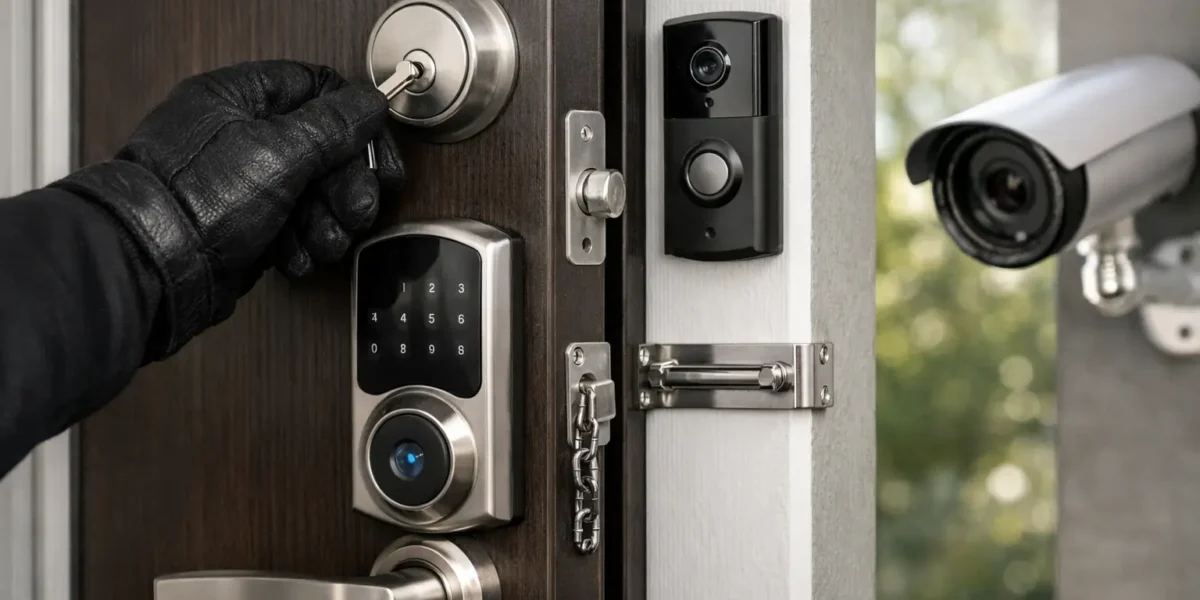
A video doorbell or security camera can help you see who is approaching and create a record of activity. These devices are valuable additions, but they do not replace physical protection. The best approach is layered: a camera can deter and document, while a strong door, frame, and lock delay or stop entry.
For businesses, control who has keys and review access when staff change. For rental properties, rekeying or changing cylinders between tenancies is a sensible safeguard. It is a straightforward step that gives new occupants confidence that old keys no longer work.
Do Not Neglect Patio, Sliding, and Rear Doors
Front doors get the attention, while rear and patio doors are often more private and less visible from the street. Check that sliding doors have working locks, anti-lift protection, and secure tracks. A professionally fitted secondary security device can be useful, but it should not interfere with safe escape in an emergency.
Bi-fold doors need smooth alignment to lock correctly across all panels. If handles feel stiff, doors drag, or locking points do not line up, arrange a repair before the mechanism wears further. The same applies to older uPVC back doors with floppy handles or a key that only turns after repeated attempts.
Make Everyday Habits Part of Your Door Security Plan
The most effective hardware cannot help if the door is left unlocked. Make a final lock check part of leaving home, closing the business, or settling in for the night. This is particularly relevant for multipoint doors: lift the handle fully, then turn the key so every locking point is engaged.
Keep keys out of sight and away from the doorway. Do not hide spare keys under mats, plant pots, or decorative stones. A secure key safe, trusted neighbor, or managed access arrangement is a much safer alternative.
Finally, act early when something changes. A stiff lock, loose handle, cracked frame, or door that no longer closes cleanly is not just an annoyance. It is an opportunity to fix a weakness before it becomes a failed lockout, costly repair, or security concern.
A local door and lock specialist can assess the whole setup, recommend upgrades that suit the property, and fit them accurately. Bee Manchester brings that practical, quality-focused approach to doors, glazing, frames, and locking systems, helping local properties stay secure while still looking their best. A secure entrance should feel solid every time you close it – that everyday confidence is worth investing in.