

-
On August 9, 2026
How to Secure Patio Doors Without Losing Style
A patio door should bring daylight and garden views into your home, not give an intruder an easier route inside. Learning how to secure patio doors starts with understanding the weak points of your particular door, then choosing upgrades that improve protection without spoiling the look, access, or natural light you bought it for.
Sliding doors, French doors, and bi-fold doors each need a slightly different approach. The good news is that a well-fitted door with quality locking hardware, sound glazing, and regular maintenance can be a highly secure part of your property.
Start With the Lock and Frame
The lock is the first place to look, but it is only as effective as the frame holding it. If the door moves, rattles, catches when closing, or can be lifted slightly in its track, the hardware may not be engaging properly. That creates a security issue even if the lock itself appears to work.
For sliding patio doors, check that the primary lock fully catches every time the handle is turned. Many older doors have a simple latch that can wear down over time. Upgrading to a more substantial locking system, particularly one with multiple locking points, makes it harder to force the panel open.
French doors benefit from secure handles and a locking system that engages at several points along the opening edge. The inactive door should also be firmly secured with strong bolts at the top and bottom, not just a lightweight surface latch. On double doors, the meeting point between the two panels deserves special attention because it can be a target for prying.
Bi-fold doors need precise alignment. Their security depends on multiple panels locking and folding correctly into the frame. If a bi-fold door has dropped, scrapes along the threshold, or no longer closes smoothly, arrange a repair rather than forcing the handle. A small alignment problem can prevent locks from doing their job.
How to Secure Patio Doors With Extra Physical Protection
A few carefully chosen additions can make forced entry far more difficult. The right option depends on your door style, the condition of the existing hardware, and whether you own the property or need a landlord-approved solution.
Fit an Anti-Lift Device to Sliding Doors
A common concern with older sliding patio doors is whether the moving panel can be lifted out of its track. Anti-lift blocks or devices limit that movement and help keep the panel seated where it belongs. They are discreet, but they can make a meaningful difference when paired with a properly adjusted roller and lock.
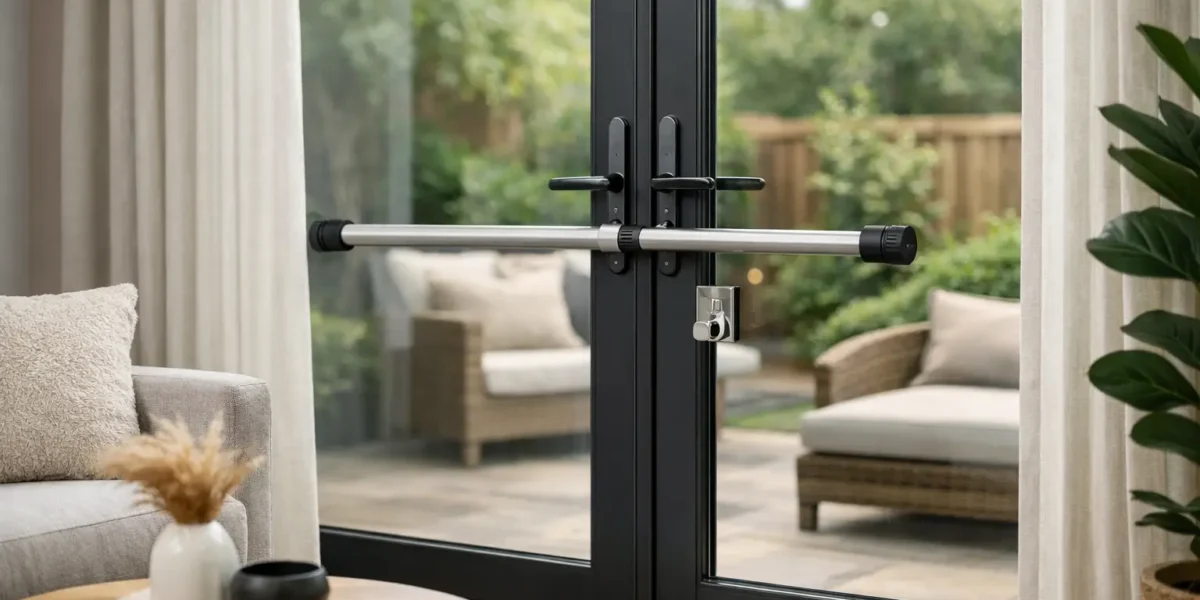
A security bar or sliding-door rod can also provide an additional barrier when the door is closed. This is a practical option for ground-floor doors, vacation properties, or rooms that are not used daily. Choose a product designed for the opening so it fits snugly without damaging the frame or track.
Reinforce Vulnerable Glass
Large panes of glass are one of the great features of patio doors, but they must be specified and maintained with security in mind. Modern double-glazed units can be made with toughened or laminated safety glass, which is more difficult to break and remains more secure if damaged.
Security film is sometimes suggested as a lower-cost upgrade for existing glazing. It can help hold broken glass together, but it does not turn ordinary glass into a replacement for properly specified security glazing. If your glass is misted, cracked, loose in the frame, or clearly dated, replacement glazing is usually the more dependable long-term choice.
Do not overlook the glazing beads or seals around the glass. Loose or damaged components can affect both security and weather resistance. A professional can assess whether the unit needs adjusting, resealing, or replacing.
Upgrade Handles, Cylinders, and Hinges
Patio door handles should feel firm, operate smoothly, and sit securely against the door. A loose handle can be a sign of worn internal parts, while a stiff handle may mean the lock is under strain. Neither issue should be ignored until the door stops locking altogether.
For doors with key-operated cylinders, choose a high-quality cylinder designed to resist common attack methods. The cylinder should be fitted correctly and should not project excessively from the handle or escutcheon. On outward-opening French doors, security hinges or hinge bolts can add useful protection by reducing the risk of the hinge side being attacked.
Fix Small Problems Before They Become Weak Points
Patio doors do a lot of work. They are exposed to changing temperatures, rain, foot traffic, pets, children, and repeated opening and closing. Over time, rollers wear, hinges loosen, seals shrink, and frames can move slightly. These are normal maintenance issues, but they should not be allowed to compromise security.
Test your patio door every few months. Open and close it fully, operate the lock, and inspect the track, frame, handles, hinges, and glass. Clear debris from sliding tracks so the door can close squarely. Avoid oiling locks with random household lubricants, as some products attract dirt or interfere with internal mechanisms. Use a lock-appropriate product if needed, or ask a specialist to service it.
Watch for warning signs such as difficulty locking, drafts around the frame, condensation between glass panes, visible gaps, cracked handles, or a door that needs lifting to close. A repair at this stage is often simpler and more affordable than replacing a severely damaged door later.
Build Better Everyday Security Habits
The strongest lock cannot help if the door is left unsecured. It sounds obvious, but patio doors are often used differently from front doors. Someone may step outside briefly, leave the door on a vent setting, or assume the backyard is private enough to be safe.
Make a full lock check part of your routine before leaving the house or going to bed. Ensure sliding doors are completely shut, handles are in their locked position, and keys are stored away from the glass. Never leave a key in a lock where it can be reached through a broken pane or opened window.
If you like fresh air, use purpose-made ventilation solutions rather than leaving a patio door partially open when the property is unattended. Door alarms, window and door sensors, exterior lighting, and visible security systems can also make an opportunistic intruder think twice. These measures work best as layers, not as substitutes for a secure door and lock.
For landlords and small business owners, inspect patio doors between tenancies or before reopening a unit. A lock that works “well enough” can become an emergency callout when it fails on moving day, after a break-in attempt, or at the end of a long workday.
Choose Security That Still Suits Your Home
Security upgrades do not have to make a patio door look industrial or out of place. Modern handles, locks, reinforced glazing, and replacement doors are available in designs that complement traditional homes, contemporary extensions, and commercial spaces alike. Color, hardware finish, sightlines, and opening style can all be considered alongside protection and thermal performance.
Sometimes a repair and lock upgrade is the sensible answer. In other cases, especially where a door is old, poorly fitted, damaged, or fitted with basic single-point locking, replacement may offer better value over time. A new energy-efficient patio door can improve security, reduce drafts, and refresh the appearance of the room in one project.
Bee Manchester can assess locks, glazing, frames, handles, hinges, and door alignment to help property owners choose a solution that fits the door they have and the level of protection they need. Good workmanship matters here: even excellent hardware cannot perform as intended if it is poorly installed.
Your patio door should feel easy to use, look right for the property, and close with a solid sense of reassurance. If it does not, treat that feeling as a useful prompt to have it checked before a minor fault becomes the opening someone was looking for.